Introduction
As warehouse space becomes more expensive and inventory demands grow, businesses need ways to store more goods without expanding their buildings. An automated high bay warehouse addresses this challenge by combining high-level racking, stacker cranes, and automated material handling equipment.
By making better use of vertical space, this type of warehouse can increase storage capacity while reducing manual handling. When integrated with warehouse management and control systems, it can also improve inventory accuracy, support faster goods movement, and connect storage operations with production and distribution processes.
What Is an Automated High Bay Warehouse?
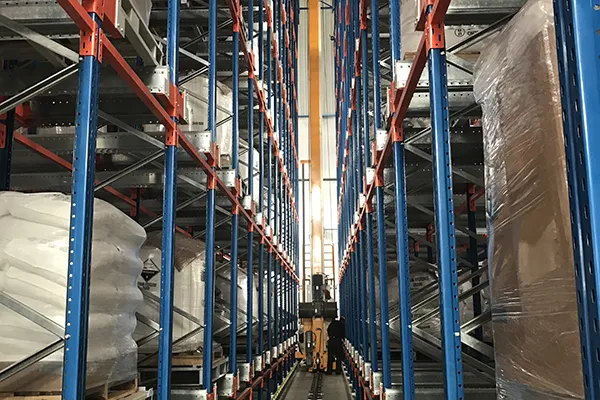
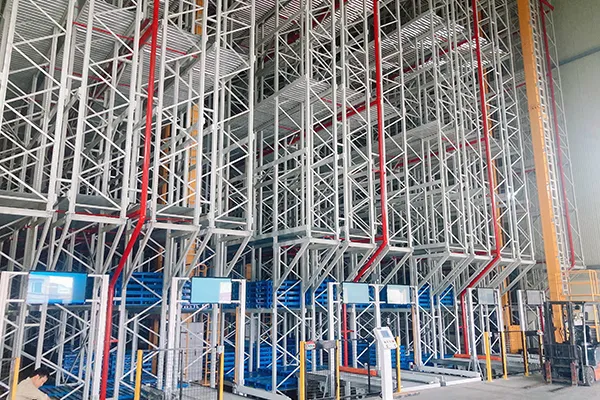
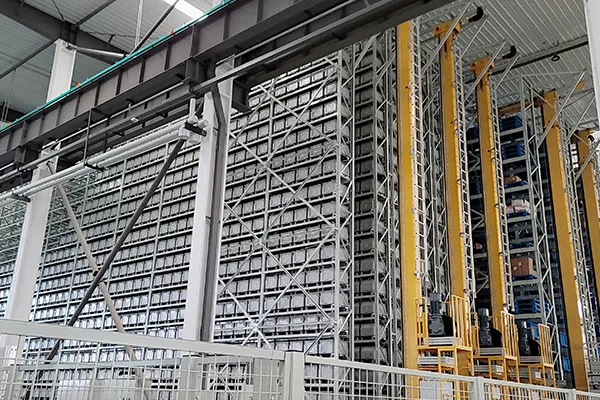
An automated high bay warehouse is a storage facility that uses tall racking structures and automated equipment to store and retrieve goods at multiple vertical levels. It commonly uses a stacker crane-based automated storage and retrieval system (AS/RS), along with conveyors and warehouse software, to move palletized goods between storage locations and input/output stations.
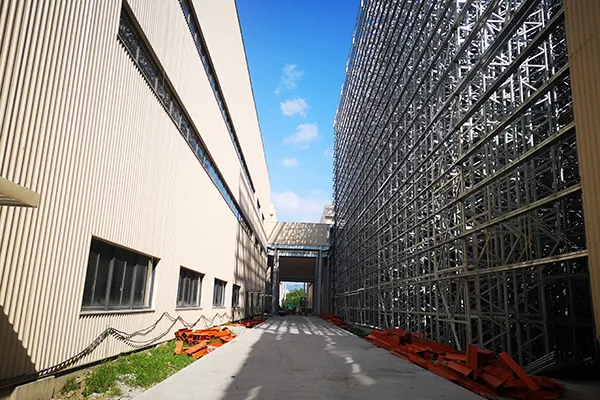
Unlike a conventional warehouse that relies heavily on forklifts and manual handling, an automated high bay warehouse uses computer-controlled equipment to carry out storage and retrieval tasks. The racking can extend to heights of 30 meters or more, depending on the building structure, load requirements, equipment design, and applicable safety standards.
A typical operation follows three basic steps:
- Inbound: Pallets arrive at an input station, where conveyors or other handling equipment transfer them to the storage system.
- Storage: A stacker crane moves along a designated aisle, lifts the load to the assigned rack level, and places it in the correct storage location.
- Outbound: When goods are needed, the system retrieves the required pallet and transfers it to an output station for production, picking, or dispatch.
The result is a storage operation that makes better use of warehouse height and reduces the need for manual movement within storage aisles. The actual storage capacity and throughput depend on factors such as rack height, aisle configuration, pallet dimensions, crane performance, and inbound and outbound demand.
Key Functions of an Automated High Bay Warehouse
An automated high bay warehouse does more than store goods on tall racks. By combining vertical storage, automated handling equipment, and warehouse software, it helps businesses manage inventory, move goods efficiently, and connect storage with other operations.
1. Maximize Storage Capacity
High-bay racking makes use of vertical space, allowing businesses to store more pallets within a limited floor area. Depending on the rack height, aisle layout, load dimensions, and system design, a large-scale facility can accommodate hundreds of thousands of pallet positions.
For example, a warehouse with 300,000 pallet positions could theoretically hold 300,000 metric tons of goods if each pallet carried an average load of one metric ton. Actual capacity depends on the project design and the weight and dimensions of the stored products.
2. Automate Storage and Retrieval
A stacker crane-based AS/RS automatically moves pallets between input/output stations and assigned rack locations. Warehouse software coordinates storage tasks and equipment movements, reducing the need for operators to enter storage aisles and handle pallets manually.
This automation can improve inventory accuracy, reduce manual handling, and support more consistent inbound and outbound operations. Actual throughput depends on factors such as crane speed, travel distance, storage strategy, and peak order demand.
3. Support Integrated Material Handling
An automated high bay warehouse can connect with conveyors, lifts, pallet shuttles, sorting equipment, and other material handling devices. When required, the system can also support order picking, sorting, packing, and dispatch operations.
Integration with a warehouse management system (WMS) and warehouse control system (WCS) helps coordinate inventory records, storage assignments, and equipment tasks. This allows the warehouse to work as part of a wider production or distribution process rather than operating as an isolated storage area.
Main Components of an Automated High Bay Warehouse
An automated high bay warehouse consists of several interconnected components that work together to store, retrieve, and transport goods. The main components include high-bay racking, storage units, stacker cranes, conveyor systems, auxiliary equipment, and warehouse software.
1. High-Bay Racking
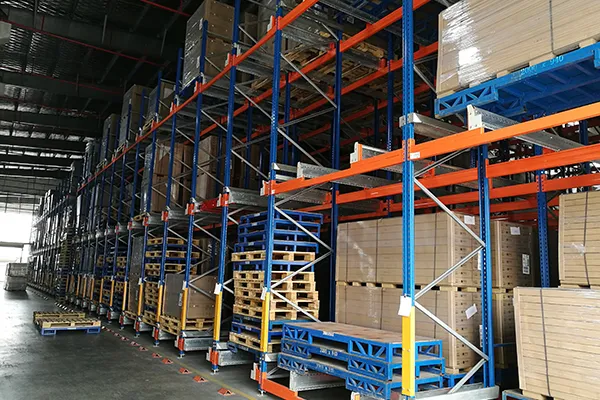
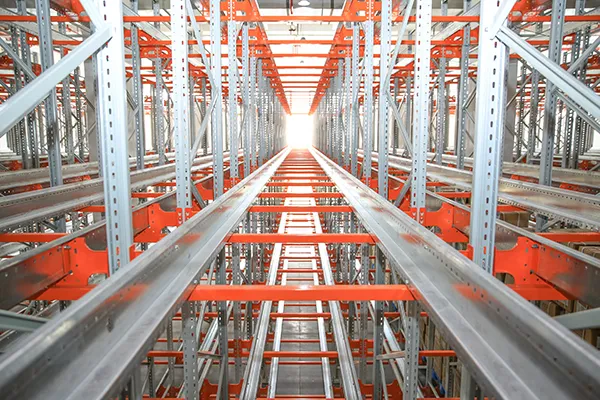
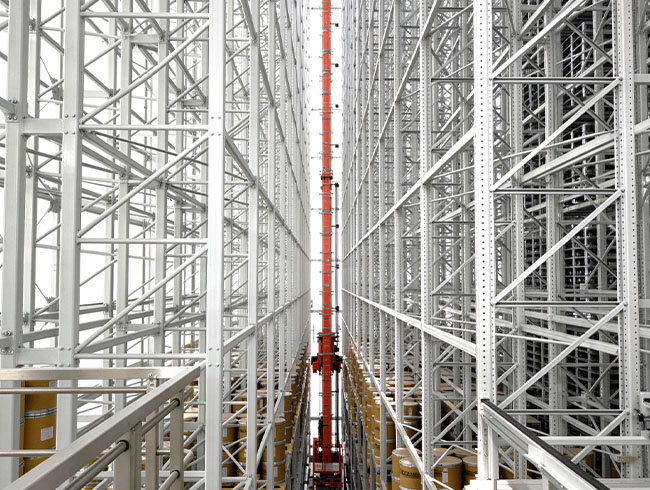
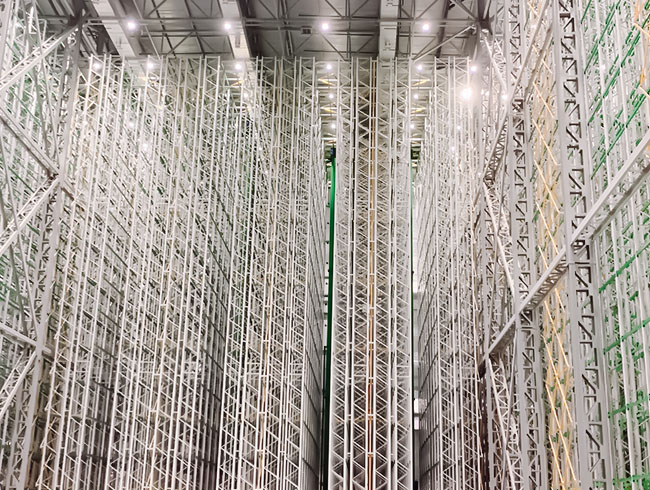
High-bay racking provides the vertical storage structure for pallets or other load units. It consists of multiple levels of storage locations arranged along crane aisles, making it possible to use warehouse height more efficiently.
Depending on the load requirements and warehouse layout, the racking can be designed for different pallet sizes, storage depths, and load capacities. Accurate rack installation is essential for safe and reliable stacker crane operation, especially in warehouses with tall rack structures.
2. Pallets and Load Carriers
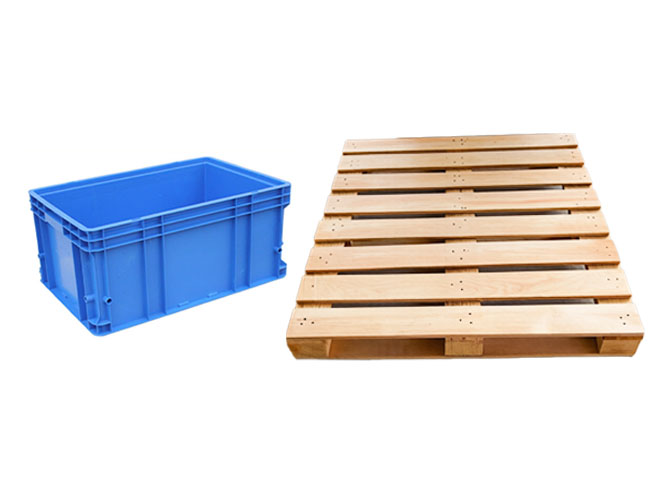
Pallets or other load carriers hold goods and allow automated equipment to handle them as standardized storage units. Their dimensions, load capacity, and structural condition affect the compatibility and reliability of the entire system.
Before selecting an automated high bay warehouse, businesses should confirm that their pallets or containers meet the requirements of the racking, conveyors, and stacker cranes. Consistent load dimensions also help reduce handling issues during storage and retrieval.
3. Stacker Cranes
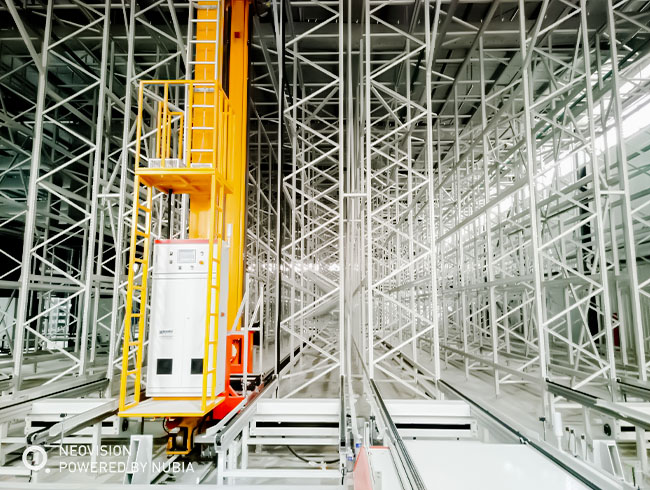
The stacker crane is the core handling machine in a stacker crane-based automated storage and retrieval system (AS/RS). It travels along a designated aisle, lifts or lowers the load, and transfers pallets between the input/output station and the assigned rack location.
By automating horizontal travel, vertical lifting, and load handling, the crane reduces the need for forklifts to operate within storage aisles. Its lifting height, travel speed, load capacity, and cycle time should match the warehouse layout and required throughput.
4. Conveyor and Material Handling Systems
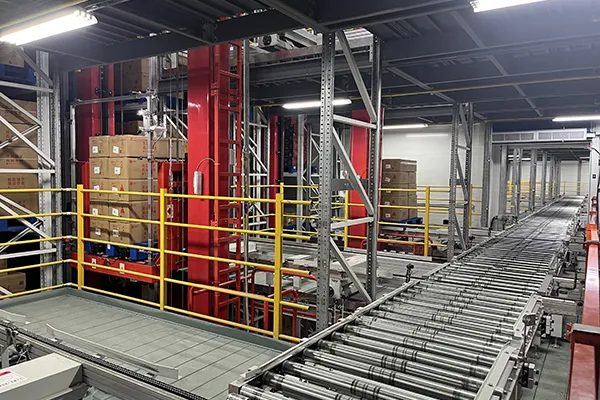
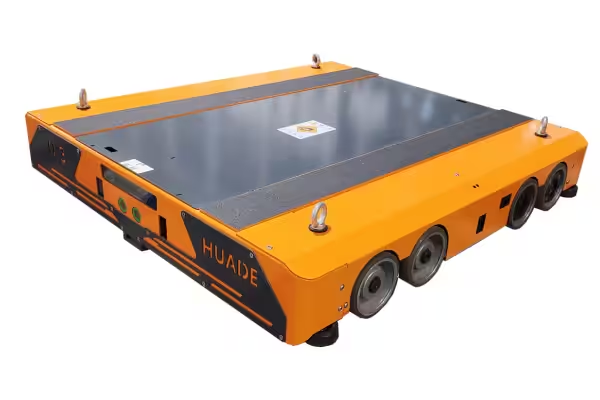
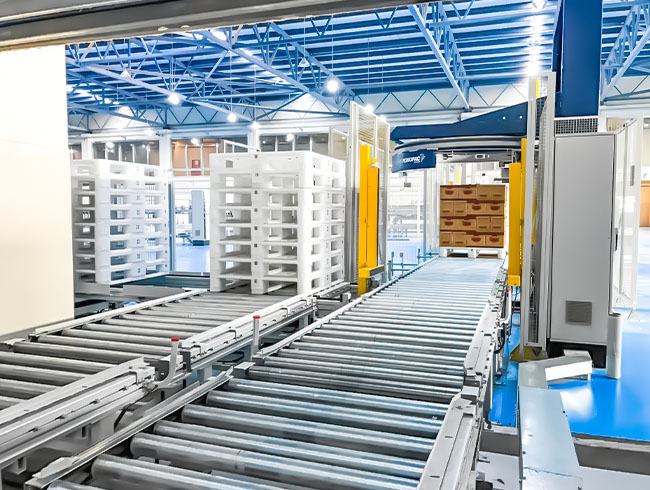
Conveyor and material handling systems connect the storage aisles with receiving, production, picking, and dispatch areas. Common equipment includes roller conveyors, chain conveyors, reciprocating lifts, pallet shuttles, and automated guided vehicles (AGVs).
Because a stacker crane normally operates within its assigned aisle, these connected devices transfer loads to and from the crane’s input/output stations. A well-designed material handling layout helps maintain a smooth flow of goods and reduces unnecessary transfers between processes.
5. Auxiliary Equipment
Auxiliary equipment extends the functions of an automated high bay warehouse beyond basic pallet storage and retrieval. Depending on operational needs, it may include barcode scanners, automatic identification devices, weighing equipment, sorting systems, and pallet inspection stations.
These devices can verify load information, support inventory checks, and direct goods to the correct destination. The specific equipment required depends on product characteristics, picking methods, and the level of automation needed.
6. Warehouse Control System (WCS)
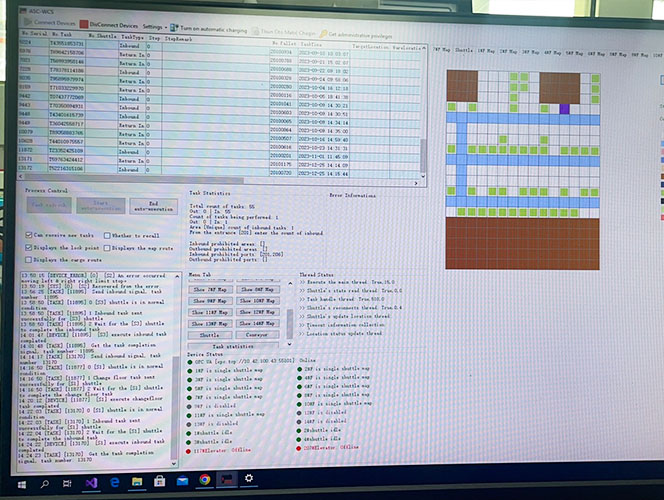
The warehouse control system (WCS) coordinates the execution of tasks across automated handling equipment. It communicates with devices such as stacker cranes, conveyors, and lifts to control movements and coordinate material flow.
For example, when a pallet is assigned to a storage location, the WCS can coordinate the relevant equipment movements so the load reaches the designated station and storage aisle. Its role is to help different devices operate in the correct sequence and respond to operational conditions.
7. Warehouse Management System (WMS)
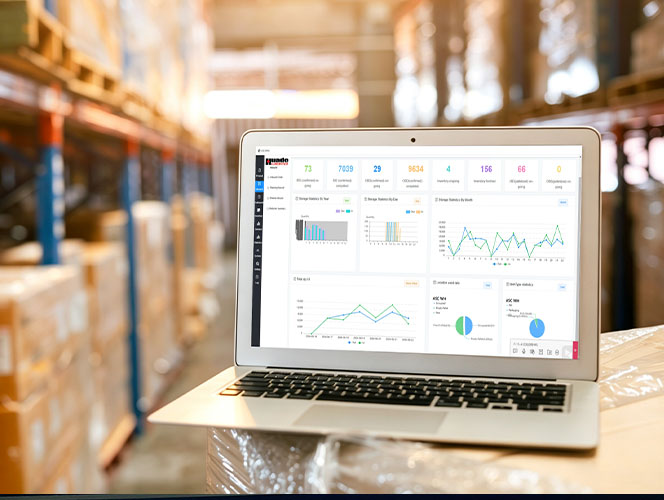
The warehouse management system (WMS) manages inventory information, storage locations, and warehouse tasks. It helps determine where goods should be stored, tracks inventory movements, and supports receiving, replenishment, picking, and dispatch operations.
A WMS can also exchange data with enterprise resource planning (ERP) software to connect warehouse activities with purchasing, production, and order management. When integrated with a WCS, it links warehouse-level decisions with the execution of automated equipment, improving inventory visibility and operational coordination.
Advantages of Automated High Bay Warehouses
1. Make Better Use of Vertical Space
High-bay racking allows goods to be stored at multiple levels, making better use of the available building height. In suitable projects, rack heights can exceed 30 meters, significantly increasing storage capacity without expanding the warehouse footprint.
Compared with a conventional warehouse, a well-designed automated high bay warehouse may reduce the floor area needed for the same storage capacity. The actual space savings depend on rack configuration, aisle width, storage density, and operational requirements.
2. Improve Storage and Retrieval Efficiency
Stacker cranes and automated material handling equipment carry out storage and retrieval tasks according to system instructions. This reduces the need for manual forklift operations within storage aisles and helps maintain a more consistent flow of goods.
When the equipment is properly sized for the required throughput, the warehouse can handle frequent inbound and outbound movements more efficiently. Performance still depends on factors such as crane cycle time, conveyor capacity, order patterns, and peak-hour demand.
3. Improve Inventory Accuracy and Control
Integration with a warehouse management system (WMS) allows businesses to track inventory quantities, storage locations, and goods movements. Automated equipment executes assigned tasks, while the system records the corresponding warehouse transactions.
This combination helps reduce errors caused by manual data entry and misplaced goods. It can also support inventory rotation strategies, such as first in, first out (FIFO), when the storage configuration and warehouse rules are designed to support them.
4. Connect Storage with Production and Distribution
An automated high bay warehouse can serve as a buffer between receiving, manufacturing, order picking, and dispatch. It can store raw materials before production, return unused materials to storage, and hold finished goods until they are ready for shipment.
By integrating conveyors, lifts, WMS, WCS, and other handling equipment, businesses can coordinate material flows across different operational areas. This helps reduce unnecessary transfers and improves visibility throughout the warehouse process.
5. Reduce Dependence on Manual Handling
Automated storage and retrieval can reduce the amount of repetitive manual work required for pallet movement, particularly in tall storage aisles or facilities with frequent handling tasks.
Automation can also support operations in challenging environments, including certain cold-storage facilities. However, equipment used in low-temperature, hazardous, or other specialized environments must be specifically designed and qualified for those conditions.
Limitations of Automated High Bay Warehouses
1. Higher Initial Investment
An automated high bay warehouse requires more than racking and stacker cranes. The overall investment may include conveyors, lifts, control software, warehouse management systems, installation, commissioning, and building preparation.
Businesses should evaluate the total project cost against expected storage capacity, labor requirements, throughput, and long-term operating costs. A detailed feasibility study can help determine whether the expected operational benefits justify the investment.
2. High Installation and Engineering Requirements
Tall racking structures and stacker cranes require accurate engineering, installation, and commissioning. Rack alignment, floor conditions, rail installation, load specifications, and equipment interfaces all affect system reliability.
Construction and commissioning may take longer than installing conventional pallet racking, especially when the project involves complex automation or integration with existing production lines. Early coordination between the building designer, racking supplier, and automation integrator helps reduce potential delays.
3. Less Flexibility When Storage Requirements Change
An automated high bay warehouse is usually designed around specific load dimensions, rack configurations, throughput targets, and material handling processes. Major changes to product sizes, pallet types, storage methods, or order profiles may require equipment adjustments or system modifications.
Businesses with highly variable inventory or frequently changing workflows should assess future requirements before selecting a configuration. A modular design and sufficient capacity for anticipated growth can help reduce the difficulty of later expansion or modification.
How an Automated High Bay Warehouse Works
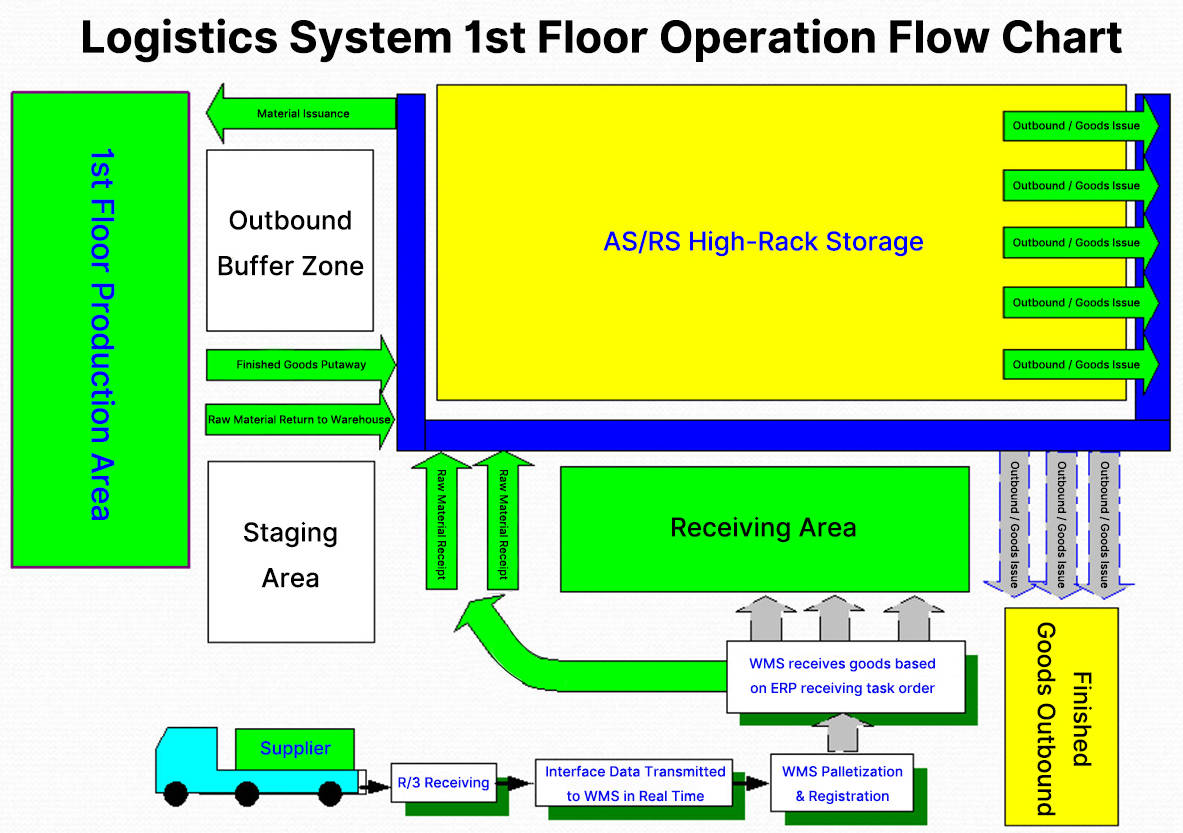
An automated high bay warehouse connects receiving, storage, production supply, and outbound operations through automated handling equipment and warehouse software. In a typical manufacturing facility, the warehouse management system (WMS) exchanges inventory and task information with the enterprise resource planning (ERP) system, while the warehouse control system (WCS) coordinates the execution of automated equipment.
The following example illustrates how pallets and materials move through a warehouse serving a production facility.
1. Raw Material Receiving and Storage
When suppliers deliver raw materials, the receiving team records the goods in the ERP system. Relevant receiving data is then synchronized with the WMS, which registers the materials, assigns storage locations, and creates the required warehouse tasks.
After the materials are identified and prepared for storage, conveyors transfer the pallets from the receiving area to the automated storage and retrieval system (AS/RS). A stacker crane moves each pallet into its assigned location in the high-bay racking. Materials that are not ready for immediate storage can be held temporarily in a designated staging area.
This process helps connect receiving information with physical inventory movements and reduces the need for manual pallet transfers.
2. Material Supply to Production
When the production line requires raw materials, the WMS processes the relevant material request and coordinates the outbound task. The WCS then coordinates the stacker crane and connected handling equipment to retrieve the required pallets from the AS/RS.
The pallets are transferred to an outbound buffer or material supply area before being delivered to the designated production zone. If unused raw materials need to be returned, or finished goods are ready for storage, the warehouse can process the corresponding return or putaway tasks.
This two-way flow allows the automated high bay warehouse to serve as a buffer between inventory storage and manufacturing operations.
3. Finished Goods Storage and Dispatch
After production, finished goods can be transferred to the receiving interface of the AS/RS for storage. The WMS records their inventory information and assigns suitable storage locations based on the warehouse’s operating rules.
When customer orders or dispatch requests are released, the system retrieves the required pallets and transfers them through the outbound conveyor network. Multiple outbound lines can direct goods to different staging, picking, or shipping areas, depending on the facility’s layout.
Before dispatch, the goods can undergo the required checks, order consolidation, or labeling processes. They are then prepared for loading and shipment.
When ERP, WMS, WCS, and material handling equipment are properly integrated, an automated high bay warehouse can connect supplier deliveries, raw material storage, production supply, finished goods storage, and outbound shipping in one coordinated workflow.
The exact process depends on the facility’s production requirements, inventory policies, and equipment configuration. A well-planned solution helps maintain consistent material flow while improving inventory visibility and reducing unnecessary handling between operational areas.
Common Automated High Bay Warehouse Layouts
The layout of an automated high bay warehouse affects how goods move between receiving, storage, picking, production, and dispatch areas. The right configuration depends on warehouse space, inventory turnover, order profiles, and inbound and outbound volumes.
Three common options are U-shaped, straight-through, and modular layouts. Conveyor and material handling equipment can then be arranged to connect the different operational areas.
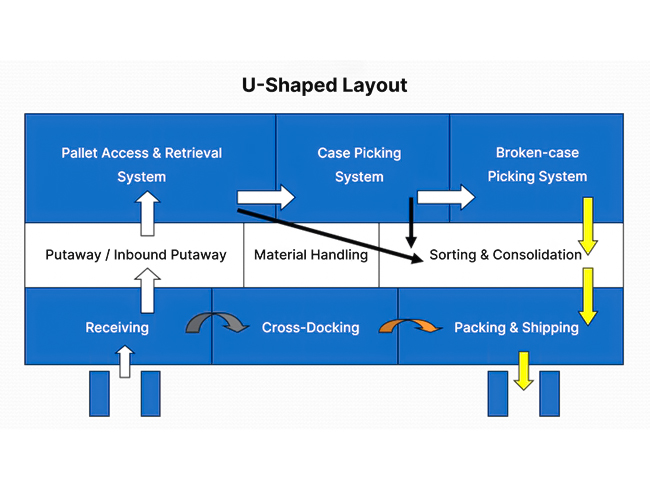
1. U-Shaped Layout
In a U-shaped layout, inbound and outbound goods use the same side of the warehouse. Receiving, storage, picking, and dispatch areas are arranged to support a compact flow of materials.
Depending on the operation, the layout can combine pallet storage and retrieval, tote picking, carton picking, sorting, consolidation, cross-docking, and packing.
Key benefits:
- Shares receiving and dispatch docks, making efficient use of available space.
- Supports cross-docking, allowing selected goods to move directly from receiving to dispatch without long-term storage.
- Offers flexibility for reorganizing work areas or expanding operations when space and system design allow.
Suitable applications: Manufacturing warehouses, including automotive parts and home appliance component facilities, where materials move between receiving, storage, and production or dispatch areas.
2. Straight-Through Layout
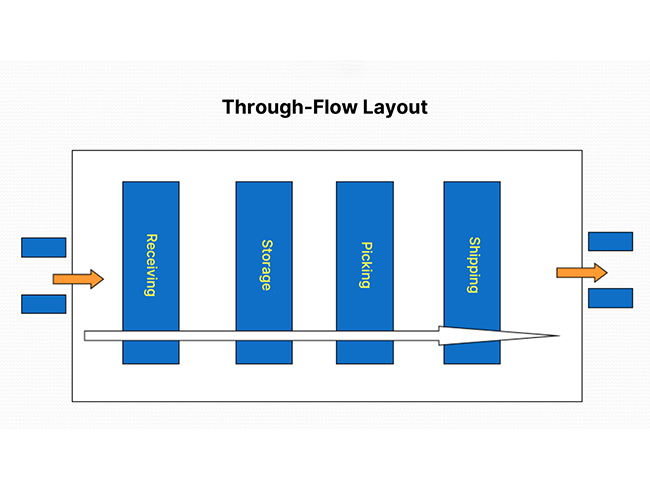
A straight-through layout places receiving and dispatch areas at opposite ends of the warehouse. Goods move in one main direction, from inbound receiving through storage and picking to outbound shipping.
This arrangement can help separate incoming and outgoing traffic and support high-volume material flows. It is particularly useful when inbound and outbound operations need to run simultaneously.
Key benefits:
- Creates a clear, directional flow of goods.
- Supports high-volume receiving and dispatch operations.
- Can facilitate cross-docking when inbound goods are transferred directly to outbound areas.
Suitable applications: Finished goods warehouses with relatively predictable material flows, such as facilities handling electronics, tobacco products, or pharmaceutical products. The final design should account for product variety, order profiles, and any special handling requirements.
3. Modular Layout
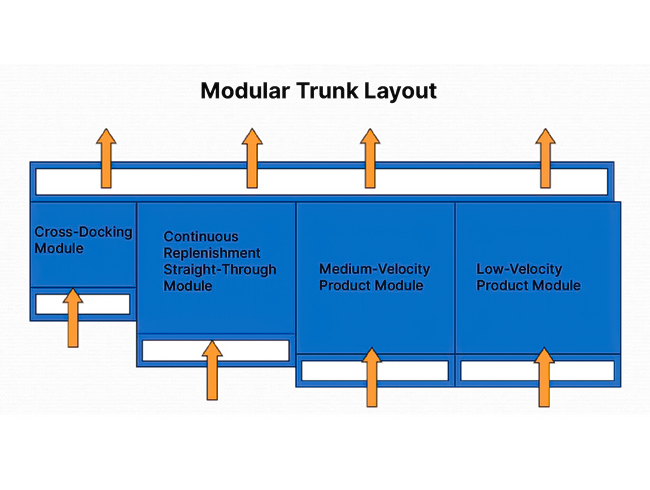
A modular layout divides the warehouse into separate operational zones based on product characteristics, inventory turnover, and handling requirements. For example, the layout may include dedicated areas for cross-docking, continuous replenishment, medium-turnover products, and slow-moving inventory.
Each module can use an appropriate storage and handling method while remaining connected to the wider warehouse workflow.
Key benefits:
- Supports different product categories and order fulfillment processes within one facility.
- Allows fast-moving and slow-moving goods to be managed according to their operational needs.
- Makes it easier to plan capacity and adjust individual zones as inventory profiles change.
Suitable applications: Large distribution centers, supermarket logistics hubs, and facilities handling a wide range of products with different turnover rates.
4. Typical Equipment Layout for an Automated High Bay Warehouse
In addition to the overall warehouse layout, the arrangement of conveyors and auxiliary equipment determines how efficiently goods move through an automated high bay warehouse.
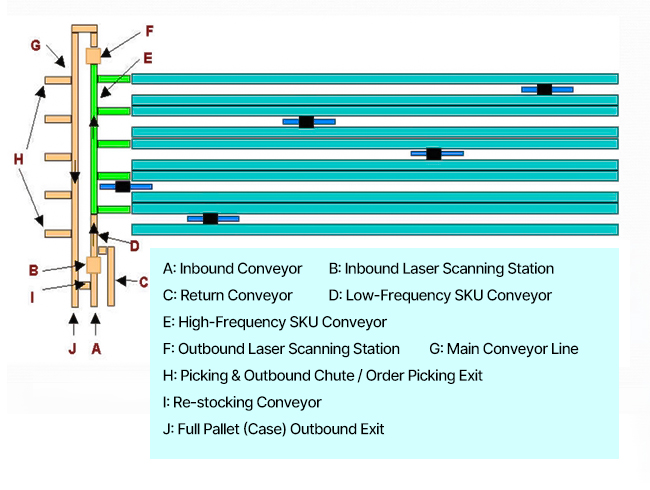
A typical equipment layout may include inbound conveyors, laser scanning and identification stations, return conveyors, separate lines for high- and low-frequency goods, main conveyor lines, picking stations, full-pallet dispatch points, and return conveyors for pallets going back into storage.
These components connect receiving, identification, storage, picking, returns, and dispatch into a coordinated material handling process. Their positions and capacities should be planned according to the required throughput, product dimensions, and movement of goods between operational areas.
The goal is to minimize unnecessary transfers, reduce bottlenecks, and ensure that the stacker crane-based AS/RS can work efficiently with the surrounding equipment.