Introduction
When planning a warehouse, one important question is whether to use a traditional warehouse or a stacker crane ASRS. A traditional warehouse is simple and flexible, while an automated warehouse can store more goods in less space and reduce manual work.
So, which option is better for your business? This article compares the two in terms of storage space, efficiency, cost, flexibility, and daily operations to help you make the right choice.
Main Systems of a Stacker Crane ASRS Warehouse
A stacker crane ASRS is more than just a crane and a set of racks. Several parts work together to move, store, and retrieve goods automatically. A typical warehouse includes the following six main systems.
1. Racking System
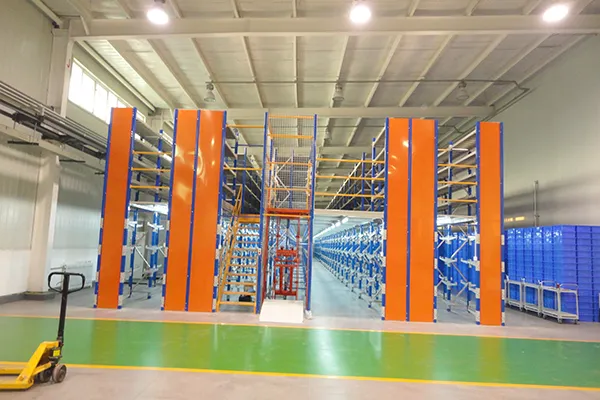
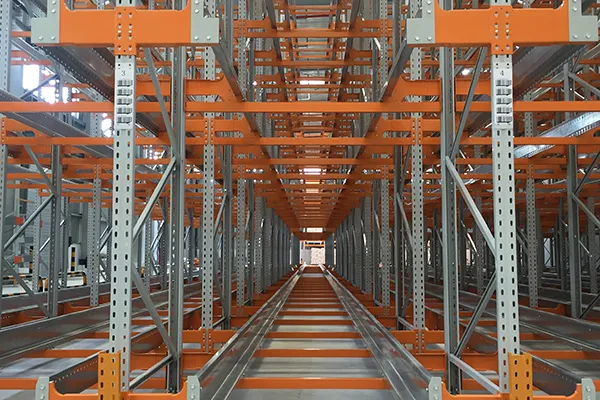
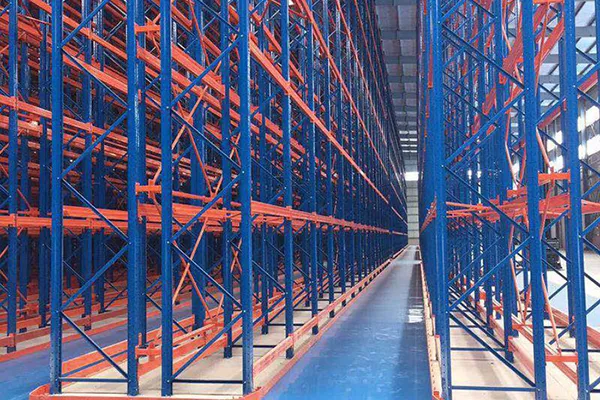
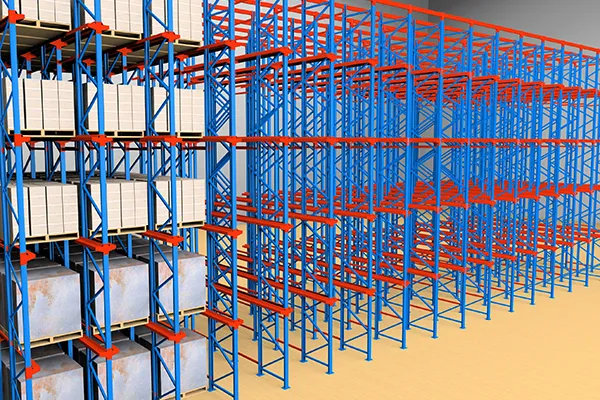
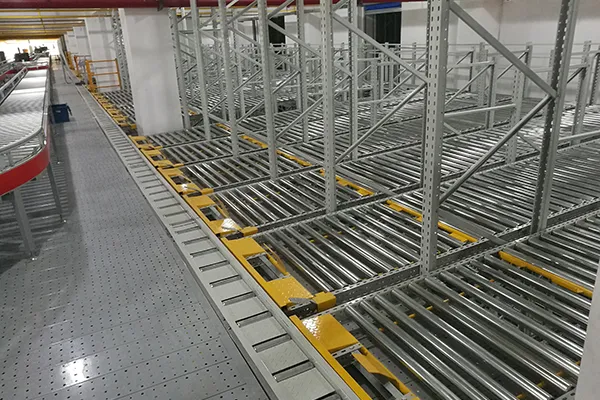
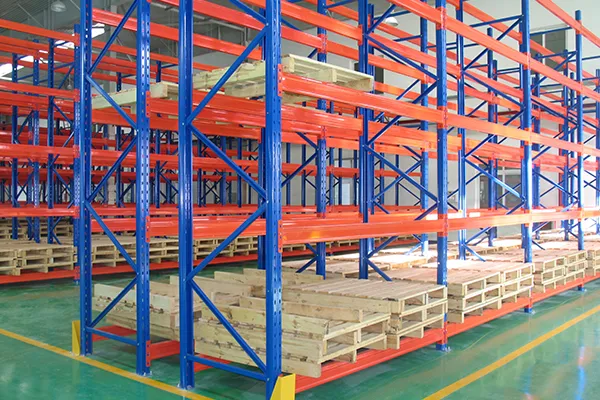
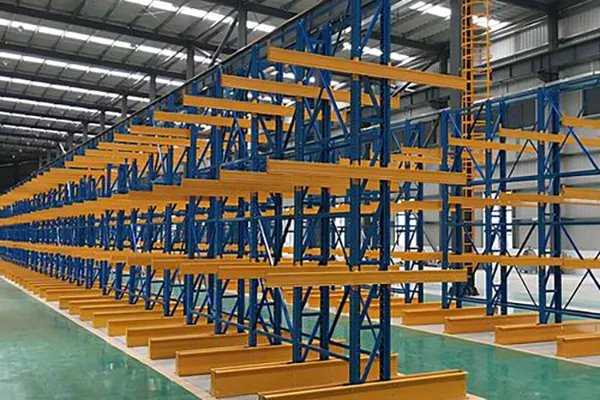
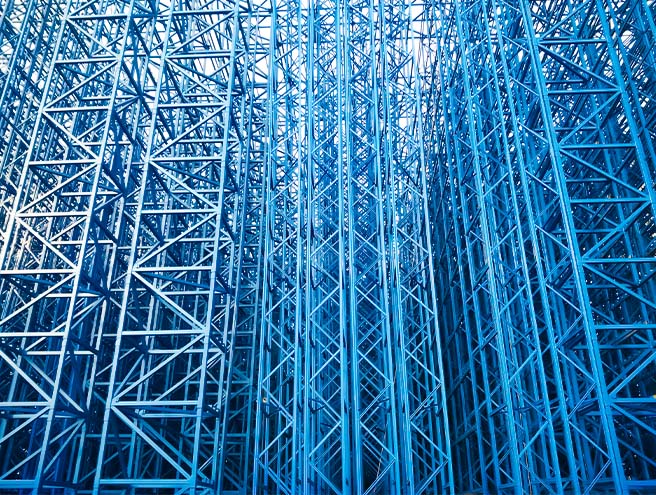
The racking system is the main structure used to store goods in a stacker crane ASRS. It is usually built with beam-type or rack-supported steel structures and can reach heights of around 10–40 meters, depending on the warehouse design.
The racks are arranged closely together to create multiple storage locations for pallets or containers. By using vertical space, the racking system allows more goods to be stored within a limited floor area and provides the foundation for high-density storage.
2. Stacker Crane System
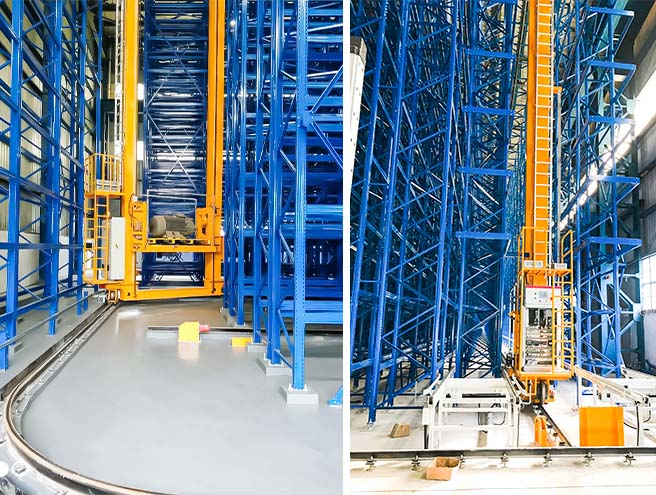
The stacker crane is the main equipment used to move goods in a stacker crane ASRS. Common types include aisle-running stacker cranes and bridge-type stacker cranes, which can be selected based on the warehouse layout and operating requirements.
The crane travels along the rack aisle and uses its lifting mechanism and telescopic forks to store and retrieve goods. It can automatically move to the assigned storage location, providing fast response and accurate positioning for daily storage and retrieval operations.
3. Conveyor and Material Handling System
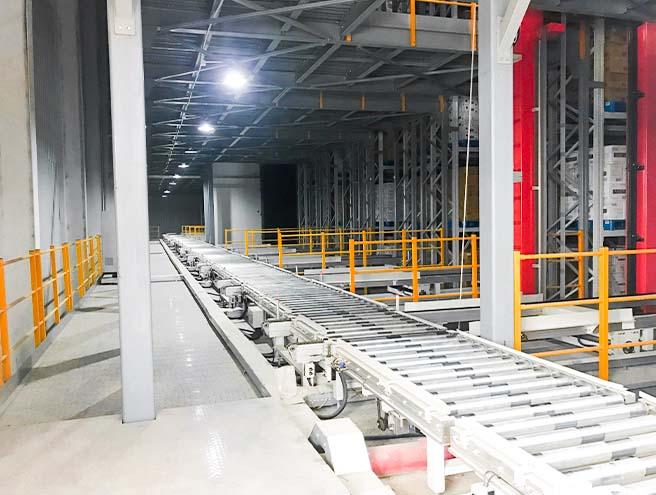
The conveyor and material handling system connects the storage area with the receiving, shipping, and picking areas. It may include roller conveyors, chain conveyors, AGVs, and other material handling equipment.
These systems move goods from the receiving area to the handover point for the stacker crane and transport retrieved goods from the storage area to the shipping or picking area. By connecting different warehouse areas, they help keep goods moving smoothly throughout the storage and retrieval process.
4. Warehouse Management and Control System
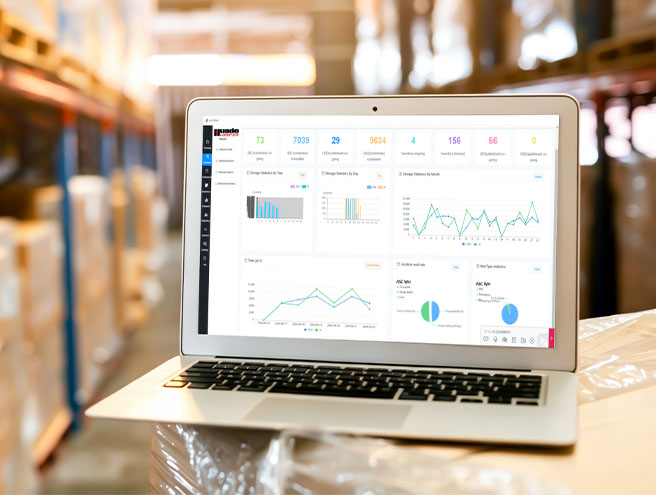
The control system acts as the “brain” of the stacker crane ASRS and usually includes a Warehouse Management System (WMS) and a Warehouse Control System (WCS).
The WMS manages orders, inventory, and storage locations, while the WCS coordinates equipment such as stacker cranes and conveyors. It also helps manage equipment status and handle abnormal situations, keeping storage and retrieval operations running smoothly.
5. Safety and Detection System
The safety and detection system helps keep the warehouse, equipment, and stored goods safe during daily operations. It can include storage location sensors, collision protection for stacker cranes, emergency stop buttons, smoke alarms, infrared sensors, and other safety devices.
These systems help prevent equipment collisions and goods from falling, while also supporting the fire safety requirements of the warehouse. The exact safety configuration depends on the warehouse layout, equipment, stored goods, and local regulations.
6. Building and Supporting Infrastructure
The building and supporting infrastructure provides the basic conditions needed for a stacker crane ASRS to operate safely. It includes the main warehouse building, reinforced flooring to support the weight of the racks and equipment, lighting, ventilation, cooling equipment, and other supporting facilities.
Some warehouses may need additional modifications for special environments. For example, cold storage facilities require suitable temperature control, while explosion-sensitive environments may need special building and equipment designs. These requirements should be considered during the early planning stage.
Typical Applications of Stacker Crane ASRS Warehouses
A stacker crane ASRS is not suitable for every warehouse. It is particularly useful when a business needs to store a large amount of goods, make better use of limited space, reduce manual work, or maintain tighter control over inventory. Common applications include the following.
1. High-Volume Storage with Limited Space
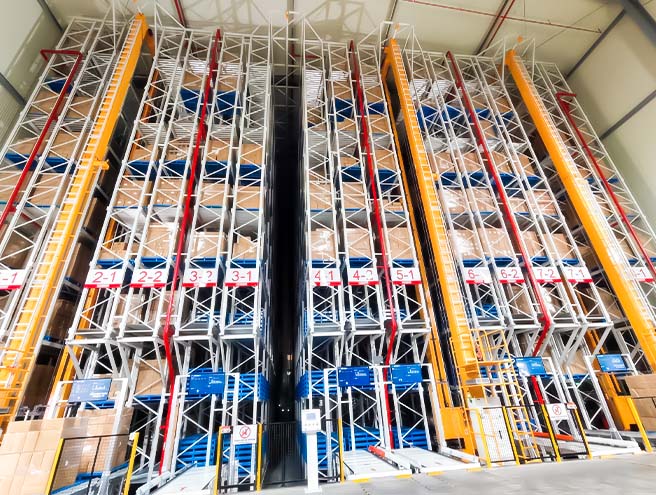
E-commerce distribution centers, parcel warehouses, and food and beverage warehouses often handle large inventory volumes and many SKUs. A stacker crane ASRS can use vertical space more effectively, allowing more goods to be stored within a smaller floor area. Depending on the warehouse layout, it can reduce the required floor space by around 50%–70% compared with conventional storage methods.
2. Warehouses Supporting Production
Automotive parts factories, electronics manufacturers, and chemical material warehouses often need to store raw materials, work-in-progress goods, and finished products close to production areas. A stacker crane ASRS can connect storage with production lines, helping create a continuous flow from material supply to production and finished goods storage.
3. Warehouses with Strict Storage Requirements
Pharmaceutical, cold chain, and hazardous material warehouses often need tighter control over storage conditions and inventory. For example, pharmaceutical warehouses may need to meet GSP requirements, while cold storage facilities need to maintain a stable low-temperature environment. Automated storage can reduce manual handling and help maintain consistent storage conditions and clearer inventory records.
4. Large-Scale Batch Storage
Tobacco warehouses, building material warehouses, and third-party logistics facilities may need to handle large quantities of goods with relatively regular storage and retrieval patterns. Automated storage and retrieval can reduce repetitive manual work, improve storage density, and support more efficient handling of high-volume inventory.
Stacker Crane ASRS vs. Traditional Warehouse
Both automated and traditional warehouses have their own strengths and limitations. A stacker crane ASRS can provide higher storage density, more automated operations, and better inventory control, but it usually requires a higher initial investment and more detailed planning. Traditional warehouses are generally simpler and more flexible, but they rely more on manual work and make less use of vertical space.
The better choice depends on factors such as storage volume, available space, goods characteristics, operating requirements, and budget. The following points compare the two options in more detail.
1. Space Utilization
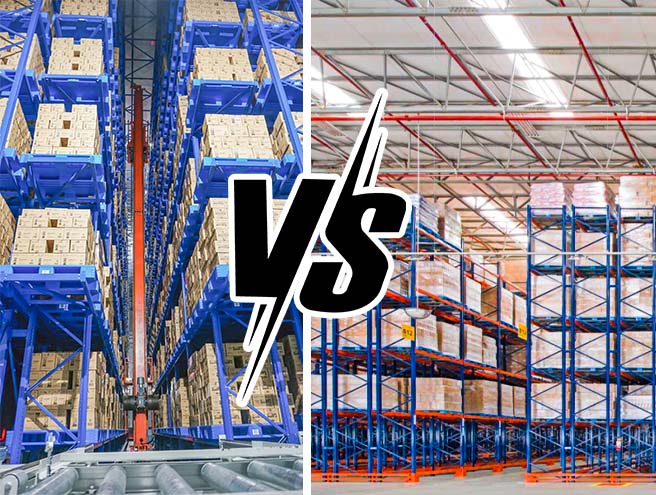
A stacker crane ASRS makes greater use of vertical space by storing goods across multiple rack levels. In suitable layouts, the storage capacity per unit of floor area can be several times higher than that of conventional storage. Rack heights of around 10–40 meters are possible depending on the project design.
Traditional warehouses mainly rely on floor-level storage and usually have much lower storage heights. As a result, more floor space may be needed to store the same amount of inventory.
2. Level of Automation
A stacker crane ASRS can automate many routine warehouse tasks, including receiving, storage, inventory checking, and retrieval. WMS and WCS software can also coordinate inventory information and equipment operations.
Traditional warehouses rely more heavily on workers for moving, picking, counting, and checking goods. Some may use conveyors or other basic equipment, but the overall level of automation is usually lower.
3. Operating Efficiency
A stacker crane ASRS can operate continuously, including during periods when fewer workers are available. Depending on the equipment, warehouse layout, and operating requirements, a single stacker crane may handle around 100–300 pallet movements per hour.
In a traditional warehouse, operating capacity depends more on the number of workers, forklift availability, travel distance, and operator experience. Manual operations may therefore become a limitation when storage and retrieval volumes increase.
4. Inventory Management
A stacker crane ASRS works with warehouse software to keep track of where goods are stored and when they move. It can support functions such as batch tracking, expiration date management, and inventory records, making it easier to trace goods and reduce manual recording errors.
In a traditional warehouse, inventory information may depend more on manual records and physical checks. This can make inventory counting and tracking more time-consuming, especially when the warehouse handles a large number of SKUs.
5. Initial Investment
A stacker crane ASRS usually requires a higher initial investment. The project may involve racks, stacker cranes, conveyors, control systems, software, electrical work, and building modifications.
A traditional warehouse generally has a lower starting cost because it may only require the warehouse building, basic racking, and manual or semi-automated handling equipment. This can make it a practical option for businesses with limited storage requirements or a smaller initial budget.
6. Operating Cost
Although a stacker crane ASRS costs more to build, it can reduce the amount of manual work required during daily operations. Lower labor requirements, more efficient use of space, and fewer manual handling steps can help reduce long-term operating costs.
Traditional warehouses usually require more workers for handling, picking, counting, and other routine tasks. Labor costs can therefore become a larger part of operating expenses as the warehouse grows.
7. Load and Product Suitability
A stacker crane ASRS works best with standardized loads, such as pallets or containers with relatively consistent dimensions and weights. Standardized loads make it easier for the equipment to handle and store goods automatically.
Traditional warehouses are generally more flexible when handling goods with different shapes, sizes, or weights. They can be more suitable for irregular products, loose items, oversized goods, or operations where storage requirements change frequently.
8. Operational Flexibility
A stacker crane ASRS requires careful planning because the rack layout, aisles, storage locations, and equipment are designed as an integrated system. Major changes to the layout after installation can be more difficult and costly.
Traditional warehouses are usually easier to adjust. Racks, storage areas, and operating zones can often be changed as product types or storage needs change, making them suitable for businesses with highly variable inventory.
9. Construction Time
A stacker crane ASRS generally takes longer to build because the project involves system design, rack manufacturing, equipment installation, software integration, testing, and commissioning. Depending on the project size and complexity, the full process may take several months.
A traditional warehouse usually has a shorter setup period. Once the building and basic facilities are ready, racking and manual handling equipment can be installed and put into use relatively quickly.
10. Maintenance Requirements
A stacker crane ASRS requires regular maintenance for its mechanical, electrical, control, and software components. Specialized technicians may be needed for troubleshooting and major repairs, and replacing some key components can be costly.
Traditional warehouses generally have simpler equipment and fewer automated components to maintain. Routine inspections and basic maintenance can often be handled by warehouse staff or general maintenance personnel.
11. Best-Fit Applications
A stacker crane ASRS is generally better suited to warehouses with high storage volumes, high throughput, standardized goods, limited floor space, or a strong need for automation. Common applications include e-commerce, automotive parts, pharmaceuticals, food and beverage, and cold storage.
Traditional warehouses can be a better fit for smaller inventory volumes, frequently changing storage requirements, irregular goods, or operations that need greater flexibility. Examples include small factory material stores, spare parts warehouses, and facilities handling a wide range of non-standard goods.
E-commerce Stacker Crane Case
1. Project Background
A 10,000 m² e-commerce warehouse was designed to handle more than 150,000 SKUs, an average of 80,000 orders per day, and peak volumes of up to 250,000 orders during major promotions. The project focused on maximizing storage space, automating the warehouse process, and adapting flexibly to changing order volumes.
The solution connects receiving, storage, picking, sorting, and shipping into an integrated workflow, allowing the warehouse to handle high-volume orders more efficiently.
2. Key Results
- Storage Capacity: The warehouse stores up to 10,000 standard pallets and 8,000 totes, supporting more than 150,000 SKUs. Storage capacity per unit of floor area is about 4 times higher than a traditional floor-level warehouse.
- Operating Efficiency: The WCS optimizes equipment scheduling across the warehouse. Eight pallet stacker cranes handle an average of 6,400 full-pallet tasks per day, while four tote stacker cranes complete around 4,800 piece-picking replenishment tasks per day. The system supports an average of 80,000 orders per day and peak volumes of 250,000 orders. Full-pallet inbound and outbound operations reach 100 pallets per hour, while piece-picking reaches 2,800 items per hour, representing a 5.5-fold improvement over the traditional warehouse.
- Operating Cost: The required workforce was reduced from 80 people to 12, with the remaining staff mainly responsible for system monitoring and exception handling. Annual labor costs decreased by 70%, while inventory accuracy reached 99.9% and the goods damage rate fell below 0.05%.
- Order Fulfillment Time: The average time from order placement to shipment was reduced to 40 minutes. The coverage of time-definite delivery services increased by 30%, while customer satisfaction improved by 25%.
Conclusion
A stacker crane ASRS can help businesses overcome storage limitations by making better use of vertical space. More than a storage solution, it combines mechanical equipment, electrical controls, software, and warehouse management technologies to connect storage and material handling into one coordinated operation. As automation technology continues to develop, these systems are becoming more flexible and cost-effective for different warehouse needs.
HUAYIDE provides automated storage and retrieval systems and integrated warehouse solutions, covering engineering consulting, system design and manufacturing, installation and implementation, training, commissioning, and after-sales service. With extensive experience in stacker crane warehouse projects, HUAYIDE helps customers build practical and cost-effective storage solutions based on their actual requirements.
Looking for a stacker crane ASRS for your warehouse? Contact HUAYIDE for a free consultation and discuss your warehouse requirements with our team.