Introduction
A stacker crane is a key piece of equipment in an automated warehouse. Over the past 50 years, it has evolved from manually operated equipment to fully automated systems, becoming faster, safer, and capable of reaching heights of up to 40 meters. By storing goods vertically and reducing manual handling, an automated stacker helps businesses make better use of warehouse space, lower labor needs, and improve inventory management.
So, what types of stacker cranes are available, how do they work, and which type is right for your warehouse? This guide covers the main types, components, applications, and benefits of automated stacker cranes.
What Is an Automated Stacker?
Simply put, an automated stacker is like a smart forklift for an automated warehouse. Instead of being driven by an operator, it follows system instructions to automatically:
- Move to the assigned storage location
- Lift and position the load
- Extend its forks to pick up or place goods
- Complete storage and retrieval tasks
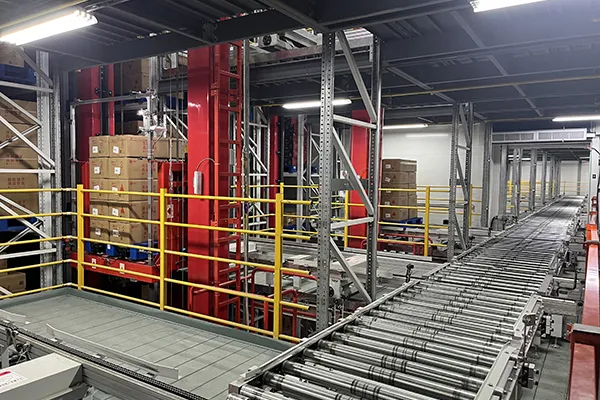
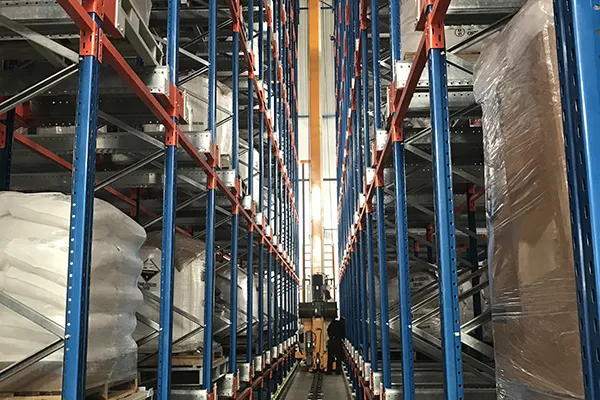
An automated stacker, also known as an ASRS crane, usually runs between two rows of high-level racking. A complete ASRS typically includes:
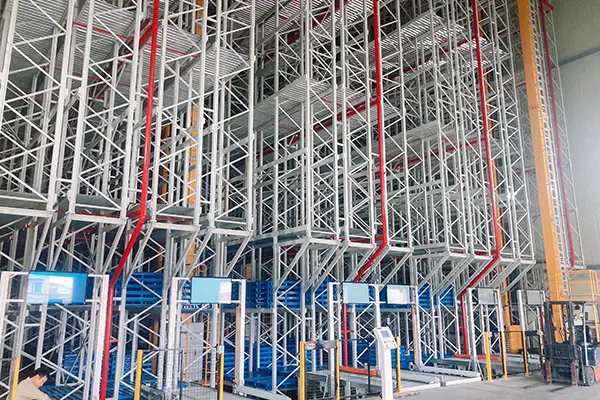
- High-level racking: Provides vertical storage space for goods.
- ASRS crane: Automatically moves goods between storage locations.
- Conveyors: Transfer goods between the storage area and inbound or outbound stations.
- WMS: Manages inventory information, including what is stored, where it is stored, and when it needs to be retrieved.
- WCS: Controls equipment movements and assigns tasks to the automated stacker and other equipment.
The WMS manages inventory information, such as what the goods are, where they are stored, and when they need to be retrieved. The WCS controls the movement of equipment, such as where the automated stacker should go and what task it should perform.
Types of Stacker Cranes
Stacker cranes can be classified in several ways depending on their structure, the type of goods they handle, and how they move within the warehouse.
- By structure: Single-column and double-column stacker cranes.
- By application: Pallet stacker cranes, tote stacker cranes, and customized stacker cranes for specific industries or applications.
- By rail configuration: Straight-rail, curved-rail, transfer-rail, and branch-rail stacker cranes.
1. Single-Column Stacker Crane
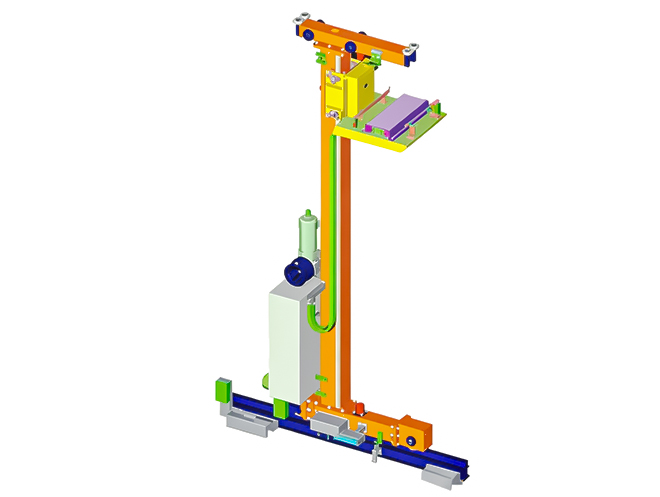
A single-column stacker crane uses one vertical column to support the load platform and lifting system. Its lightweight structure makes it suitable for lighter loads and relatively lower storage heights.
| Specification | Typical Range |
| Load capacity | Up to 1.5 tons |
| Lifting height | Up to 16 meters |
| Structure | Single column |
| Typical goods | Totes and small items |
Key advantages:
- Lightweight and flexible structure
- Easy to install
- Relatively low energy consumption
- Suitable for short-distance handling
Best suited for:
- Electronic components
- Pharmaceutical products
- Small items
- ASRS totes and other lightweight goods
2. Double-Column Stacker Crane
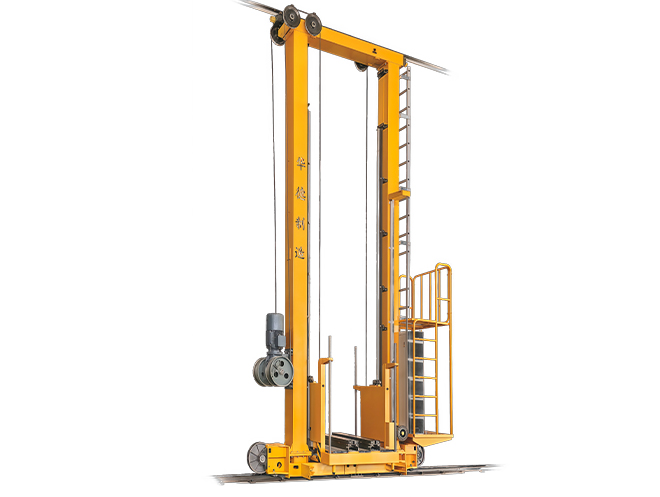
A double-column stacker crane uses two vertical columns connected by top and bottom beams to form a strong and stable frame. Compared with a single-column design, it is better suited for heavier loads and higher storage applications.
| Specification | Typical Range |
| Structure | Double column |
| Load capacity | Up to 5 tons, with higher capacities available when required |
| Lifting height | Suitable for different storage heights |
| Typical goods | Pallets and heavy loads |
Key advantages:
- Strong and stable structure
- Good resistance to wear and impact
- Long service life
- Suitable for heavy-duty storage operations
Typical applications:
- Manufacturing raw materials
- Finished-product pallets
- Automotive glass
- Machinery components
- Other heavy palletized goods
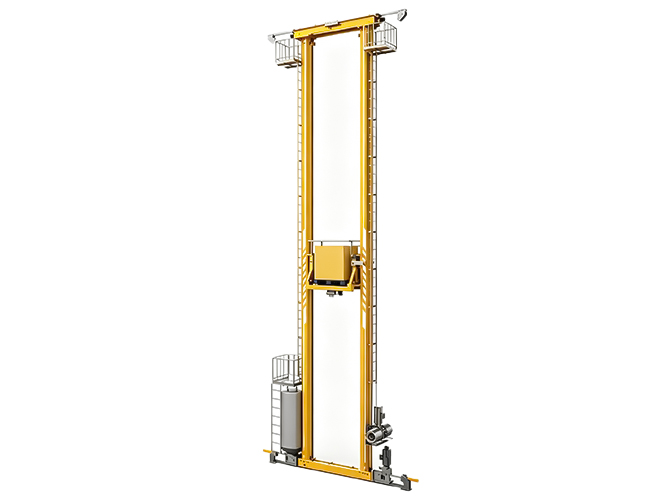
3. Pallet Stacker Crane
The pallet stacker crane is one of the most widely used types of automated stackers. It is designed to handle palletized goods and is commonly used in Pallet ASRS for high-density storage and automated material handling.
Key advantages:
- Suitable for standardized palletized goods
- Supports large-volume storage
- Enables automated storage and retrieval
- Works well with high-bay racking
Common industries:
- Automotive manufacturing
- New energy
- Machinery manufacturing
- Home appliance manufacturing
4. Tote Stacker Crane
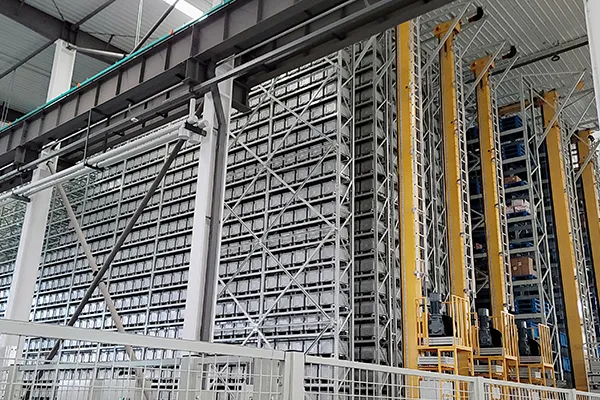
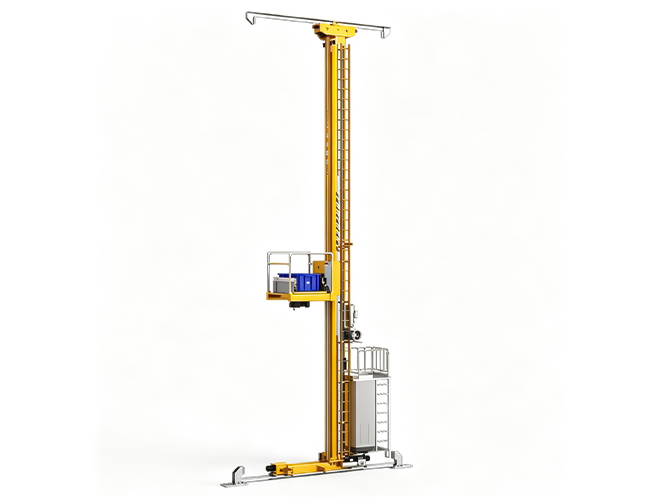
A tote stacker crane is designed for storing and handling totes, bins, and other small items. Compared with pallet-based systems, it focuses more on high-density storage, fast retrieval, and accurate order picking.
Key advantages:
- High-density storage for small items
- Fast storage and retrieval
- Accurate picking and inventory handling
- Efficient use of vertical warehouse space
Typical applications:
- Pharmaceutical warehouses
- Electronics manufacturing
- Precision components
- ASRS totes and other small-item storage
5. High-Bay High-Speed Stacker Crane
High-bay high-speed stacker cranes are mainly used in large automated warehouses where storage height and operating efficiency are important.
Key advantages:
- Higher storage heights
- Faster travel and lifting speeds
- Higher level of automation
- Better use of vertical warehouse space
Typical applications:
- Large manufacturing facilities
- Distribution centers
- Large-scale automated warehouses
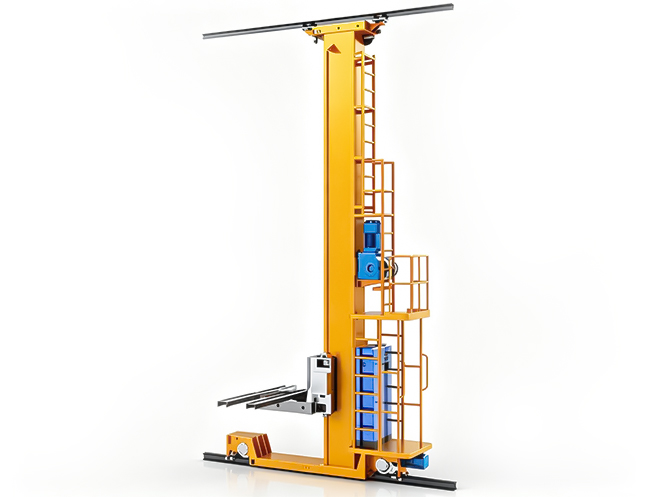
6. Cold-Storage Stacker Crane
A cold-storage stacker crane is designed for automated warehouses operating in low-temperature and high-humidity environments. The equipment is specially adapted to reduce the impact of low temperatures, frost, and condensation on its operation.
Key advantages:
- Designed for low-temperature and high-humidity environments
- Key components are adapted for cold-storage operation
- Stable operation in ultra-low-temperature warehouses
- Can work with double-deep storage to increase storage density
Typical applications:
- Seafood warehouses
- Meat storage
- Frozen food warehouses
- Pharmaceutical cold storage
- High-bay cold storage warehouses
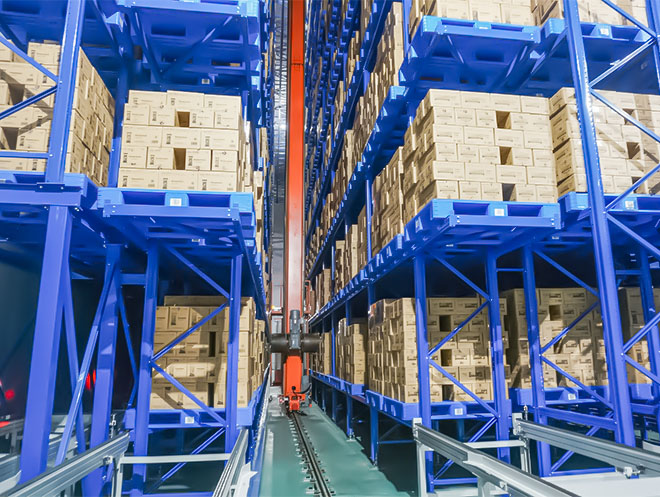
7. Explosion-Proof Stacker Crane
An explosion-proof stacker crane is designed for warehouses where flammable, explosive, or other hazardous goods require specialized safety measures. Its electrical, drive, and control systems can be configured with explosion-proof technologies to reduce the risk of sparks and other ignition sources.
Key advantages:
- Explosion-proof design for hazardous environments
- Explosion-proof and intrinsically safe technologies can be applied to key systems
- Protection against potential sparks and static electricity
- Suitable for automated storage of hazardous goods
Typical applications:
- Chemical warehouses
- Pharmaceutical warehouses
- Paint and coating storage
- Fuel and oil storage
- Alcohol and other flammable-material warehouses
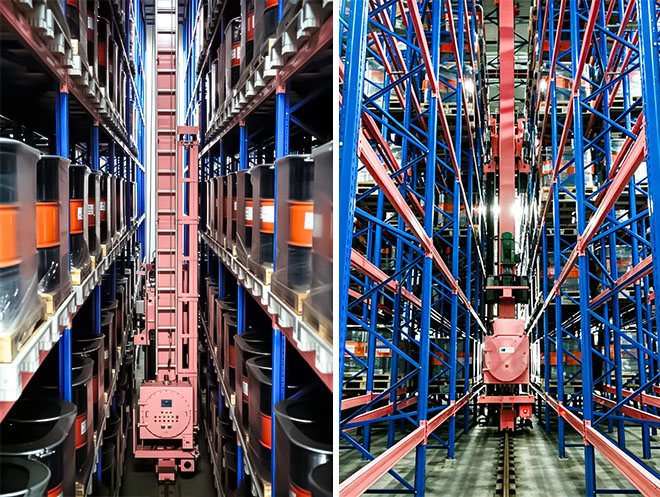
8. Ultra-High Stacker Crane
An ultra-high stacker crane is designed for high-bay automated warehouses where maximum use of vertical space is required. It can operate at heights of 40 meters or more, depending on the warehouse design and project requirements.
Key advantages:
- Supports storage heights of 40 meters or more
- Reinforced structure for stable operation at great heights
- High positioning accuracy
- Efficient lifting and handling at high elevations
- Maximizes the use of vertical warehouse space
Typical applications:
- Large industrial warehouses
- High-density automated warehouses
- High-bay cold storage
- High-bay chemical warehouses
- Other projects with high vertical storage requirements
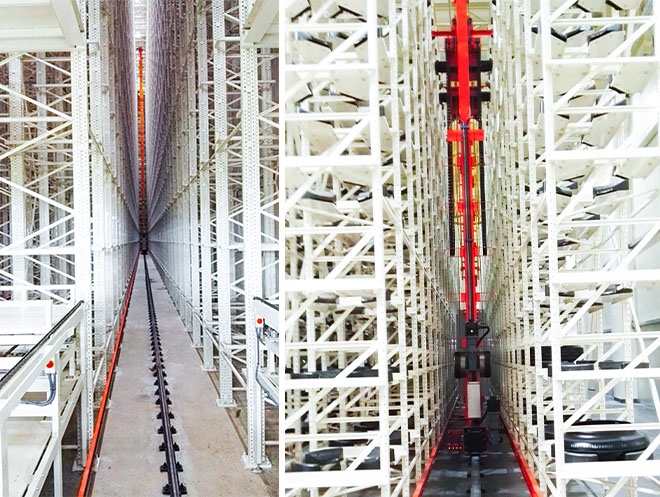
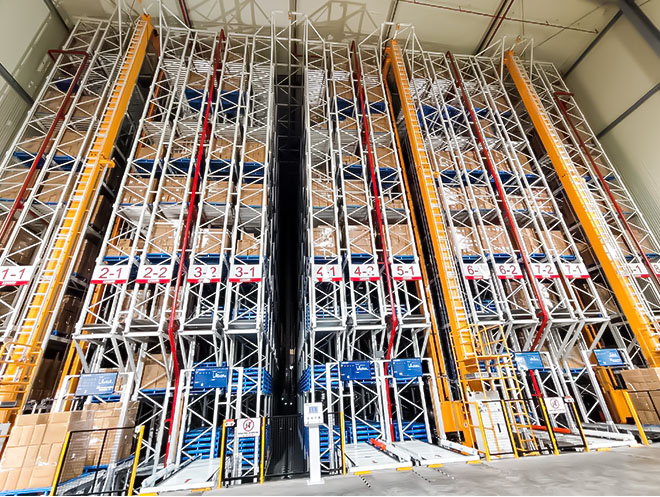
9. Straight-Rail Stacker Crane
A straight-rail stacker crane runs along a straight rail inside the warehouse aisle. Its stable structure and precise movement make it a common choice for standard high-bay automated warehouses.
Key advantages:
- Stable and smooth operation
- Simple and reliable movement
- Strong load-bearing capability
- Suitable for high-level and heavy-load storage
- Supports consistent warehouse operations
Typical applications:
- Standardized automated warehouses
- Manufacturing facilities
- Chemical warehouses
- Distribution centers
- High-throughput storage operations
10. Curved-Rail Stacker Crane
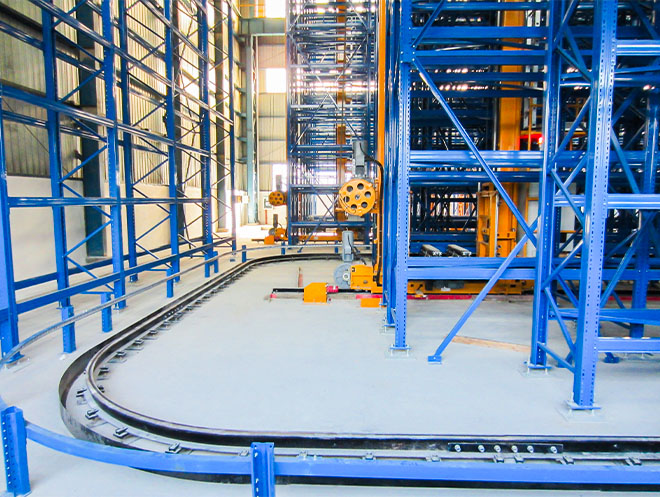
A curved-rail stacker crane can move along curved rails, allowing it to serve warehouses with non-standard layouts or curved aisles. This design provides more flexibility when the warehouse layout does not allow for a conventional straight aisle.
Key advantages:
- Can operate along curved warehouse aisles
- Adapts to irregular warehouse layouts
- Provides greater flexibility in equipment movement
- Helps make better use of available warehouse space
Typical applications:
- Warehouses with irregular layouts
- Facilities with curved aisles
- Storage projects where flexible equipment movement is required
11. Transfer-Rail Stacker Crane
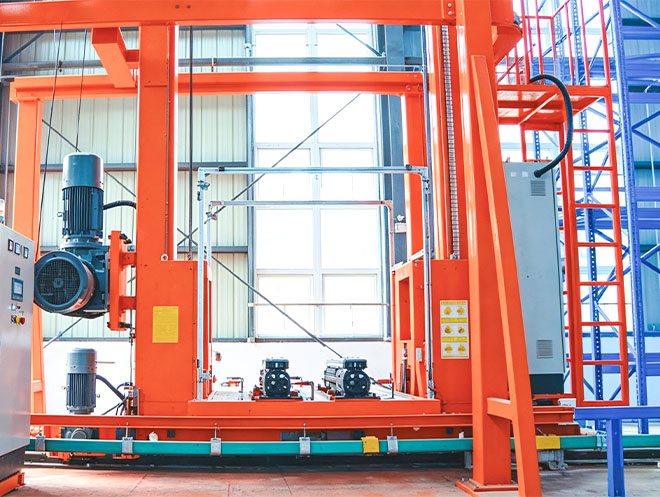
A transfer-rail stacker crane can move between different warehouse aisles through a rail transfer system. This allows one automated stacker to serve multiple aisles instead of assigning one crane to each aisle.
Key advantages:
- Serves multiple storage aisles
- Reduces the number of stacker cranes required
- Lowers equipment investment and maintenance costs
- Provides flexible storage operations
Typical applications:
- Multi-aisle warehouses
- Large-span storage facilities
- Warehouses with moderate throughput requirements
- Projects where equipment investment needs to be controlled
12. Branch-Rail Stacker Crane
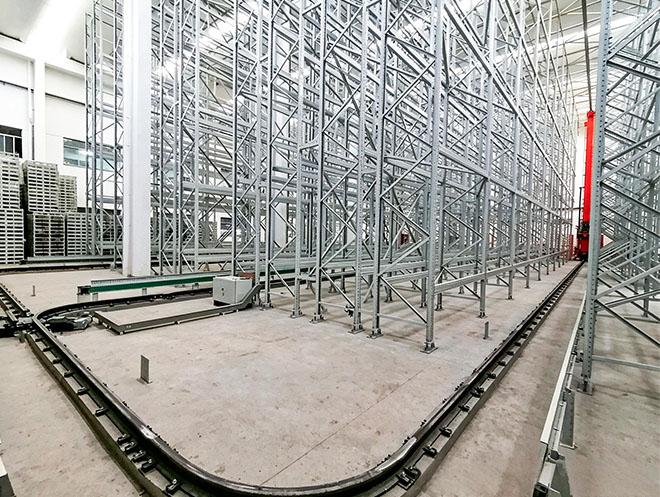
A branch-rail stacker crane uses a rail system with multiple branches, allowing the automated stacker to move between different aisles and storage areas. This gives it a wider operating range and makes it suitable for warehouses with complex layouts and multiple storage zones.
Key advantages:
- Flexible movement between multiple aisles
- Covers a wider storage area
- Supports efficient movement of goods across different zones
- Suitable for high-density storage and complex warehouse operations
Typical applications:
- Large manufacturing facilities
- Chemical warehouses
- Large-scale distribution centers
- Warehouses with multiple aisle branches and complex material flows
Main Components of a Stacker Crane
An automated stacker consists of several key components that work together to move and store goods accurately.
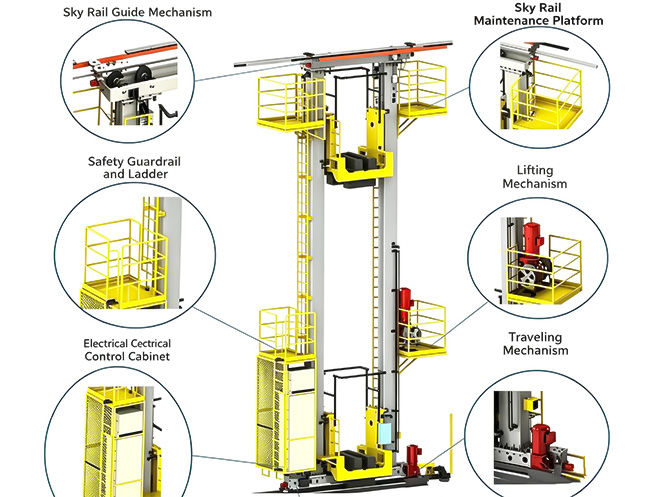
1. Frame System
The frame is the main structural part of the stacker crane. It supports the lifting platform, load, and travel system. Since stacker cranes can operate at heights of 20 meters or more, a strong and stable frame is essential for safe operation.
2. Travel Mechanism
The travel mechanism moves the stacker crane horizontally along the warehouse aisle. It allows the crane to reach the required storage location accurately and smoothly.
3. Lifting Mechanism
The lifting mechanism moves goods vertically between different storage levels. For example, when a pallet needs to be stored 15 meters above the floor, the lifting system moves the load to the required height.
4. Fork Mechanism
The fork mechanism directly handles the goods. It extends into the rack to pick up or place:
- Pallets
- Totes
Depending on the storage requirements, the fork system can be configured for:
- Single-deep storage
- Double-deep storage
Double-deep storage can further increase storage density when the warehouse layout and operating requirements allow it.
Why Are More Companies Choosing Stacker Cranes?
More companies are choosing automated stackers because they can improve storage capacity, reduce manual handling, and make inventory management more accurate.
1. Increase Warehouse Storage Capacity
Traditional warehouses need wider aisles for forklifts and often cannot make full use of vertical space. An automated stacker can operate in narrow aisles and make better use of warehouse height.
This allows businesses to store more goods without increasing the warehouse footprint, which is especially valuable when floor space is limited or expensive.
2. Reduce Dependence on Manual Labor
Traditional warehouses often rely on:
- Forklift operators
- Material handling workers
- Warehouse staff
An automated warehouse uses system-controlled equipment to handle repetitive storage and retrieval tasks, reducing manual work and improving operational efficiency.
3. Improve Inventory Accuracy
Manual warehouse operations can lead to:
- Difficulty locating goods
- Inaccurate inventory records
- Poor storage location management
When an automated stacker works with a WMS, the system can automatically record storage and retrieval activities, helping businesses locate goods more accurately and check inventory information in real time.
Who Should Use an Automated Stacker?
An automated stacker is not necessary for every warehouse. It is particularly suitable for businesses with high inventory volumes, limited space, or a strong need for efficient inventory management.
An automated stacker may be a good fit if your warehouse has:
- Limited floor space but high inventory volumes: Use vertical space to increase storage capacity without expanding the warehouse footprint.
- Standardized products: Ideal for palletized goods, totes, and products produced or handled in large batches.
- Regular inbound and outbound operations: Suitable for businesses with relatively predictable production, storage, and distribution flows.
- High inventory management requirements: Particularly useful in industries such as new energy, pharmaceuticals, food, and automotive parts, where accurate inventory tracking is important.
Conclusion
An automated stacker is more than a replacement for manual handling. It helps businesses solve a key warehouse challenge: how to increase storage capacity and improve efficiency when floor space is limited.
By making better use of vertical space, automating storage and retrieval, and working with warehouse management systems, stacker cranes can help transform traditional warehouses into more efficient automated logistics centers.
For businesses with high inventory volumes, limited warehouse space, or growing automation needs, an automated stacker can be an effective solution for upgrading warehouse operations.
HUAYIDE provides one-stop warehouse solutions, including racking systems, automated equipment, stacker cranes, and shuttle systems. We welcome companies from different industries worldwide to contact us for a customized ASRS stacker crane solution and other warehouse automation solutions.
Frequently Asked Questions About Automated Stackers
1. What is an automated stacker?
An automated stacker is an automated storage and retrieval machine used to move goods between storage locations and inbound or outbound stations. It typically runs between high-level racks and is controlled by a WCS based on tasks from the WMS.
2. What is the difference between an automated stacker and an ASRS crane?
An automated stacker and an ASRS crane generally refer to the same type of automated warehouse equipment. “Stacker crane” describes the equipment itself, while “ASRS crane” emphasizes its role in an automated storage and retrieval system.
3. What is the difference between a single-column and double-column stacker crane?
The main difference is their structural design and typical load capacity. A single-column stacker crane uses one vertical column and is generally suitable for lighter loads and lower storage heights. A double-column stacker crane uses two columns, providing greater structural strength for heavier loads and higher storage applications.
4. What is the difference between a pallet stacker crane and a tote stacker crane?
A pallet stacker crane is designed to handle palletized goods and is commonly used for large-volume storage in manufacturing and distribution warehouses. A tote stacker crane is designed for totes, bins, and small items, making it more suitable for high-density storage and picking operations.
5. How high can an automated stacker reach?
The maximum lifting height depends on the warehouse design, load requirements, equipment configuration, and safety requirements. Modern high-bay stacker cranes can reach around 40 meters or more in suitable projects.
6. Can stacker cranes be used in cold storage warehouses?
Yes. Cold-storage stacker cranes can be specially configured for low-temperature and high-humidity environments. They are suitable for applications such as frozen food, seafood, meat, and pharmaceutical cold storage, including high-bay cold storage facilities.
7. Can one stacker crane serve multiple warehouse aisles?
Yes. Certain rail configurations, such as transfer-rail and branch-rail systems, allow a stacker crane to move between multiple aisles or storage areas. This can reduce the number of cranes required when the warehouse does not require extremely high throughput in every aisle.
8. How do I choose the right automated stacker for my warehouse?
The right automated stacker depends on several factors, including:
- Type of goods: Pallets, totes, bins, or other loads
- Load weight and dimensions: Determines the required handling capacity
- Storage height: Affects the crane structure and lifting system
- Warehouse layout: Determines the suitable rail and aisle configuration
- Inbound and outbound volume: Determines the required operating speed and capacity
- Operating environment: Such as normal temperature, cold storage, or hazardous areas
- Storage density requirements: Determines whether single-deep, double-deep, or other configurations are appropriate
A detailed warehouse assessment is recommended before selecting the equipment and system configuration.