Introduction
Warehouse space is getting more expensive, while businesses need to store more goods and move them faster. Using vertical space and automation has become an effective way to improve storage capacity and warehouse efficiency.
Today, ASRS warehouses are not limited to stacker cranes. Shuttle systems, mobile robots, and other automated storage technologies can also be used for different warehouse requirements.
This guide explains what an ASRS warehouse is, the main ways to classify it, and the common automated storage technologies available today.
What Is an ASRS Warehouse?
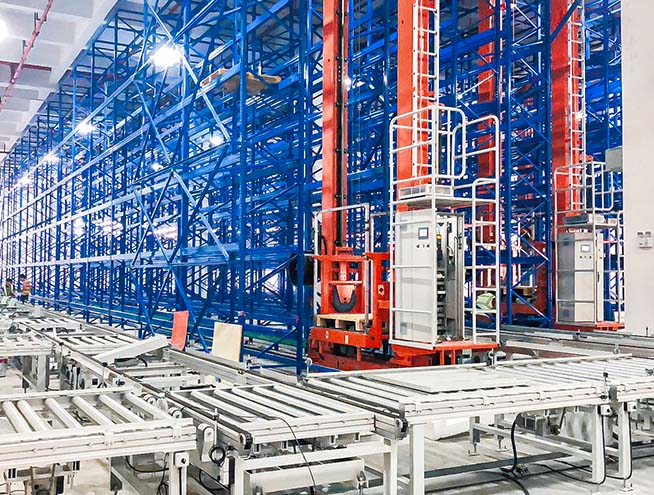
An ASRS warehouse uses automated equipment to store and retrieve goods with limited manual handling. The system can support processes such as receiving, putaway, storage, picking, and shipping.
Traditional ASRS solutions mainly used stacker cranes. Today, shuttle systems, mobile robots, and other automated equipment have expanded the range of solutions available for different warehouse layouts and storage requirements.
At its core, an automated storage system has two basic parts:
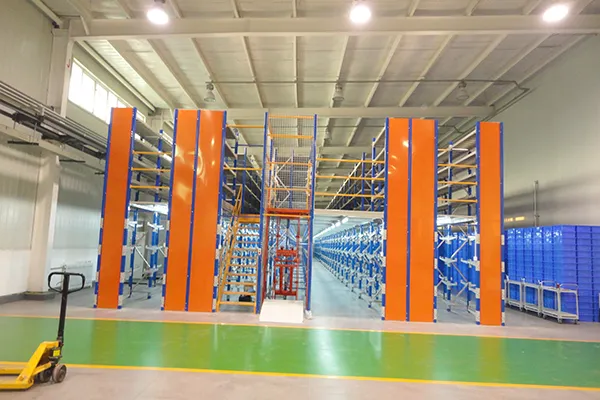
- Storage unit: Racks or other storage structures that hold pallets, totes, cartons, or other goods.
- Handling unit: Automated equipment that moves goods into and out of storage locations, such as stacker cranes, shuttle vehicles, or mobile robots.
The right configuration depends on factors such as warehouse height, load type, storage density, required throughput, SKU characteristics, and available space.
Classification of ASRS Warehouses
ASRS warehouses can be classified in several ways. A single project may belong to multiple categories at the same time. For example, a warehouse can be a rack-supported, high-bay, pallet-based, single-deep ASRS warehouse.
1. By the Relationship Between Racking and the Building
The first distinction is whether the racking also forms part of the building structure.
Rack-Supported ASRS Warehouse
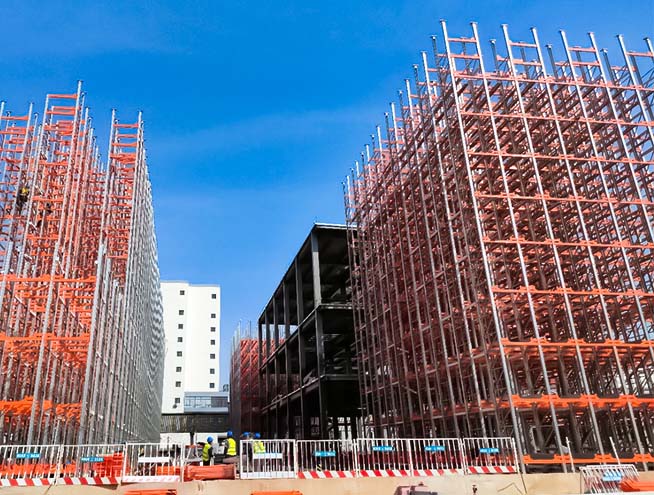
In a rack-supported warehouse, the racking supports not only the stored goods but also the building structure. The racks, roof, and walls are designed as an integrated structure.
Key characteristics:
- Makes better use of vertical space and reduces the need for separate building columns.
- Suitable for high-bay and large-capacity warehouses.
- Requires close coordination between rack design, construction, and automation equipment.
- Layout changes are more difficult after construction.
Rack-supported warehouses are commonly used when the project requires a large storage capacity and a high building height, typically above 15 meters.
Building-Supported ASRS Warehouse
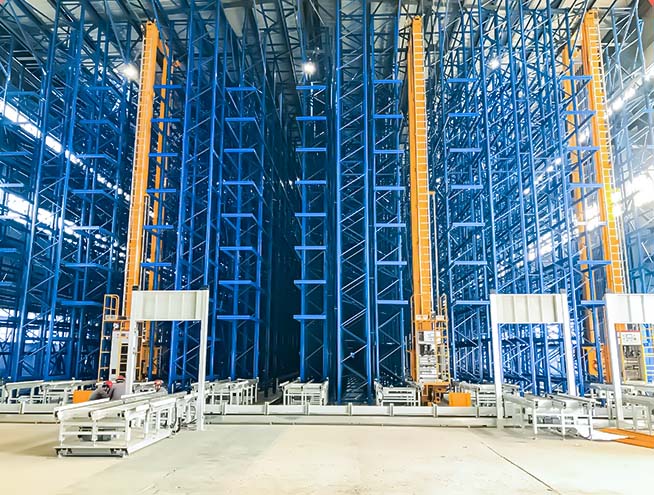
In a building-supported warehouse, the racking and building structure are designed separately. The racks are installed inside an existing or independently constructed warehouse.
Key characteristics:
- Easier to adapt to existing buildings.
- Racking and building construction can be handled more independently.
- Provides greater flexibility for warehouse modifications.
- Commonly used for standard warehouse automation projects.
This configuration is often suitable when a company wants to automate an existing facility or needs more flexibility for future changes.
2. By Warehouse Height
Warehouse height directly affects storage capacity, equipment selection, construction requirements, and investment. ASRS warehouses can generally be divided into three height ranges.
Low-Bay ASRS Warehouse
Typically below 5 meters.
Low-bay systems have relatively lower construction requirements and can work well in buildings with limited height. They are often considered for existing buildings, temporary storage, or buffer areas where extreme storage density is not the main goal.
Mid-Bay ASRS Warehouse
Typically 5–15 meters high.
This is a common range for many manufacturing and commercial warehouses. It provides a practical balance between storage capacity, equipment investment, and building requirements.
High-Bay ASRS Warehouse
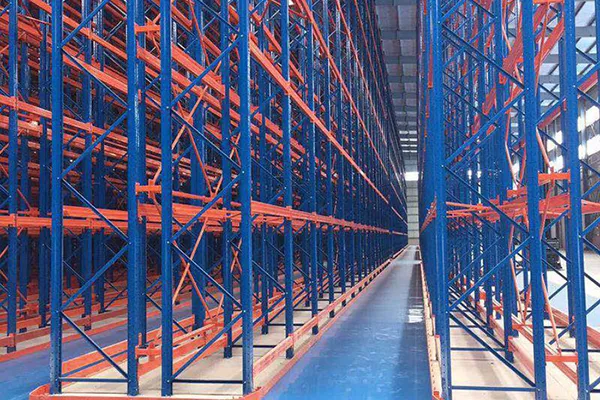
Typically above 15 meters, with some systems reaching 40 meters or more.
High-bay storage makes greater use of vertical space and can provide very high storage density. However, taller warehouses require greater attention to foundations, building structure, equipment accuracy, fire protection, and overall system coordination.
3. By Storage Structure
The storage structure also affects how goods are accessed and how much space the warehouse can use.
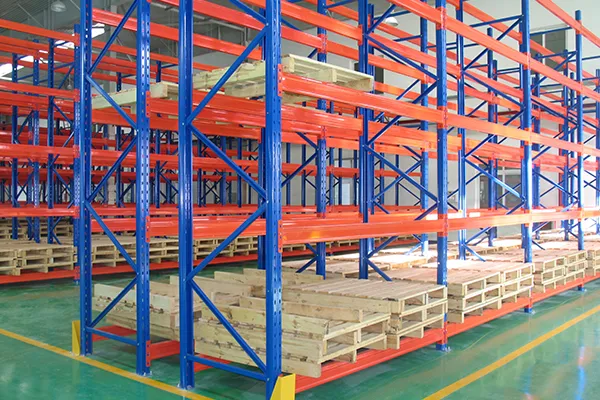
Single-Deep Racking
Each storage position holds one load unit at a given depth. Goods can be accessed directly from the aisle, making the layout simple and flexible.
This configuration is suitable when accessibility and SKU variety are more important than maximum storage density.
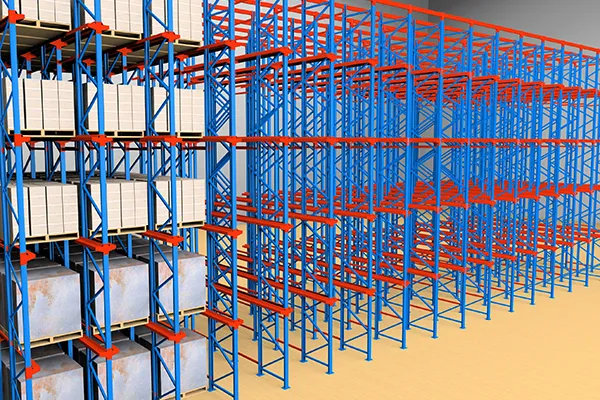
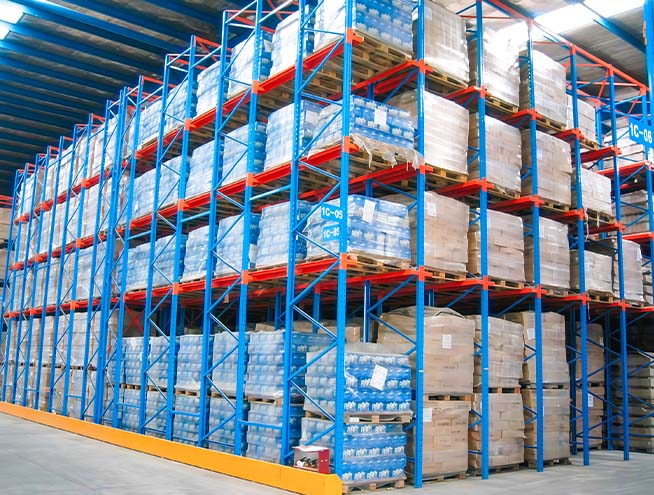
Drive-In / Deep-Lane Storage
Storage lanes extend into the rack structure, allowing goods to be stored several positions deep. Depending on the configuration, goods may follow LIFO or FIFO principles.
This design provides high storage density and is particularly useful for warehouses handling large quantities of relatively few SKUs.
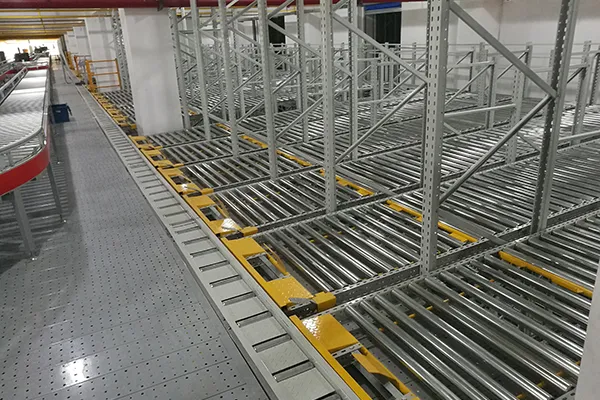
Shuttle Racking
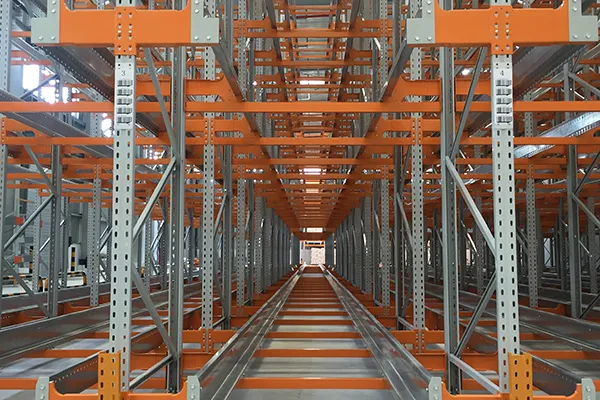
Shuttle racking uses automated shuttle vehicles to move pallets along dedicated rails inside deep storage lanes. It can support multiple storage depths while reducing the space required for aisles.
It is commonly considered for high-density storage, including food, beverage, tobacco, chemical, and temperature-controlled warehouses.
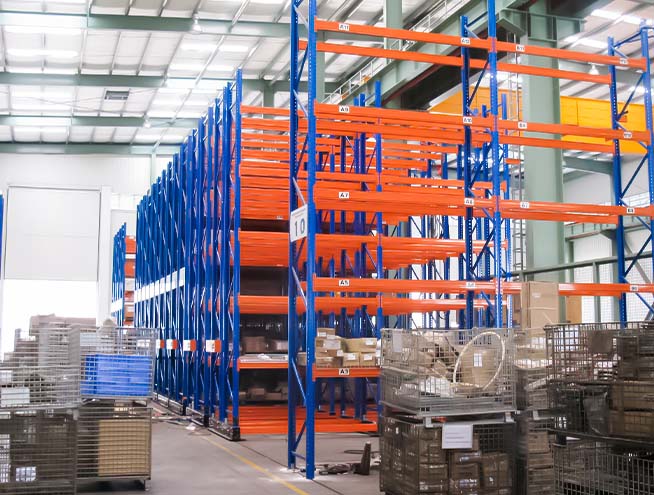
Mobile Racking
Mobile racks move along floor-mounted rails. When storage or retrieval is required, the racks open to create an operating aisle. When the aisle is not needed, the racks close together.
This approach can increase space utilization while maintaining direct access to the storage areas. It is suitable when storage density is important but extremely high throughput is not required.
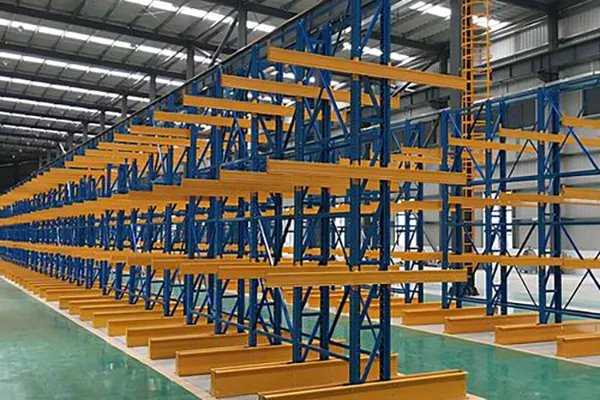
Cantilever Racking
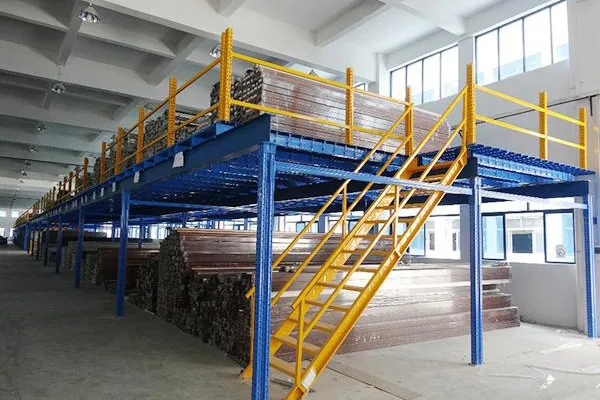
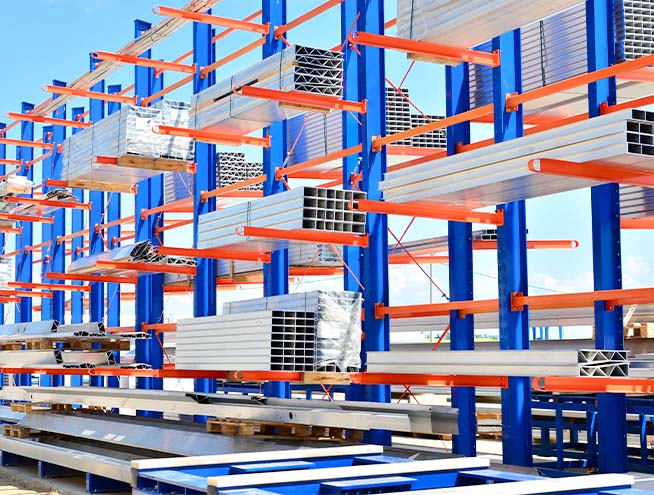
Cantilever racks use horizontal arms instead of conventional pallet beams. The open-front design makes them suitable for long, oversized, or irregularly shaped materials.
Typical applications include steel pipes, timber, profiles, tubes, and other long materials.
Carousel Storage
Carousel systems move storage locations to the operator rather than requiring the operator or handling equipment to travel to each location.
They can be configured as horizontal or vertical carousels and are mainly used for smaller goods, parts, and order-picking applications.
4. By Storage Unit
The type of goods being stored is another important factor when selecting an ASRS warehouse configuration. The main options include pallet-based, tote-based, and carrier-free storage.
Pallet ASRS
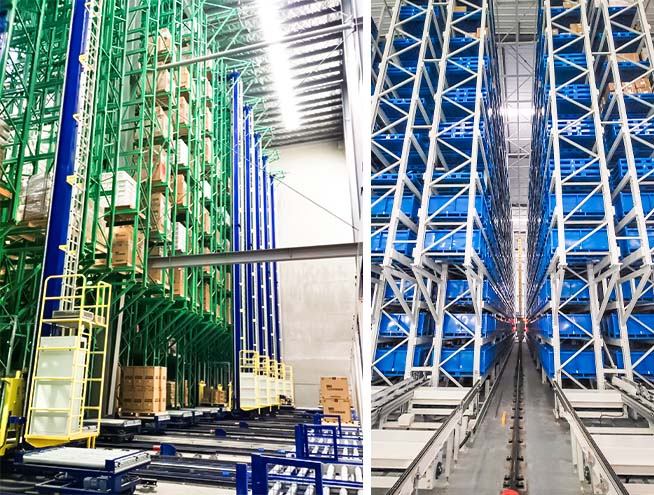
Pallet ASRS uses standard pallets as the main storage unit. Stacker cranes, shuttle vehicles, or other automated equipment move pallets between storage locations and input/output points.
It is suitable for raw materials, components, finished products, and other heavy or bulk goods.
Tote and Bin ASRS
Tote and bin ASRS uses plastic totes, cartons, or other small load carriers instead of pallets. Typical handling equipment includes Mini-Load AS/RS cranes, tote shuttles, and CTU or STU robots.
These systems are commonly used for small-item storage and order picking, especially in electronics, e-commerce, spare parts, and pharmaceutical warehouses.
Carrier-Free ASRS
Some automated storage systems store goods directly without using standard pallets or totes. Instead, the handling equipment uses customized forks, clamps, grippers, or other mechanisms to handle the goods.
This approach is usually designed for specific materials, such as coils, bars, tires, or solder paste containers, where standard load carriers are not practical.
5. By Storage Depth
Storage depth determines how many load units can be stored behind one another. It directly affects storage density and accessibility.
Single-Deep Storage
Each storage position contains one load unit in depth. The handling equipment can access each load directly from the aisle.
This configuration provides high accessibility and flexible SKU management, but uses more aisle space than deep-storage solutions.
Double-Deep Storage
Two load units are stored behind one another in each storage position. This increases storage density but requires the front load to be moved before the rear load can be accessed.
Double-deep storage can be useful when storage capacity is more important than direct access to every load.
Multi-Deep Storage
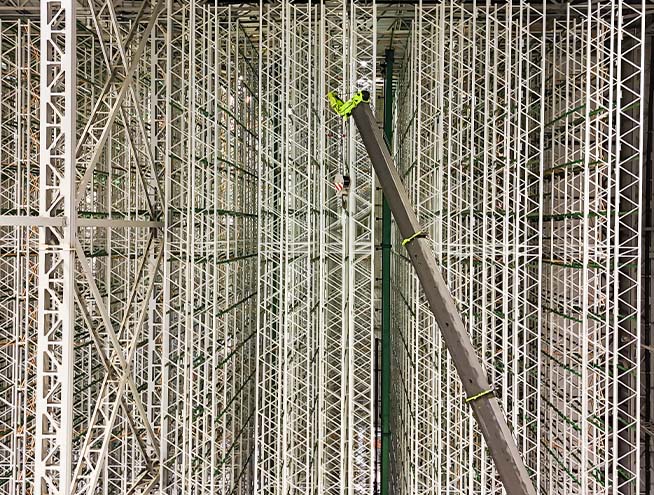
Multi-deep storage places more than two load units in a storage lane. Shuttle vehicles are commonly used to move goods deep into the rack.
This configuration can achieve very high storage density and is particularly suitable for high-volume, low-SKU warehouses where direct access to every pallet is not required.
ASRS Warehouse Types by Material Handling Technology
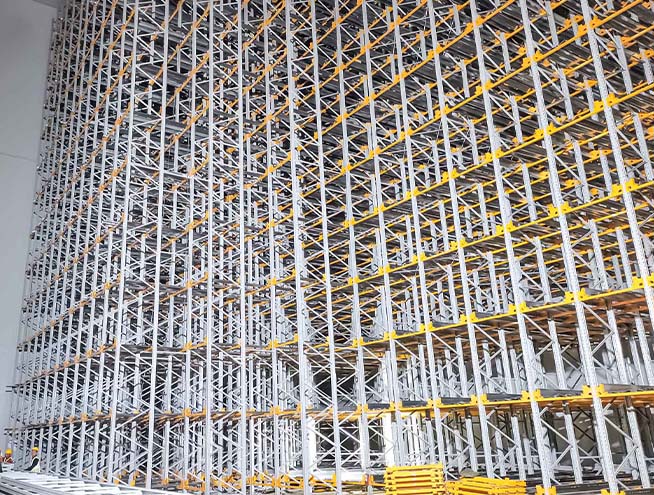
The handling technology is one of the most important factors that determines how an ASRS warehouse operates. Different technologies offer different combinations of storage density, throughput, flexibility, and investment.
Stacker Crane ASRS
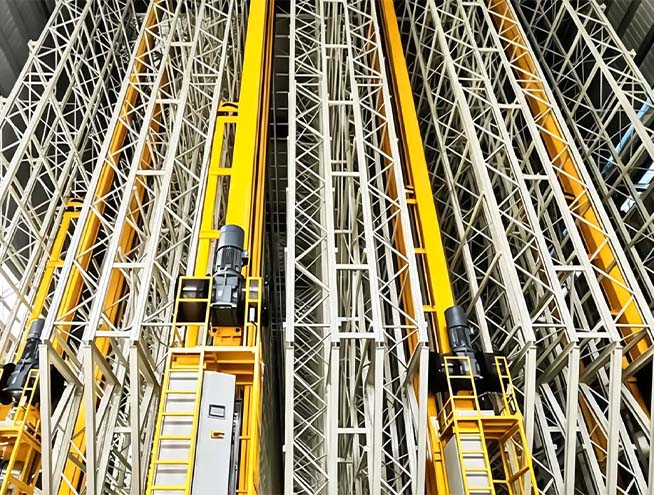
A stacker crane ASRS uses a crane that travels along the storage aisles to automatically store and retrieve pallets or totes. The crane moves horizontally and vertically and uses a load-handling device to place goods into or remove them from storage locations.
It is one of the most established ASRS technologies and can support both high storage density and high throughput.
Common configurations include:
- Single-column or double-column stacker cranes
- Single-load or double-load handling
- Single-deep or double-deep storage
- Pallet stacker cranes or Mini-Load stacker cranes
Key advantages:
- High throughput with stable operation
- Suitable for different load sizes and weights
- Can support high-bay warehouses up to around 40 meters or more
- Well suited to large-scale and standardized storage
Main limitation:
The system has a relatively fixed layout. Changing aisle positions or significantly expanding the storage structure after installation can be difficult.
Typical applications: Manufacturing plants, distribution centers, cold storage, food and beverage warehouses, and other large-scale storage facilities.
Shuttle ASRS
A shuttle ASRS uses automated shuttle vehicles to move goods inside deep storage lanes. Depending on the system design, the shuttle can operate within a single lane or move between different lanes and levels.
Common configurations include:
- Two-way shuttle: Moves forward and backward within one storage lane. Forklifts or lifts can be used to transfer the shuttle between lanes or levels.
- Mother-and-child shuttle: A mother shuttle transfers the child shuttle between lanes, while the child shuttle performs storage and retrieval inside the rack.
- Four-way shuttle: Moves in both longitudinal and transverse directions and can change lanes without requiring a fixed shuttle for every aisle.
Key advantages:
- Supports multi-deep, high-density storage
- Multiple shuttles can share the workload
- Capacity can be increased by adding more shuttles
- Works well with different warehouse layouts
Main limitations:
Shuttle systems require accurate rack installation and sophisticated control logic. The WCS/WMS also plays an important role in coordinating shuttle movements and storage locations.
Typical applications: Food and beverage, cold storage, retail, e-commerce, pharmaceutical distribution, and other warehouses requiring high-density and flexible storage.
AGV/AMR-Based ASRS
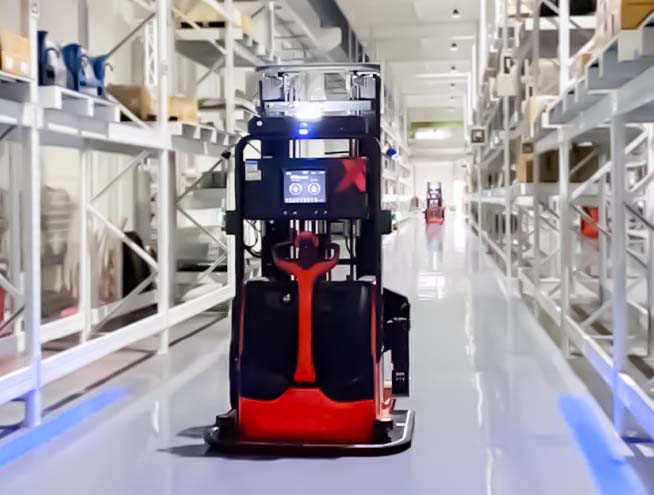
AGV- and AMR-based storage systems use autonomous mobile vehicles to move goods between storage locations and operating areas. Unlike rail-based systems, they do not require a fixed track throughout the storage area.
Typical vehicles include stacker AGVs, reach-truck AGVs, counterbalance AGVs, and three-way or omnidirectional forklifts.
Key advantages:
- Suitable for upgrading existing warehouses
- Flexible routing and layout changes
- Storage capacity and throughput can be expanded by adding more vehicles
- Lower dependence on fixed infrastructure
Main limitations:
Compared with stacker crane and shuttle systems, vehicle-based systems generally have lower throughput in very large, high-flow warehouses. Storage height is also more limited by vehicle stability and operating conditions.
Typical applications: Existing warehouse upgrades, medium-sized warehouses, and facilities where flexibility is more important than maximum throughput.
Carousel Storage Systems
Carousel systems move storage locations to the operator instead of requiring the operator to travel through the warehouse.
Two common configurations are:
- Horizontal carousel: Storage locations move horizontally in a loop and bring the required goods to the picking station.
- Vertical carousel: Storage carriers move vertically to bring the required item to an access opening.
These systems can reduce walking and picking time while making efficient use of floor or vertical space.
Typical applications: Small parts, spare parts, tools, documents, and other goods that require frequent picking from relatively compact storage areas.
Vertical Lift Modules
A vertical lift module (VLM) stores trays or carriers in two vertical columns. An automated extractor retrieves the required tray and brings it to an ergonomic access opening.
VLMs require relatively little floor space and make good use of vertical space. They are particularly suitable for small, high-value, or frequently accessed items.
Typical applications include tools, fixtures, electronic components, spare parts, and other small items used in manufacturing environments.
Tote and Bin Robot ASRS
Tote and bin robot systems are designed for small-item storage and high-frequency picking. Depending on the configuration, mobile robots can move beneath storage racks, lift totes, or access different storage levels.
Common technologies include CTU robots, STU systems, and other tote-handling robots.
These systems are well suited to warehouses with:
- Large numbers of SKUs
- Small or medium-sized items
- High picking frequency
- Limited floor space
- Frequent changes in inventory and order profiles
They are commonly used in e-commerce, spare parts, electronics, pharmaceuticals, and other small-item distribution operations.
Gantry Robot Storage Systems
Gantry robot systems use an overhead XYZ gantry to move a gripper or lifting device across the storage area. The robot can pick and place goods directly from defined storage positions.
This configuration offers high flexibility and can work with floor-stacked goods, dedicated racks, or customized storage structures.
Key advantages:
- Flexible storage layout
- Fast deployment for certain applications
- Suitable for heavy loads and changing storage layouts
- Can reduce the need for conventional fixed aisles
However, the system usually requires standardized load units and accurate positioning to ensure reliable picking and placement.
Typical applications: Heavy-duty storage, production materials, and applications where storage layouts need to change frequently.
Conclusion
ASRS warehouses now cover a wide range of technologies, from stacker crane and shuttle systems to mobile robots, tote systems, and specialized automated storage equipment.
The right solution depends on what you need to store, how much capacity you need, how fast goods must move, and how your warehouse may develop in the future.
If you are planning a new ASRS warehouse or upgrading an existing facility, evaluating these factors first can help you identify the right technology and system configuration before moving into detailed warehouse design. HUAYIDE provides integrated warehouse storage and automation solutions, from system planning and rack design to automated equipment integration, installation, and commissioning, helping customers build ASRS solutions that match their actual storage and operational requirements.