Introduction
To reduce local temperature differences in a cold storage warehouse, optimize the racking layout around airflow distribution. Maintain adequate clearance between racks, evaporators, walls, and ceilings; avoid blocking supply and return air paths; control storage height; and balance rack density across different zones. These measures help cold air circulate more evenly and reduce localized hot or cold spots.
Local temperature variation can occur even when the refrigeration system is operating normally. Poorly positioned racks and improperly stacked products can obstruct supply air, restrict return airflow, or create airflow dead zones, resulting in uneven temperatures throughout the storage area.
This article explains the key principles for cold storage racking layout, zone planning, and airflow management. It also provides practical layout recommendations for fresh produce, meat and frozen food, pharmaceutical, and e-commerce cold storage, along with common layout mistakes and methods for monitoring and optimizing temperature distribution.
Core Principles for Cold Storage Racking Layout
After cold air is discharged from the evaporator or air cooler, it needs a clear path to distribute throughout the storage area before returning to the refrigeration system. The clearance between racking, refrigeration equipment, walls, and adjacent racks plays an important role in maintaining effective airflow.
1. Maintain Adequate Clearance Around Evaporators
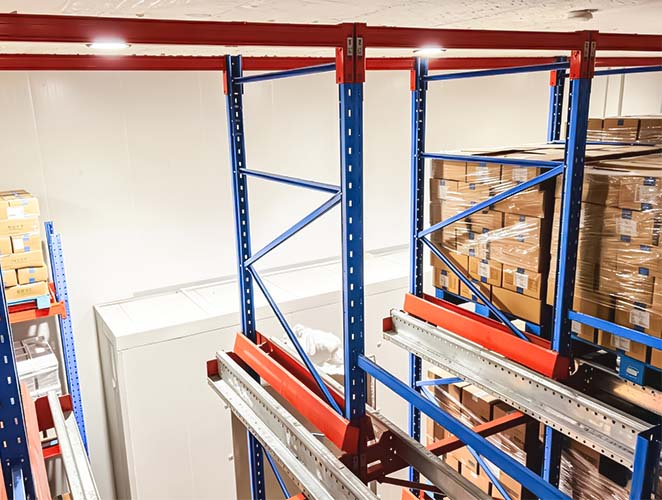
In a cold storage warehouse, storage racks should not be positioned directly in front of or too close to the evaporator discharge area. Depending on the refrigeration equipment, airflow pattern, and warehouse configuration, a 30–50 cm clearance can be used as a practical reference to reduce direct obstruction of the supply air.
For top-mounted evaporators in a cold storage warehouse, sufficient clearance should also be maintained between the top of the racking and the warehouse ceiling. A clearance of at least 50 cm can be used as a reference where appropriate, although the final requirement should follow the evaporator manufacturer’s specifications and the designed airflow pattern.
Adequate clearance allows cold air to travel further into the storage area instead of being blocked by the racks. This helps reduce excessive cooling near the evaporator and improves temperature consistency across the cold storage warehouse.
2. Leave Clearance Between Racks and Walls
Cold storage racks should generally not be installed directly against the walls. The building envelope can be affected by heat transfer and condensation, while insufficient clearance can restrict airflow around the perimeter of the storage area.
A 20–30 cm gap between the racking and the wall can provide additional space for air movement and reduce the risk of products being stored directly against temperature-sensitive wall surfaces.
The actual clearance should be determined based on the insulation structure, wall conditions, evaporator location, and airflow design of the cold storage warehouse.
3. Plan Adequate Aisle Width
Aisle configuration in a cold storage warehouse affects both material handling efficiency and airflow distribution. Narrow or poorly positioned aisles can restrict air movement between rack rows and create areas with limited circulation.
As a general layout reference, a main aisle of at least 80 cm and auxiliary aisles of at least 60 cm may be suitable for areas primarily intended for ventilation and inspection. However, these dimensions should not be treated as universal requirements for every cold storage warehouse.
Where forklifts, stacker cranes, pallet shuttles, or other material handling equipment are used, aisle width must be designed according to the equipment’s turning radius, load dimensions, operating clearance, and safety requirements.
The goal is to balance storage density, material handling efficiency, and airflow performance. In a well-planned cold storage warehouse, aisle width should support both daily operations and effective air circulation rather than simply being reduced to maximize storage space.
Zone Planning: Match Rack Layout with Cold Airflow
Cold air naturally moves downward, while warmer air tends to rise. In a cold storage warehouse, rack placement should take this airflow pattern into account. Poor zoning or excessive storage height can block cold air and create temperature differences between the upper and lower areas.
1. Group Products by Temperature Requirements
If a cold storage warehouse stores products with different temperature requirements, divide them into suitable storage zones instead of mixing everything together.
Products that require lower temperatures can be placed in areas with better cold-air coverage, while products with less demanding temperature requirements can be stored in other zones. The exact rack position should depend on how cold air moves through the warehouse and the actual temperature conditions in each area.
A well-planned zoning layout makes it easier to maintain the required temperature for different products without putting unnecessary pressure on the refrigeration system.
2. Avoid Stacking Products Too High
The rack height should match the available ceiling height and the position of the evaporators. Avoid stacking pallets or cartons too close to the supply air outlet.
As a practical reference, leave around 10–15 cm of open space below the lower edge of the air outlet. This gives cold air enough room to move through the storage area instead of being blocked by the top layer of products.
Overstacking can also make it harder for cold air to reach lower or deeper areas, creating noticeable temperature differences between different parts of the warehouse.
3. Divide Large Cold Storage Warehouses into Smaller Zones
For a large cold storage warehouse, especially facilities with an area of more than 1,000 m², it can be more effective to divide the storage area into several zones.
Each zone can be served by a dedicated evaporator or air cooler, with the rack layout arranged around the corresponding cooling area. This reduces the distance cold air needs to travel and helps provide more consistent cooling across the warehouse.
For larger or more complex facilities, the final layout should be based on the actual warehouse size, product load, refrigeration capacity, and temperature requirements. In other words, the bigger the warehouse, the more important it is to plan cooling zones together with the rack layout.
Keep the Rack Layout Balanced to Improve Airflow
An uneven rack layout can change the path of cold air inside a cold storage warehouse. If one side is packed with racks and products while the other side has too much open space, cold air may move toward the less crowded area instead of reaching the storage area evenly. This can leave one side too cold and the other side too warm.
1. Keep Rack Rows Evenly Distributed
Whenever the warehouse layout allows, arrange rack groups in a balanced way around the evaporators or main airflow direction. This gives cold air a more even path to move through the storage area.
Avoid placing too many racks or pallets on one side while leaving the other side largely empty. A balanced layout helps prevent airflow from being concentrated in one area and improves temperature consistency across the warehouse.
2. Keep Product Loads Balanced
The same principle applies to how products are stored on the racks. Avoid completely filling one side of a rack while leaving the other side mostly empty.
If pallets or cartons are stacked too tightly in one area, they can block the movement of cold air. On the other hand, a large empty area may allow cold air to pass through too quickly without properly cooling the surrounding products.
Try to keep product distribution reasonably even within each rack group, while leaving enough space between loads for air to circulate. This simple adjustment can help reduce local temperature fluctuations without changing the refrigeration system itself.
Practical Rack Layouts for Different Types of Cold Storage Warehouses
Different cold storage facilities have different requirements for temperature control, airflow, storage density, and handling efficiency. The rack layout should be adjusted to match the products and daily operations.
1. Fresh Produce Cold Storage: Prioritize Airflow
Fresh fruits and vegetables release heat and moisture during storage. Good airflow helps prevent local heat and humidity buildup.
- Use open or perforated shelf panels: Where suitable, choose shelving with open or perforated panels to allow cold air to circulate around stored products.
- Leave gaps between cartons: Keep around 5–8 cm of space between cartons where possible. Staggered stacking can create additional airflow paths and help heat and moisture escape.
- Keep racks away from return air openings: Leave around 30 cm or more of clearance where possible to prevent products from blocking return airflow. The actual distance should follow the refrigeration system design.
2. Meat and Frozen Food Cold Storage: Improve Air Circulation
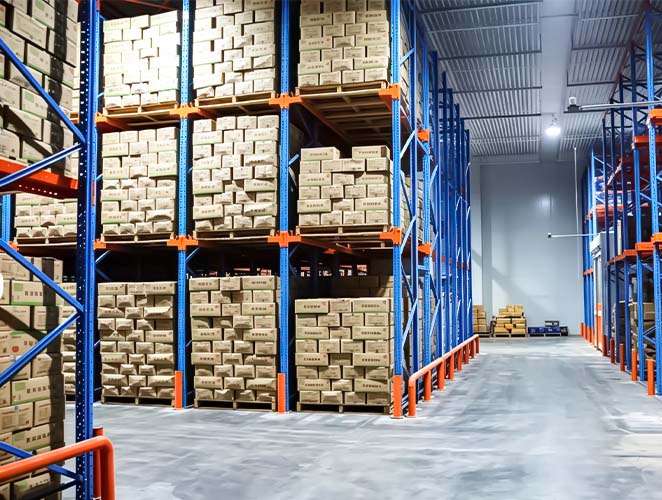
Meat and frozen products require stable low temperatures. Rack layouts should allow cold air to circulate around pallet loads and reduce areas prone to frost or temperature fluctuations.
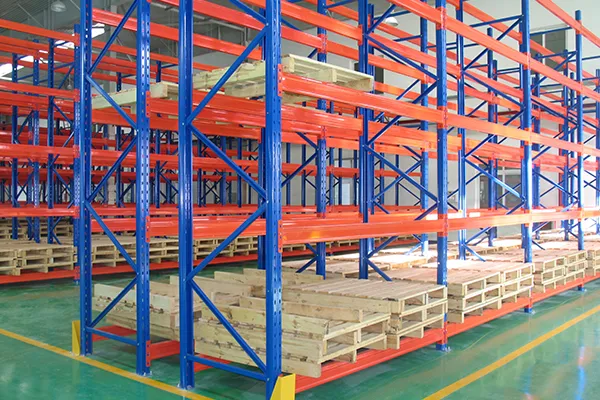
- Use pallet racking with an open structure: The open design provides more space for air circulation while allowing easy forklift access.
- Leave space below the lowest storage level: A clearance of around 15–20 cm above the floor can help keep pallets away from floor frost and improve airflow around the bottom of the rack.
- Leave a buffer near evaporators: Where racks are close to an evaporator, keep around 40 cm of clearance between the outermost load and the unit where appropriate. This can help reduce direct cold-air impact and localized icing.
3. Pharmaceutical Cold Storage: Maintain Consistent Temperature
Pharmaceutical products require strict temperature control, and storage conditions depend on the product and applicable regulations. Rack layouts should support even cooling and reliable temperature monitoring.
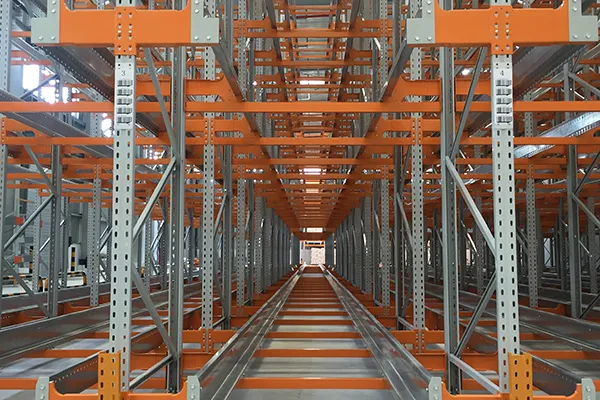
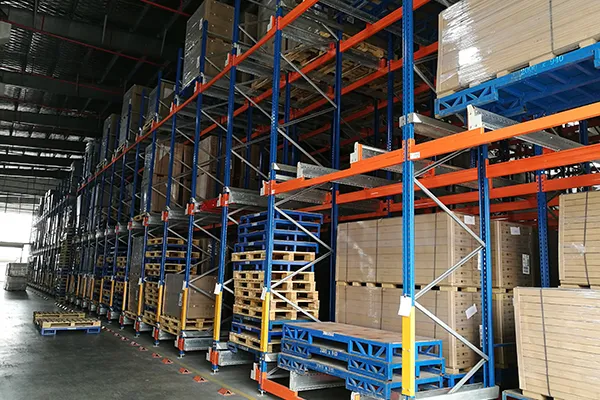
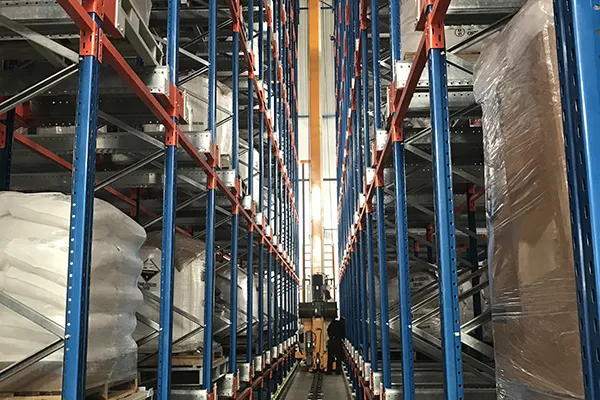
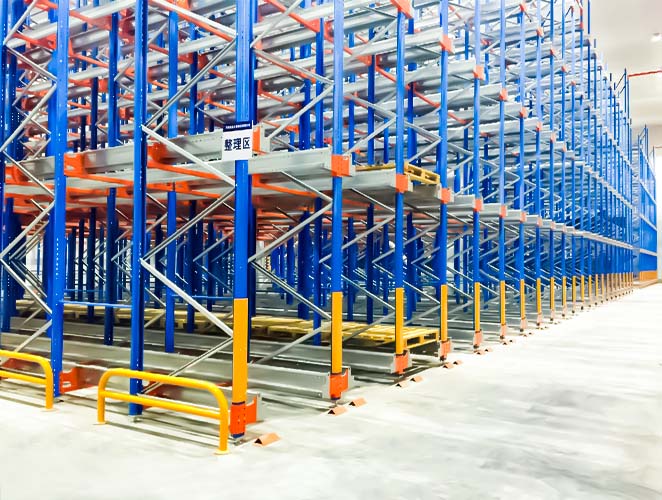
- Consider shuttle racking: Shuttle racking keeps pallet positions organized and reduces irregular product stacking, helping maintain more consistent airflow paths.
- Use multiple temperature monitoring points: Place sensors or data loggers at different rack levels and positions, including the front, middle, and rear areas, to identify temperature variations.
- Keep monitoring equipment unobstructed: Do not place pallets directly in front of temperature sensors or data loggers. Clear access helps ensure the readings accurately reflect actual storage conditions.
4. Small E-Commerce Cold Storage: Keep the Layout Flexible
E-commerce cold storage often has frequent picking, replenishment, and door openings. The rack layout needs to balance airflow, storage capacity, and fast access.
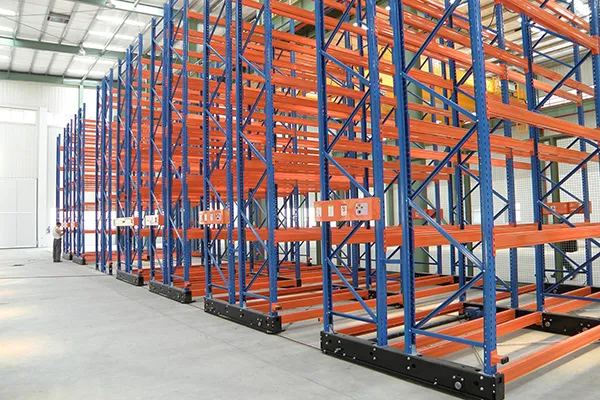
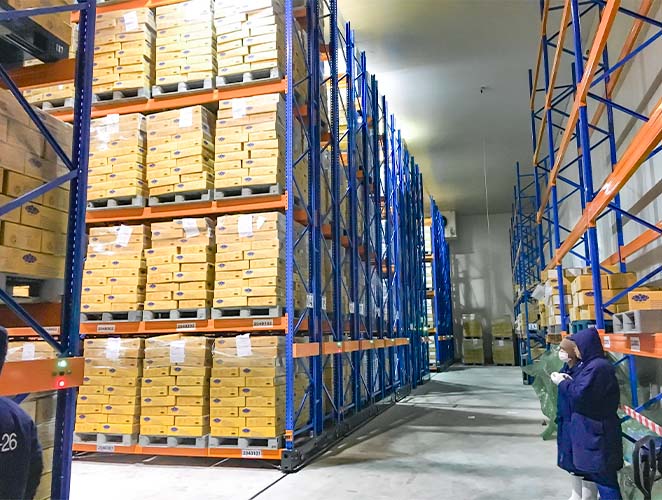
- Use flexible racking where appropriate: Mobile racking can allow aisle space to be adjusted according to operational needs, helping balance storage density and access.
- Keep the area near the door relatively open: Avoid placing dense rack loads directly beside the cold room door. An air curtain can also help reduce warm-air infiltration when the door is opened.
- Group products by order frequency: Store fast-moving products closer to the picking area for easier access, while slower-moving inventory can be placed deeper inside the warehouse to reduce unnecessary movement.
Different cold storage facilities have different requirements for temperature control, airflow, storage density, and handling efficiency. The right rack layout should be adapted to the products being stored and how the warehouse operates. For a broader overview of cold storage warehousing solutions, see our guide to cold storage warehousing.
Cold Storage Racking Mistakes to Avoid
Some seemingly small racking mistakes can have a noticeable impact on airflow and temperature consistency. In a cold storage warehouse, avoiding the following four problems can help reduce local hot and cold spots and maintain more stable storage conditions.
1. Placing Racks Too Close to the Evaporator
- What happens: Racks can block the cold-air discharge, causing excessive cooling near the evaporator while areas farther away receive less cold air. This can create significant local temperature differences.
- How to fix it: Keep around 30–50 cm of clearance from the air outlet where appropriate. If space is limited, adjusting the discharge direction may help prevent cold air from hitting the racks directly.
2. Stacking Products Too Close to the Top of the Rack
- What happens: Products stacked too high can block the movement of cold air. Overloading the rack can also exceed its rated capacity and affect structural safety.
- How to fix it: Leave around 10–15 cm of open space below the air outlet or above the highest load where appropriate. If more storage capacity is needed, consider a higher rack configuration rather than simply stacking products higher.
3. Making Rack Aisles Too Narrow
- What happens: Very narrow spaces can restrict airflow and make it difficult for cold air to reach deeper areas of the cold storage warehouse. They can also make inspection, picking, and maintenance more difficult.
- How to fix it: Maintain enough aisle space for both airflow and daily operations. A 60 cm or wider clearance can be used as a basic reference for some storage areas, but forklift and automated storage equipment require larger working aisles based on their operating requirements.
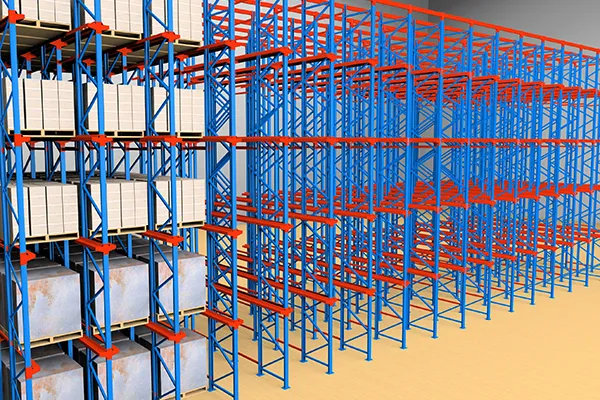
- For higher storage density: Consider high-density racking combined with suitable narrow-aisle handling equipment instead of simply reducing every aisle. This can help increase storage capacity without unnecessarily restricting airflow in the cold storage warehouse.
4. Overloading One Side While Leaving the Other Side Empty
- What happens: When one side of a storage area is heavily loaded and the other side is mostly empty, cold air may take the path of least resistance toward the open area. The loaded side may receive less airflow, while the empty side may become excessively cold, creating uneven temperatures within the cold storage warehouse.
- How to fix it: Keep rack and product distribution reasonably balanced whenever possible. If one area must remain empty temporarily, airflow guides or temporary barriers may be considered to help direct cold air toward areas with higher storage density.
Monitor and Adjust Temperature After Optimizing the Layout
Rearranging the racks is only the first step. After the layout is adjusted, temperature monitoring in a cold storage warehouse can show whether the new arrangement is actually improving airflow and temperature consistency. The results can then be used to make further adjustments and maintain more stable storage conditions.
1. Monitor Temperature at Multiple Points
- Cover different areas: Place temperature monitoring points near the door, in the middle of the warehouse, and in corners or other areas where airflow may be weaker. This helps identify potential hot or cold spots within the cold storage warehouse.
- Check different rack levels: Monitor the upper, middle, and lower areas to identify temperature differences at different heights.
- Record temperatures continuously: Using around 8–10 monitoring points and a thermometer with approximately ±0.5°C accuracy, continuous monitoring for at least 24 hours can provide a clearer picture of temperature distribution.
The acceptable temperature difference depends on the products being stored and the required storage conditions. A target of around 2°C or less may be suitable for some applications, but product-specific requirements should always take priority when setting temperature control targets for a cold storage warehouse.
2. Adjust the Layout Based on the Results
Once the monitoring data identifies problem areas, make targeted adjustments instead of changing the entire layout.
- If an area is too warm: Check whether racks or pallets are blocking the air outlet or whether the storage area is too densely packed. Increasing the clearance or adjusting the airflow direction may improve cooling.
- If an area is too cold: Check whether it is directly exposed to the evaporator or close to the return air area. Airflow guides may help redirect excessive cold air toward other parts of the warehouse.
- If the upper and lower levels differ significantly: Check the product stacking height and airflow around the rack levels. Reducing the load height or using ventilated shelf panels may help improve air movement between levels.
3. Review the Rack Layout Regularly
The best cold storage warehouse rack layout can change as inventory levels, product types, and order volumes change. Regular checks help prevent new airflow problems from developing.
- Review the layout regularly: A monthly check can help identify racks or pallets that have been moved into positions that restrict airflow.
- Keep storage areas clear: Remove unnecessary cartons, pallets, or other items that may block air outlets, return air openings, or rack aisles.
- Clean the racks and surrounding areas: Regularly remove frost, dust, and debris that could interfere with airflow or daily inspection.
A cold storage warehouse layout should therefore be treated as an ongoing operational issue rather than a one-time design decision. Regular temperature monitoring and small layout adjustments can help maintain more stable storage conditions as inventory and warehouse operations change.
Optimize Your Cold Storage Warehouse with the Right Solution
Reducing temperature differences is not only about adjusting the refrigeration system. The right racking layout, storage method, airflow planning, and handling system all contribute to more stable and efficient cold storage operations.
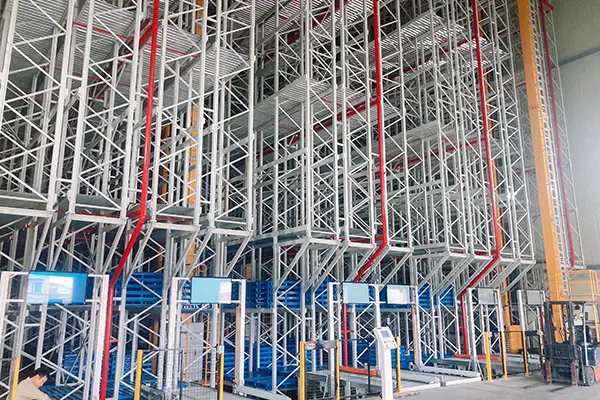
With extensive experience in cold storage projects, HUAYIDE provides one-stop automated and semi-automated storage solutions for customers across industries worldwide. From racking and high-density storage to automated handling and warehouse systems, we can help you select and design a solution that fits your products, warehouse conditions, and operational needs.
If you are planning a new cold storage warehouse or looking to improve an existing facility, contact HUAYIDE for a customized storage solution.