
Table of Contents
Contact Us
Recent Posts
Follow Us
Introduction
Cold storage warehousing faces unique challenges, including low-temperature environments, high energy consumption, limited storage space, and strict inventory management requirements. Traditional storage methods often result in inefficient space utilization and increased labor costs due to frequent manual operations in cold environments.
To overcome these challenges, modern cold storage facilities are increasingly adopting automated dense storage systems, which combine high-density pallet racking, shuttle technology, stacker cranes, and intelligent warehouse management systems. These solutions help maximize storage capacity, improve operational efficiency, and reduce energy consumption in cold chain logistics.
This article explores different racking systems used in cold storage warehousing and explains why automated dense storage solutions are becoming the preferred choice for modern refrigerated warehouses.
Common Racking Systems Used in Cold Storage Warehousing
Different pallet storage systems can be applied in cold storage environments depending on inventory characteristics, storage density requirements, and operational needs.
Drive-In Pallet Racking
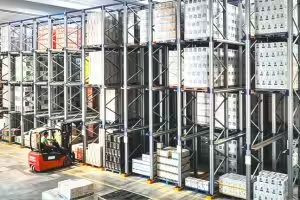
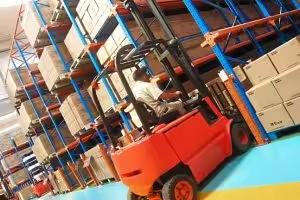
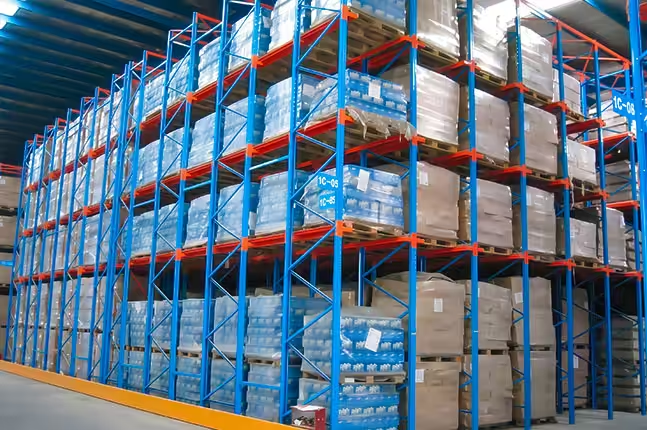
Drive-in pallet racking is one of the most common high-density storage solutions for cold storage warehouses. Forklifts directly enter the rack lanes to store and retrieve pallets, maximizing warehouse capacity.
Advantages:
- High storage density compared with selective pallet racks
- Lower initial investment cost
- Suitable for large quantities of similar products
Limitations:
- Limited storage flexibility due to LIFO operation
- Forklift access inside rack lanes increases operational risks
- Lower efficiency for frequent pallet retrieval
- Space utilization is usually lower than automated storage systems
Drive-in racking is suitable for cold warehouses storing large volumes of the same products but may not meet the requirements of high-throughput operations.
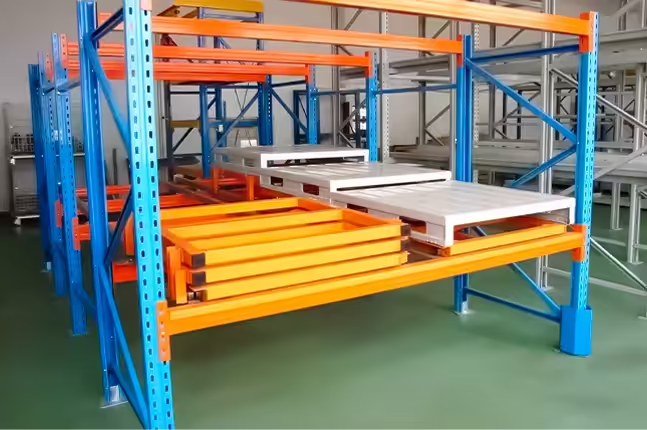
Push Back Pallet Racking
Push back racking uses inclined rails and gravity rollers, allowing pallets to move forward automatically when pallets are removed from the front position.
Advantages:
- Higher density than selective pallet racking
- No need for forklifts to enter storage lanes
- Improved safety compared with drive-in systems
Limitations:
- Usually supports limited pallet depth
- Mainly follows LIFO inventory management
- Not ideal for warehouses requiring frequent access to different SKUs
Pallet Flow Racking
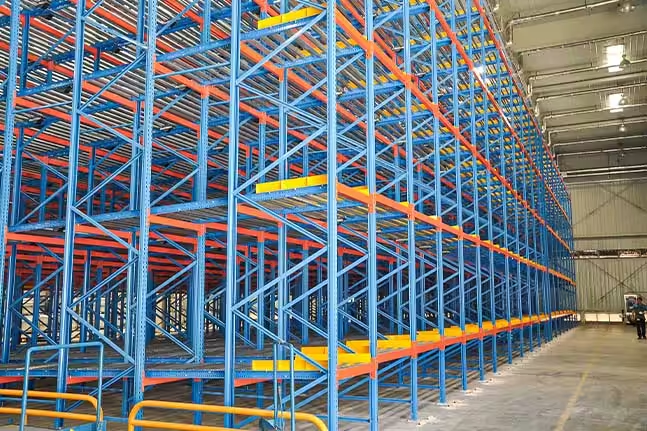
Pallet flow racking uses gravity roller tracks to move pallets from the loading side to the picking side, supporting FIFO inventory management.
Advantages:
- Suitable for products requiring FIFO rotation
- Better space utilization
- Efficient pallet movement
Limitations:
- Higher equipment cost
- Mechanical components require maintenance
- Limited flexibility for complex inventory management
Mobile Pallet Racking
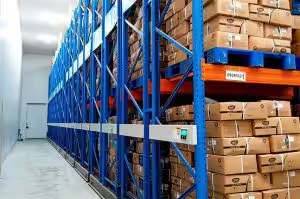
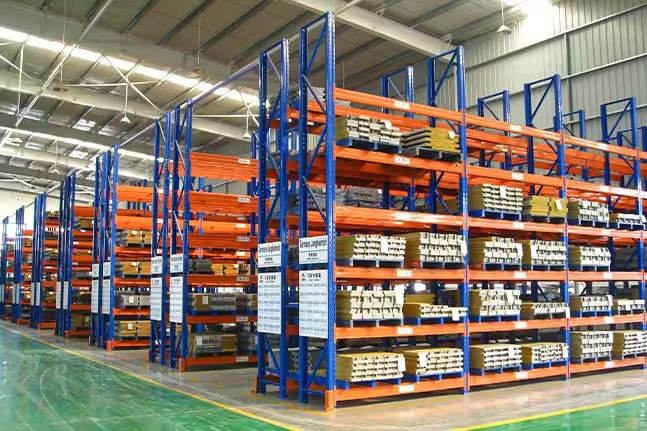
Mobile pallet racking installs racks on movable bases, allowing multiple storage rows to share one operating aisle.
Advantages:
- Excellent space utilization
- Reduces unused aisle space
- Suitable for limited cold storage areas
Limitations:
- Lower access speed
- Higher equipment complexity
- Usually not suitable for very high warehouse heights
Automated Storage Systems for Modern Cold Storage Warehousing
With increasing demand from industries such as food processing, pharmaceuticals, beverages, and fresh products, cold storage warehouses require higher automation levels and better space utilization.
Automated storage and retrieval systems (AS/RS) and pallet shuttle solutions provide an efficient alternative by combining high-density storage with intelligent control technology.
Pallet Shuttle + Stacker Crane System
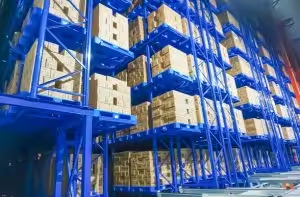
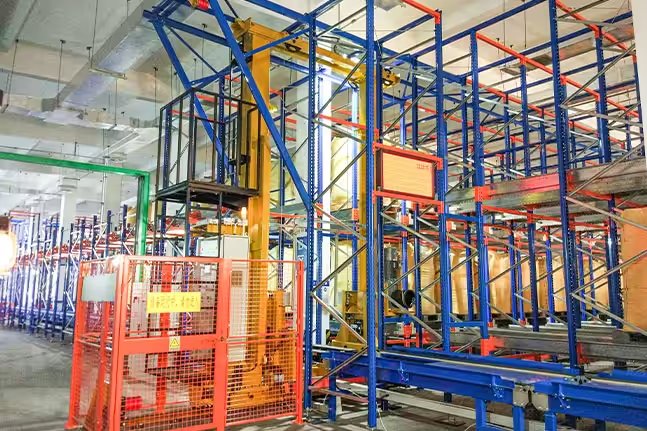
The combination of pallet shuttle systems and stacker cranes creates a highly efficient automated dense storage solution for cold storage warehousing.
The system typically consists of:
- Multi-depth shuttle racking
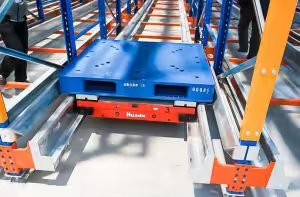
- Pallet shuttle vehicles
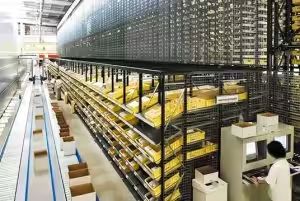
- AS/RS stacker cranes
- Conveyor systems
- Barcode or RFID identification
- WMS warehouse management software
- WCS warehouse control system
The stacker crane transports shuttle vehicles between different storage levels, while shuttle carts automatically move pallets deep inside rack lanes.
This design eliminates the need for forklifts to operate inside cold storage areas and enables fully automated pallet storage and retrieval.
Advantages of Automated Dense Storage in Cold Storage
Maximizing Storage Capacity
Cold storage construction and operation costs are significantly higher than normal warehouses. Automated dense storage systems maximize vertical and horizontal space utilization by reducing unnecessary aisles and increasing pallet positions.
Compared with traditional pallet racking, automated systems can significantly improve warehouse capacity while reducing the required building area.
Improving Operational Efficiency
Automated storage systems provide fast and accurate pallet handling through intelligent scheduling.
With WMS and WCS integration, warehouse tasks such as receiving, storage allocation, picking, and shipping can be automatically controlled, reducing manual errors and improving inventory accuracy.
Reducing Energy Consumption and Labor Risks
Frequent personnel access is a major challenge in cold storage environments. Automated solutions minimize human movement inside low-temperature areas, reducing heat loss caused by door openings and lowering the risk of cold-related injuries.
At the same time, fewer manual operations reduce labor requirements and improve overall warehouse safety.
Why Choose Automated Storage Solutions for Cold Storage Warehousing?
For modern cold chain logistics, cold storage warehousing is no longer only about storing products—it requires efficient space management, accurate inventory control, and reliable operation.
Automated dense storage systems provide:
- Higher storage density
- Faster pallet handling
- Better inventory accuracy
- Lower energy consumption
- Improved warehouse safety
By integrating pallet shuttle technology, AS/RS stacker cranes, conveyors, and intelligent warehouse software, automated cold storage solutions help companies build smarter, more efficient, and more sustainable refrigerated warehouses.
Frequently Asked Questions
1. What is cold storage warehousing?
Cold storage warehousing is a specialized storage facility designed to maintain products under controlled low-temperature conditions. It is widely used in food, beverage, pharmaceutical, and chemical industries to preserve product quality and extend shelf life. Modern cold storage warehouses often integrate automated storage systems, intelligent control software, and high-density racking solutions to improve efficiency.
2. What racking system is best for cold storage warehousing?
The best racking system depends on storage requirements, product types, and operational goals. For high-density cold storage warehouses, pallet shuttle systems and AS/RS solutions are often preferred because they maximize storage capacity, reduce manual operations, and improve efficiency in low-temperature environments.
3. Why use automated storage systems in cold storage warehouses?
Automated storage systems reduce the need for manual operations in extremely cold environments while improving storage density and operational accuracy. Technologies such as pallet shuttles, stacker cranes, conveyors, and WMS/WCS software enable faster pallet handling, better inventory control, and lower energy consumption.
4. How can cold storage warehousing improve space utilization?
Cold storage automation improves space utilization by reducing unnecessary aisles and increasing vertical storage capacity. High-density solutions such as multi-depth pallet shuttle racking and AS/RS can store more pallets within the same warehouse footprint compared with traditional selective pallet racking.
5. Is a pallet shuttle system suitable for cold storage?
Yes. A pallet shuttle system is highly suitable for cold storage applications because it can operate reliably in low-temperature environments while providing high-density pallet storage. It reduces forklift movement inside cold rooms and supports both FIFO and LIFO inventory management methods.
6. What are the benefits of AS/RS in cold storage warehousing?
An AS/RS cold storage system provides several advantages, including:
- Higher storage capacity
- Automated pallet handling
- Improved inventory accuracy
- Reduced labor requirements
- Lower energy loss caused by frequent cold room access
It is especially suitable for large-scale refrigerated warehouses with high throughput requirements.
7. How does automation reduce energy costs in cold storage warehouses?
Automation reduces energy consumption by minimizing human entry into cold storage areas. Fewer door openings and less manual operation help maintain stable temperatures, reduce refrigeration workload, and improve overall warehouse energy efficiency.
8. What industries benefit from automated cold storage warehousing?
Automated cold storage warehousing is widely used in industries including:
- Food and beverage
- Frozen food
- Meat and seafood processing
- Pharmaceutical and healthcare
- Dairy products
- Fresh produce logistics
These industries require reliable temperature control, efficient storage, and accurate inventory management.
9. What is the difference between traditional cold storage and automated cold storage?
Traditional cold storage mainly relies on forklifts and manual handling, which requires more labor and provides lower storage density. Automated cold storage uses intelligent systems such as AS/RS, pallet shuttles, conveyors, and warehouse software to improve capacity, efficiency, and safety.
10. How do I choose the right cold storage warehousing solution?
Choosing the right solution depends on several factors, including:
- Storage temperature requirements
- Warehouse size and height
- Number of pallet locations
- Daily inbound and outbound volume
- Product turnover rate
- FIFO or LIFO requirements
A professional warehouse automation provider can design a customized solution based on specific operational needs. Contact HUAYIDE to discuss your cold storage warehousing requirements and get a customized solution for your project.