Introduction
Automated cold storage is no longer just for large-scale logistics centers. As the frozen food industry grows, more small and medium-sized food manufacturers are looking for ways to increase storage capacity, reduce labor costs, and improve inventory management. However, limited warehouse space, high investment costs, and complex equipment often make automation difficult to implement.
So, how can a small cold storage warehouse achieve efficient automation without a large-scale investment? HUAYIDE recently completed a 4WS cold storage automation project for a 500㎡ warehouse operating at -20°C. By combining a four-way shuttle system with a lifting machine, the solution provides over 1,000 planned pallet positions and supports approximately 180 frozen food categories. From contract signing to final delivery, the project took less than two months, showing that efficient cold storage automation can also be practical for smaller facilities.
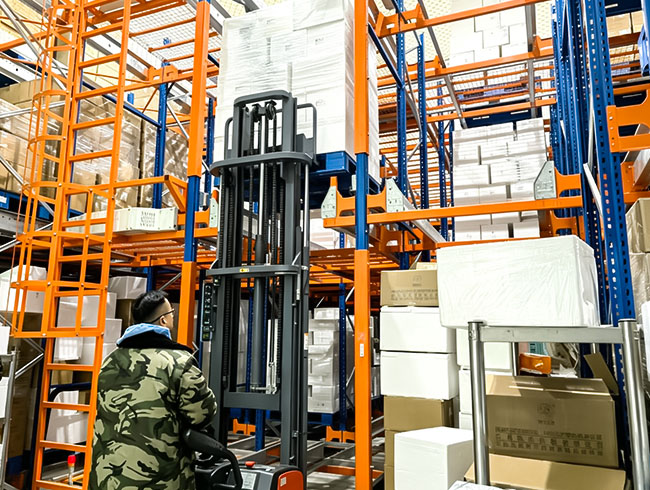
Why Do Small Cold Storage Warehouses Need Automation?
As the frozen food industry continues to grow, many small and medium-sized food manufacturers are facing increasing pressure on their storage operations.
Limited warehouse space, a growing number of product varieties, and high labor costs in low-temperature environments make traditional storage methods less efficient.
Some of the most common challenges include:
- Limited storage space: Conventional pallet racking and forklift aisles take up valuable floor space, leaving less room for actual pallet storage.
- Multiple SKUs: Frozen food manufacturers often handle many product varieties, requiring accurate inventory management and flexible storage locations.
- High labor costs: Working in environments below freezing requires additional labor protection and creates more demanding operating conditions.
- Low space utilization: Forklift aisles and fixed handling routes reduce the available storage area.
- Limited inventory visibility: Manual warehouse operations make it harder to track pallet locations and manage inbound and outbound activities accurately.
For businesses operating a 500㎡ or similarly sized cold storage facility, investing in a conventional large-scale AS/RS may not always be practical.
A more suitable solution should balance storage density, automation level, equipment investment, and implementation time.
This is where a compact 4WS warehouse automation solution can make a difference.
4WS Cold Storage Project Overview
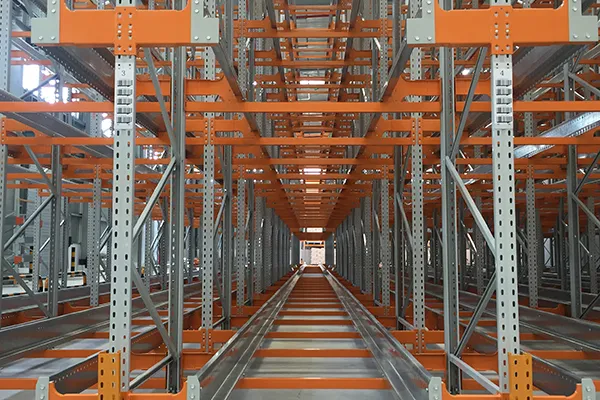
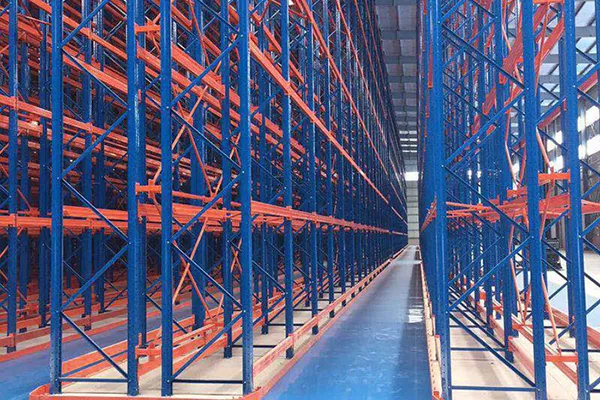
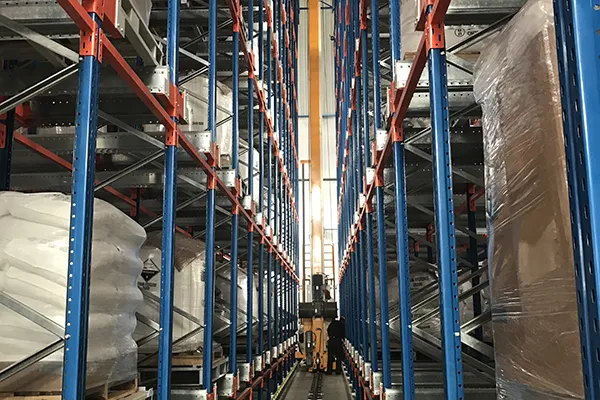
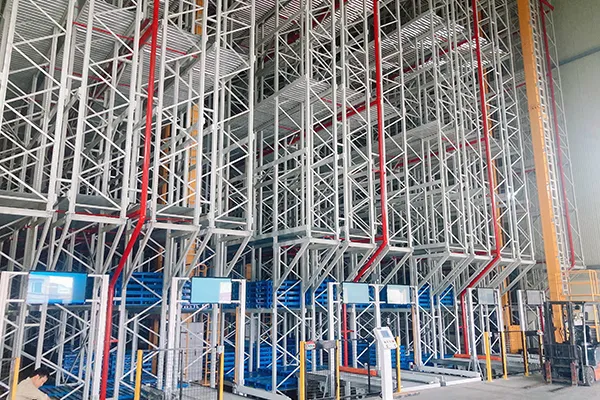
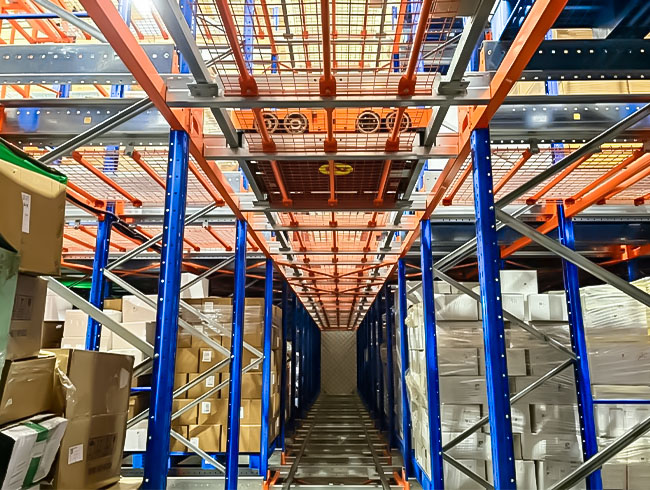
For this project, HUAYIDE designed a compact automated storage solution specifically for a 500㎡ frozen food warehouse. Instead of adopting a complex multi-level transfer arrangement, the design uses independent four-way shuttles on each storage level, combined with a stacker-type lifting machine.
The layout makes efficient use of the available space while keeping equipment movement and pallet handling straightforward.
Key project specifications:
| Item | Project Details |
| Warehouse area | 500㎡ |
| Operating temperature | -20°C |
| Rack layout | 2 main aisles + 60 sub-aisles |
| Storage levels | 3 levels |
| Four-way shuttles | 3 units |
| Lifting equipment | 1 stacker-type lifting machine |
| Planned storage capacity | 1,000+ pallet positions |
| Product variety | Approximately 180 frozen food categories |
| Project delivery | Less than 2 months |
The system is designed to accommodate different frozen food products while improving pallet storage density and reducing the need for manual handling inside the cold room.
How Does the 4WS System Work in This Cold Storage Warehouse?
One of the key features of this project is its independent shuttle operation on each storage level.
Unlike conventional shuttle arrangements that rely on a central lift to transfer shuttles between levels, this design assigns one four-way shuttle to each of the three storage levels.
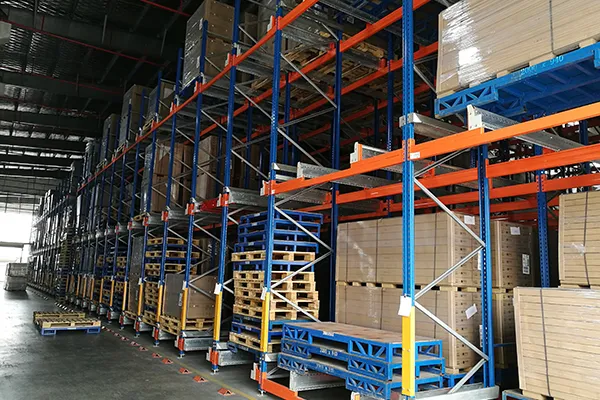
Each shuttle operates independently within its own level, moving along both the main aisle and sub-aisles to reach the required storage positions.
1. Independent Four-Way Shuttle Operation on Each Level
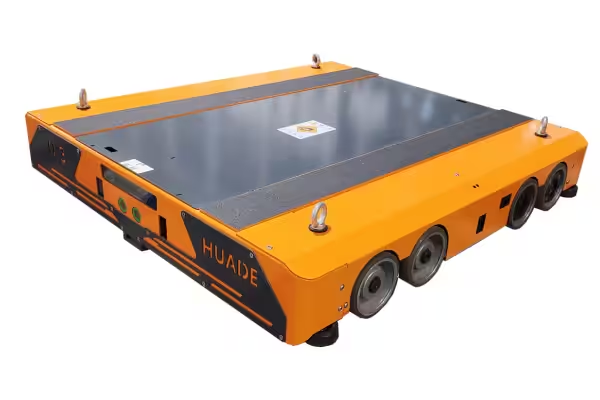
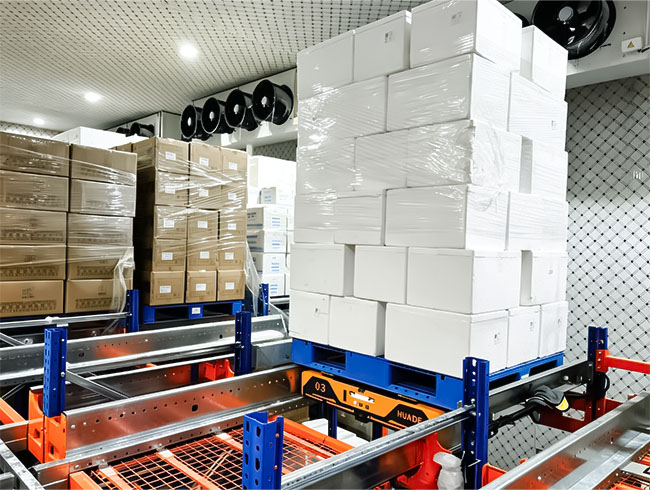
Each storage level is equipped with one four-way shuttle, giving the system three shuttles in total.
These shuttles can travel in both longitudinal and transverse directions within their assigned level. They can move between the main aisle and sub-aisles to access different pallet positions without requiring a shuttle transfer between floors.
This arrangement offers several practical benefits:
- No cross-level shuttle transfer is required.
- Each level operates independently, reducing unnecessary equipment waiting.
- Shuttles can access all designated storage positions on their respective levels.
- Independent operation helps reduce the impact of a single shuttle malfunction on other storage levels.
For a small cold storage warehouse, this simpler equipment arrangement helps reduce system complexity while maintaining automated pallet handling.
2. A Lifting Machine Handles Vertical Pallet Movement
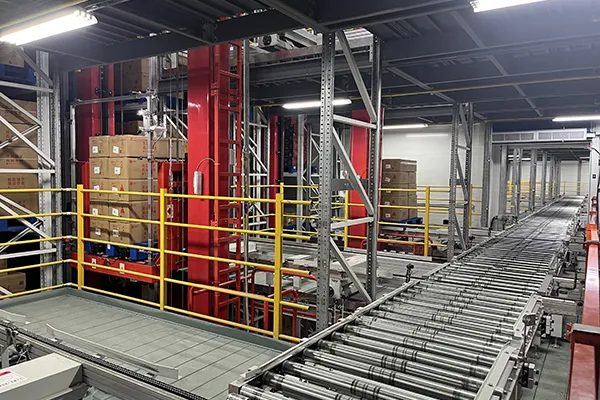
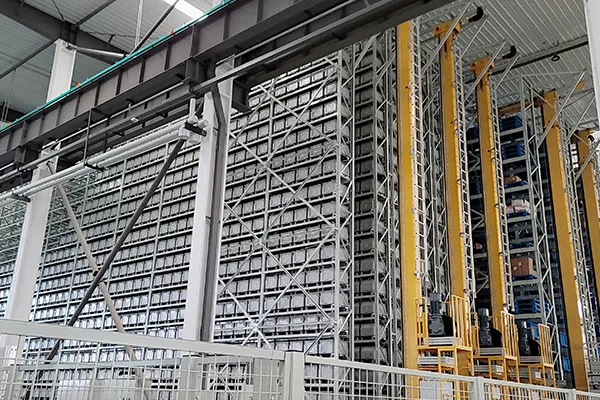
While the four-way shuttles handle horizontal movement within each storage level, the stacker-type lifting machine is responsible for vertical pallet handling.
It works together with the shuttle system to move pallets between the warehouse’s handling interface and the designated storage levels.
By separating horizontal shuttle movement from vertical lifting operations, the system creates a straightforward division of tasks.
This arrangement avoids the need to move shuttles between levels and helps keep the overall warehouse layout compact.
3. Automated Pallet Storage and Retrieval
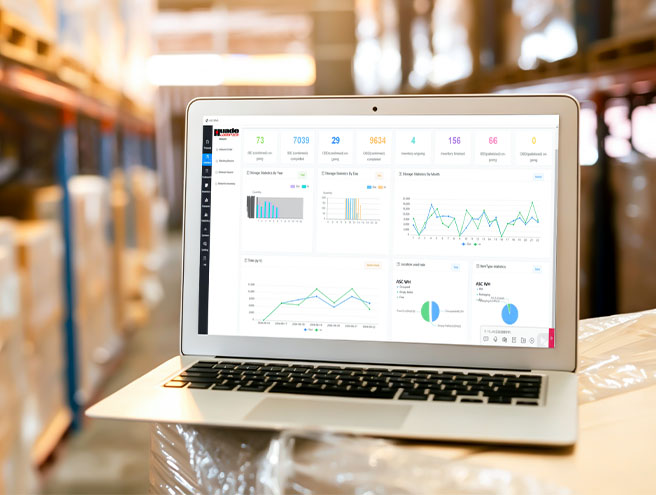
The 4WS system is integrated with WMS and WCS software to coordinate warehouse operations.
The general workflow is as follows:
- Inbound: Pallets enter the warehouse through the designated inbound interface.
- Vertical handling: The lifting machine transfers pallets to the required storage level.
- Horizontal movement: The four-way shuttle transports pallets along the main aisle and sub-aisles.
- Storage: The shuttle places each pallet into its assigned storage position.
- Outbound: When an order is released, the system coordinates pallet retrieval and transfers the pallet to the outbound interface.
With automated equipment movement and software-based scheduling, the warehouse can manage pallet locations and inbound and outbound operations more efficiently.
Four Key Advantages of This 4WS Warehouse Automation Solution
For small and medium-sized food manufacturers, warehouse automation needs to deliver practical improvements rather than unnecessary equipment complexity.
This project focuses on four key advantages.
1. Higher Storage Density with No Dedicated Forklift Aisles
Traditional forklift-based warehouses need wide operating aisles, which take up a considerable amount of floor space.
In this project, the 4WS layout eliminates the need for conventional 3.5-meter forklift aisles inside the storage area.
The four-way shuttles move directly within the rack structure, making better use of the available warehouse space.
For a 500㎡ cold storage facility, this is particularly important because every square meter contributes to the overall storage capacity.
2. Less Manual Handling in Low-Temperature Environments
Working in a -20°C cold storage environment is physically demanding. Frequent forklift operations also increase the need for personnel to enter the cold room.
By using a stacker-type lifting machine and four-way shuttles, pallet handling inside the warehouse can be automated.
This helps:
- Reduce manual forklift operations.
- Minimize personnel entry into the cold storage area.
- Lower labor requirements for routine pallet movement.
- Improve the consistency of warehouse operations.
The result is a more efficient working environment with less dependence on manual material handling.
3. WMS and WCS for More Accurate Inventory Management
Managing approximately 180 frozen food categories requires accurate inventory information and reliable pallet tracking.
The project integrates WMS and WCS to coordinate storage locations, equipment movement, and inbound and outbound tasks.
The two software systems work together to support:
- Automatic pallet location management.
- Inbound and outbound task scheduling.
- Equipment movement coordination.
- Real-time inventory visibility.
- Automated pallet transfer to the outbound interface.
This reduces reliance on manual records and helps warehouse operators manage different product categories more systematically.
4. Modular Design for Future Expansion
A small warehouse does not necessarily need to invest in all automation equipment at the beginning.
This 4WS solution adopts a modular layout, allowing the warehouse to be configured according to actual operational requirements.
For example:
- Sub-aisle ends can serve as inbound or outbound handling points, depending on the layout.
- Additional lifting equipment can be introduced when handling demand increases.
- Ground-level conveyor systems can be added to improve pallet transportation.
- The system can be expanded in stages as business volume grows.
This flexible approach helps businesses start with the equipment they need today while keeping room for future development.
Is a 4WS System Suitable for Small Cold Storage Warehouses?
Not every cold storage warehouse needs a large-scale automated storage and retrieval system.
For small and medium-sized food manufacturers, a 4WS solution can be worth considering when the warehouse has limited floor space, multiple palletized product categories, and a need to reduce manual handling.
It is particularly suitable for businesses that:
- Operate compact frozen food warehouses.
- Need higher pallet storage density without expanding the building.
- Handle multiple SKUs and require more accurate inventory management.
- Want to reduce forklift operations in low-temperature environments.
- Prefer phased automation rather than a large initial investment.
Conclusion: Making Cold Storage Automation More Accessible
This 500㎡, -20°C frozen food warehouse project shows that automated cold storage is not limited to large industrial facilities.
By combining three independently operating four-way shuttles with a stacker-type lifting machine, HUAYIDE delivered a compact 4WS solution with more than 1,000 planned pallet positions and storage capacity for approximately 180 frozen food categories.
More importantly, the project was completed in less than two months, providing the customer with a faster route to warehouse automation.
For small and medium-sized food manufacturers looking to improve storage density, reduce manual handling, and strengthen inventory management, a properly designed 4WS system offers a practical starting point.
HUAYIDE provides customized warehouse automation solutions, covering system design, equipment manufacturing, installation, commissioning, and after-sales support.
Whether you are planning a new frozen food warehouse or upgrading an existing cold storage facility, our engineering team can help you evaluate the right automation layout for your space and operational needs.
Frequently Asked Questions About 4WS Cold Storage Automation
Q1: What is a 4WS system in warehouse automation?
A 4WS system uses four-way shuttles to move pallets in both longitudinal and transverse directions within a storage rack structure. It supports automated pallet storage and retrieval and can be configured with lifting equipment, conveyors, WMS, and WCS according to warehouse requirements.
Q2: Is a 4WS system suitable for small cold storage warehouses?
Yes. A properly designed 4WS system can be used in compact cold storage facilities where floor space is limited and higher pallet storage density is required. The equipment configuration should be based on warehouse dimensions, pallet specifications, throughput, and storage requirements.
Q3: Can a four-way shuttle operate in a -20°C cold storage warehouse?
Yes, four-way shuttle systems can be customized for low-temperature environments. Equipment selection, electrical components, lubrication, batteries, and control systems should be designed to meet the required operating temperature.
Q4: How long does it take to implement a small automated cold storage warehouse?
The implementation period depends on warehouse size, equipment configuration, site conditions, and project complexity. In HUAYIDE’s 500㎡ frozen food warehouse project, the complete process from contract signing to final delivery took less than two months.
Q5: How many pallet positions can a small 4WS cold storage warehouse provide?
Storage capacity depends on the warehouse area, available height, rack layout, pallet dimensions, and number of storage levels. In this HUAYIDE project, the 500㎡ warehouse was designed with more than 1,000 pallet positions across three storage levels.