Introduction
As warehouse operations become more demanding, businesses need to store more pallets, improve handling efficiency, and reduce reliance on manual labor. A 4 way shuttle system offers a flexible solution by combining high-density racking, automated shuttle vehicles, and intelligent control technology. It helps warehouses make better use of available space while improving pallet handling and storage efficiency.
What Is a 4 Way Shuttle System?
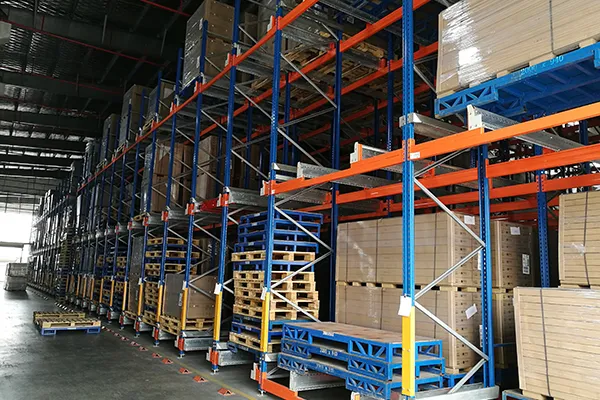
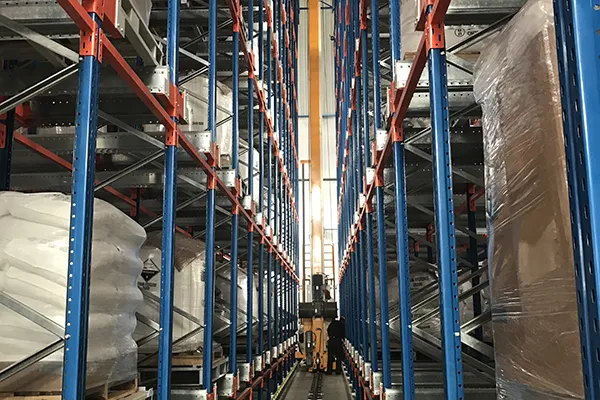
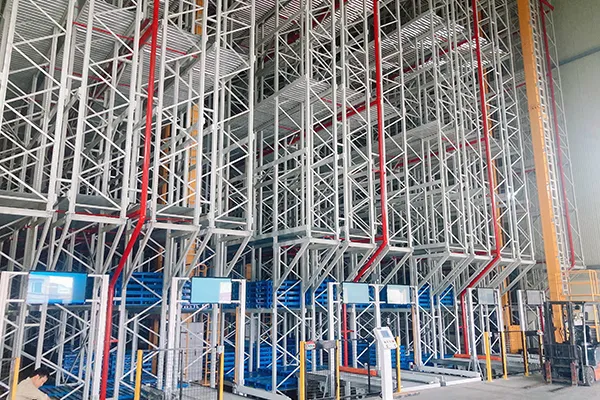
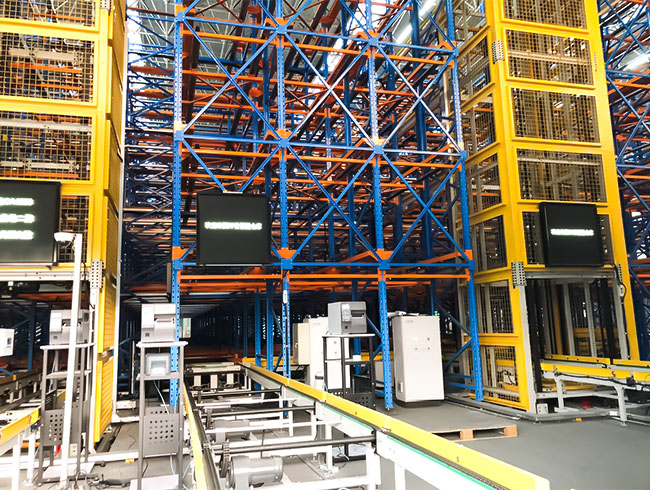
A 4 way shuttle system is an automated pallet storage solution that uses multi-level racking, four-way shuttle vehicles, and vertical lifts to move pallets within a warehouse. The shuttles can travel in both longitudinal and transverse directions, allowing them to access different storage locations without relying on forklifts to enter storage aisles.
A complete system can include:
- Storage and handling equipment: Multi-level racking, four-way shuttles, and vertical lifts.
- Conveying equipment: Roller conveyors, chain conveyors, and AGVs for pallet transportation.
- Identification and inspection devices: Barcode scanners, RFID readers, weighing systems, and dimensioning equipment.
- Control and management systems: WMS and WCS for inventory management, equipment coordination, and task scheduling.
The configuration depends on warehouse layout, storage capacity, and inbound and outbound requirements. Based on the level of automation, a 4 way shuttle system can operate in two modes.
1. Semi-Automated Operation
In a semi-automated warehouse, forklifts or other manual handling equipment transport pallets outside the storage area. Operators place pallets at designated exchange stations near the racks, where four-way shuttles take over.
The shuttles handle horizontal pallet movement within each storage level, while vertical lifts transfer pallets or shuttle vehicles between levels.
This setup reduces manual handling inside the storage area and offers a relatively simple way to upgrade existing warehouses. However, external pallet transportation still relies on operators, so the entire inbound and outbound process cannot operate as a fully automated workflow.
2. Fully Automated Operation
A fully automated 4 way shuttle system connects internal storage equipment with external material handling equipment through a centralized control system.
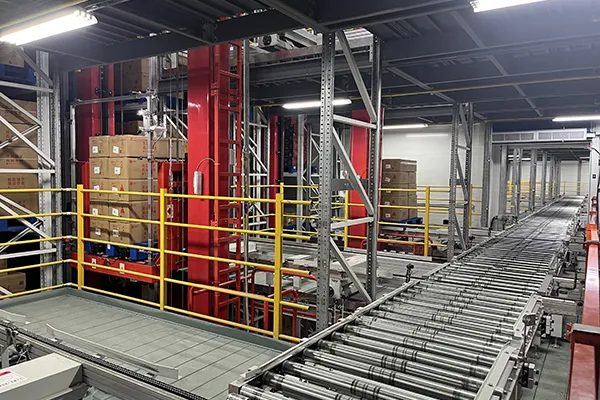
Four-way shuttles and vertical lifts handle pallet movement inside the racks, while conveyors and AGVs connect the storage area with production lines, sorting stations, and shipping areas.
The automated workflow typically includes:
- Inbound: Conveyors or AGVs transport pallets to the warehouse. Identification and inspection equipment checks pallet information before storage.
- Storage: The control system assigns storage locations and dispatches four-way shuttles and vertical lifts to complete the required movements.
- Retrieval: Shuttles retrieve pallets from designated locations and transfer them to the outbound area.
- Outbound: Conveyors or AGVs transport retrieved pallets to picking, production, or shipping stations.
With coordinated equipment scheduling, the system can manage pallet movements across multiple storage levels and connect warehouse operations with other logistics processes.
3. What Makes a 4 Way Shuttle System Different?
Unlike conventional shuttle racking, which generally relies on fixed travel directions, a 4 way shuttle system allows vehicles to move in both directions along the length and width of the rack structure. It combines the dense storage capabilities of shuttle racking with the flexible movement and automated handling of an AS/RS.
For warehouses handling large volumes of palletized goods, this offers several practical advantages:
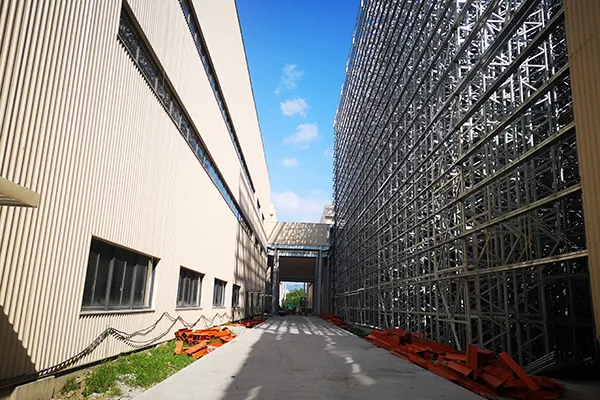
- Higher storage density: Make better use of available warehouse space with multi-level, compact racking.
- Flexible pallet access: Move shuttles between different aisles and storage locations according to operational needs.
- Reduced manual handling: Minimize forklift movements inside the storage area and reduce labor requirements.
- Scalable automation: Adjust shuttle quantities and supporting equipment configurations as storage and throughput requirements change.
- Flexible warehouse layouts: Adapt the system to different building conditions and storage requirements.
Main Structure of a 4 Way Shuttle System
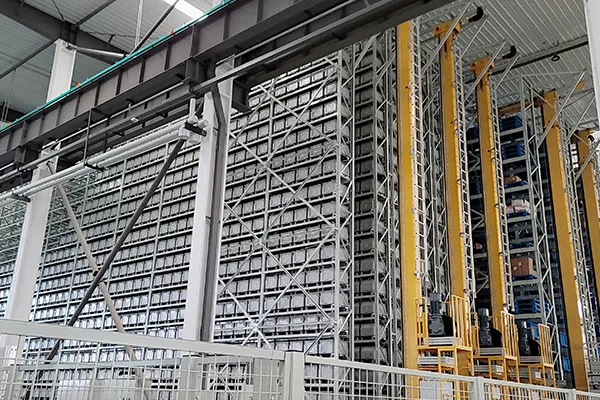
A 4 way shuttle system mainly consists of three core components: four-way shuttle vehicles, vertical lifts, and specialized storage racking.
Each component plays a different role in pallet handling. Four-way shuttles move pallets horizontally along dedicated rack tracks, while vertical lifts handle transportation between storage levels. The racking structure provides storage positions and interconnected tracks for shuttle movement.
The number of shuttles and lifts, as well as their arrangement, can be customized according to warehouse layout, storage capacity, and throughput requirements. This flexible configuration allows businesses to adapt the system to different warehouse conditions and operational needs.
1. System Configuration and Operation
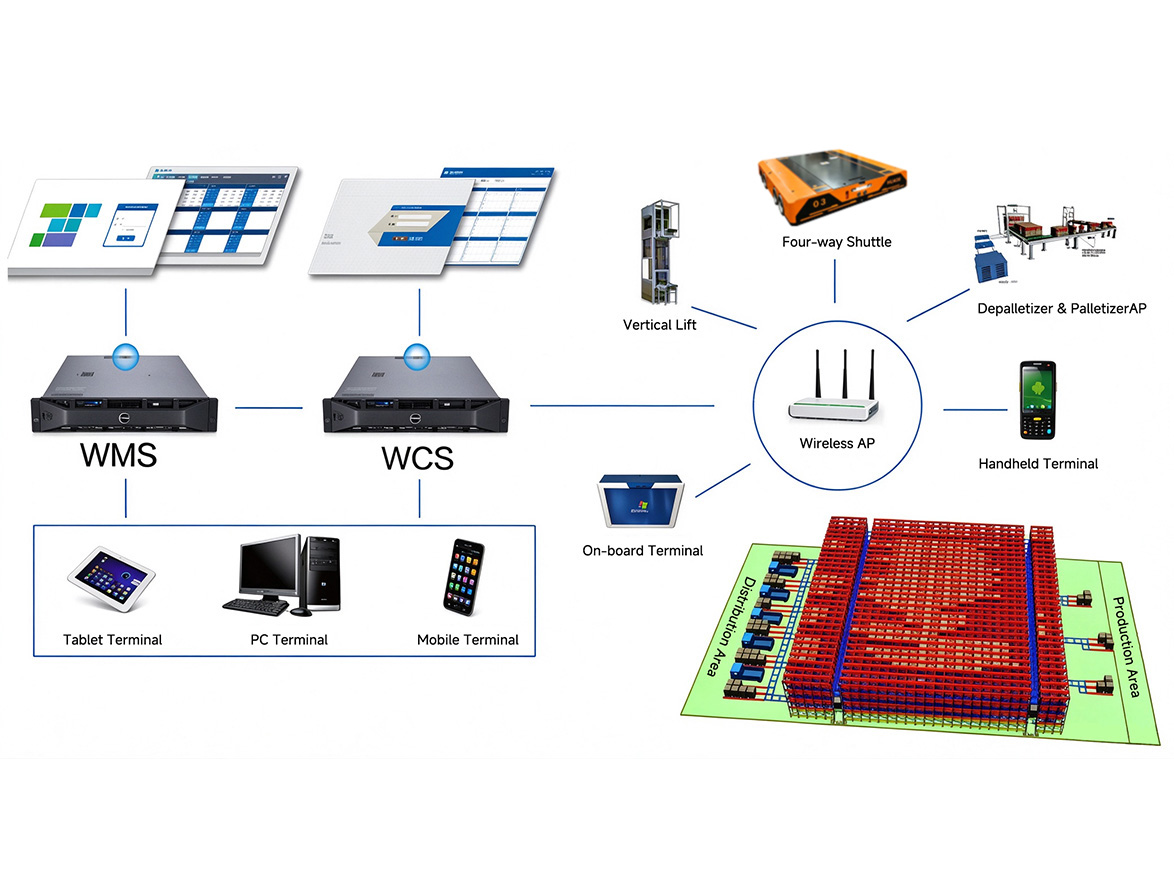
A complete 4 way shuttle system integrates the storage racking, shuttle vehicles, vertical lifts, and intelligent control platform. It also includes supporting components such as:
- WMS (Warehouse Management System): Manages inventory information, storage locations, and inbound and outbound orders.
- WCS (Warehouse Control System): Coordinates shuttle movements, lift operations, and other automated equipment.
- Wireless APs and communication devices: Maintain real-time communication between shuttle vehicles and the control system.
- Servers and operator terminals: Support system operation, equipment monitoring, and warehouse management.
During operation, the WMS and WCS coordinate equipment movements according to warehouse tasks. Four-way shuttles travel along dedicated tracks to access pallet positions within the same storage level. When a pallet or shuttle needs to move between levels, the vertical lift provides the required vertical transportation.
This coordination enables three-dimensional pallet storage and retrieval throughout the warehouse. The system can also be configured with different numbers of shuttles and lifts to match specific throughput and operational requirements.
2. How Does the Rack Track Network Work?
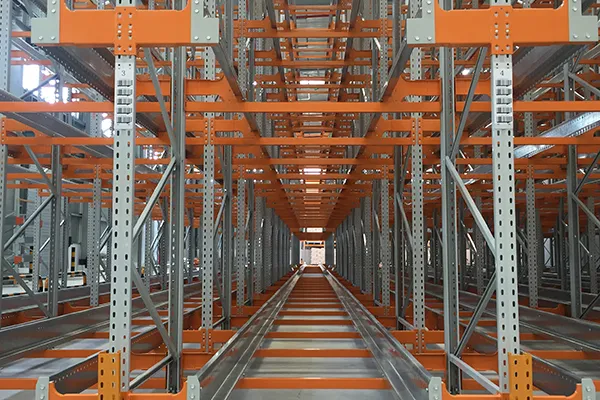
The rack structure is more than a storage framework. Its interconnected tracks form a transportation network that allows four-way shuttles to move between storage aisles and designated pallet positions.
The network mainly consists of:
- Storage tracks: Located inside each storage aisle and connected to individual pallet positions.
- Main tracks: Connect different storage aisles on the same level, allowing shuttles to change travel directions and access different areas.
- Vertical lifts: Connect the main tracks on different levels to support cross-level transportation.
- Rack access points: Provide designated positions for pallet exchange and connection with external handling equipment.
Within each storage aisle, multiple pallet positions are arranged along dedicated tracks to form a storage group. For aisles accessible from both ends, an additional divider can be installed in the middle to create two independent storage groups.
This interconnected layout gives the 4 way shuttle system greater flexibility in pallet movement and equipment scheduling, while allowing the rack structure to be configured around the available warehouse space.
Four-Way Shuttle Vehicle
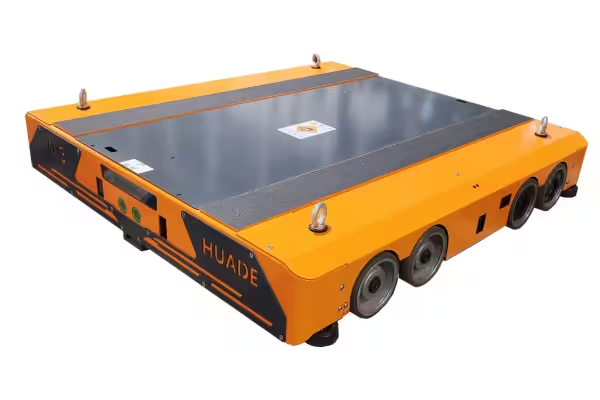
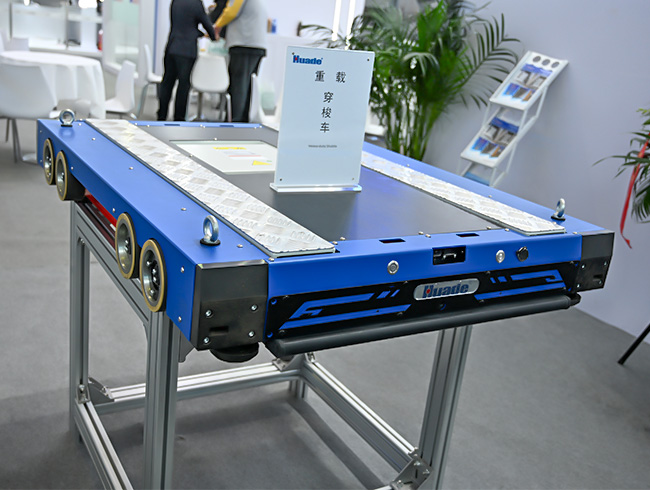
The four-way shuttle is the core handling equipment in a 4 way shuttle system. It travels along dedicated rack tracks in both longitudinal and transverse directions, allowing it to reach different storage locations without turning around. At track intersections, the vehicle can change direction by 90° and lift or lower pallets to complete storage and retrieval tasks.
When combined with vertical lifts, four-way shuttles can also move between different storage levels, enabling three-dimensional pallet handling throughout the warehouse. Their compact structure, heavy-load capability, and flexible movement make them suitable for high-density pallet storage, including warehouses with demanding operating conditions.
1. How Does a Four-Way Shuttle Work?
Each shuttle receives task instructions from the warehouse control system and follows a planned route to the target storage location. Its main operations include:
- Travel: Servo motors drive the shuttle along dedicated rack tracks, while positioning sensors help it reach the target location accurately.
- Direction Change: A hydraulic lifting mechanism raises the vehicle’s wheel assemblies, allowing the wheels to switch between longitudinal and transverse tracks.
- Pallet Handling: A hydraulic lifting mechanism raises or lowers the pallet, enabling the shuttle to place or retrieve loads from designated storage positions.
- Cross-Level Transportation: When a task requires movement between storage levels, a vertical lift transfers the shuttle or pallet to the required floor.
- Task Coordination: The onboard control system communicates with the WCS to receive instructions, report operating status, and coordinate movements with other equipment.
2. Key Technical Features
A four-way shuttle combines mechanical, electrical, sensing, and communication technologies to ensure stable operation and accurate pallet handling.
Strong Mechanical Structure
The vehicle consists of a main frame, travel mechanism, pallet lifting mechanism, wheel-lifting and direction-changing mechanism, and hydraulic system. Its reinforced structure provides resistance to deformation under heavy loads and supports stable movement along rack tracks.
Accurate Positioning and Movement
The shuttle uses DC servo motors and encoders for motion control, combined with barcode, laser ranging, and RFID technologies for positioning. This multi-sensor approach helps the vehicle locate target positions and perform pallet handling tasks accurately.
Reliable Pallet Lifting and Direction Changing
The hydraulic lifting mechanism provides stable pallet lifting and supports heavy loads. It also incorporates overload protection and upper and lower travel limits.
For direction changes, the vehicle uses a hydraulic mechanism to lift its wheel assemblies and switch direction by 90° at track intersections.
Intelligent Power and Communication
The shuttle is equipped with a lithium battery and Battery Management System (BMS) to monitor battery status and support automatic charging.
Built-in Wi-Fi communication enables real-time data exchange with the warehouse control system. Its onboard controller, based on a PLC or embedded control unit, manages vehicle movement, safety interlocks, and communication with the WMS/WCS.
Integrated Sensors and Control
Multiple sensors collect information about vehicle position, obstacles, and pallet status. The onboard controller processes these signals to coordinate movement, pallet handling, and safety functions.
Vertical Lift
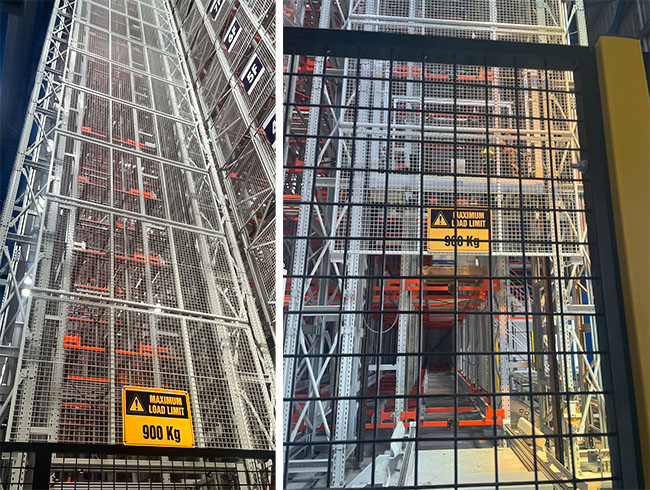
A vertical lift is an essential part of a 4 way shuttle system. It handles vertical transportation between storage levels, allowing four-way shuttles or pallet loads to move between different floors.
HUAYIDE develops servo-driven vertical lifts specifically for automated pallet storage applications. The lift features a rigid load platform and precise positioning, helping ensure stable transportation and accurate alignment with rack tracks.
Its main components include:
- Lift frame: Provides structural support for the lifting mechanism and load platform.
- Servo-driven lifting mechanism: Uses a servo motor, integrated gearbox, and rack-and-pinion transmission for controlled vertical movement.
- Load platform: Integrates conveyor chains and compatible shuttle tracks to handle both pallets and four-way shuttle vehicles.
- Electrical control system: Coordinates lifting operations and communicates with the WCS.
The lift supports three operating modes: manual, standalone automatic, and integrated automatic operation. It can also be equipped with protective roller shutters or an enclosed shaft structure to meet warehouse insulation and fire compartmentation requirements.
When working with four-way shuttles, the vertical lift provides reliable cross-level transportation and helps maintain efficient pallet handling throughout the warehouse.
Pallet Inspection and Identification
Before pallets enter the storage area, the system needs to verify their weight, dimensions, and identification information. These checks help prevent unsuitable loads from entering the racks and ensure accurate inventory management.
A 4 way shuttle system can integrate weighing equipment, RFID readers, and automatic dimensioning devices to complete these checks.
Weight and RFID Inspection
After an inbound order is generated, the control system sends instructions to the relevant equipment. As pallets pass through the inspection area, the system checks their actual weight against the recorded value and reads the pallet’s RFID information.
- Weight verification: If the actual weight exceeds the specified limit or does not match the recorded value, the system stops the inbound process and returns the pallet for inspection.
- RFID identification: RFID readers capture pallet identification data and link it to the corresponding inventory information.
To improve reading reliability, RFID antennas are installed on both sides of the conveyor rather than being rigidly attached to the conveyor structure. This helps reduce interference caused by equipment vibration.
Automatic Pallet Dimensioning
A gantry-style photoelectric inspection system measures the length, width, and height of inbound pallet loads without physical contact.
Multiple photoelectric sensors are arranged around the conveyor to detect pallet positions and measure load dimensions.
If a pallet exceeds the permitted length, width, or height, the system triggers an alarm and stops the inbound process. The pallet is returned for manual adjustment and reinspection before entering storage.
Once the dimensions pass inspection, the warehouse control system uses the measured data to assign a suitable storage location based on predefined allocation rules, helping maintain efficient and organized warehouse operations.
Storage Racking
Storage racking provides the structural framework and dedicated travel tracks for four-way shuttle operations. Its design directly affects storage density, pallet accessibility, and equipment movement.
A typical four-way shuttle rack structure consists of:
- Upright frames
- Support beams
- Secondary shuttle tracks
- Main tracks
- Tie rods
- End supports
- Direction-changing tracks
These components work together to support pallet loads and create interconnected travel paths for shuttle vehicles. The rack layout can be customized according to warehouse dimensions, storage capacity, and shuttle movement requirements.
Conveyors, AGVs and Auxiliary Equipment
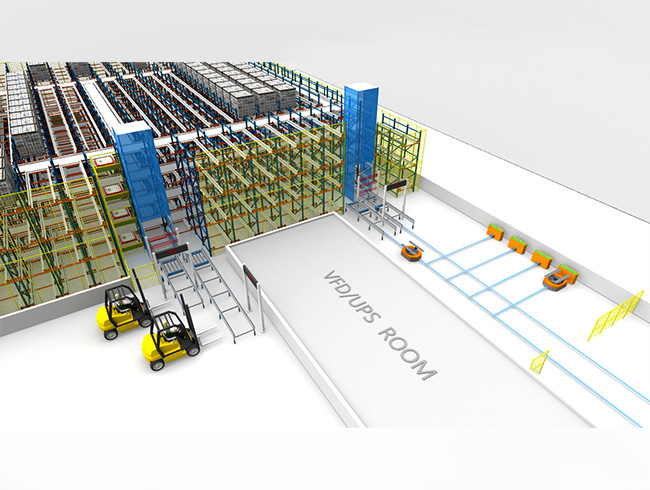
Conveyors and AGVs connect the automated storage area with external material handling operations. Their configuration depends on warehouse layout, pallet specifications, and inbound and outbound processes.
1. Conveyor Systems
Chain conveyors and roller conveyors are commonly used to transport pallets between inspection stations, lift platforms, storage access points, and outbound workstations.
Position sensors installed along the conveyor detect pallet locations and control starting, stopping, and transfer operations. Conveyor types and quantities are selected according to the required throughput and workflow, helping balance the handling capacity of different equipment.
2. Ground AGVs and Supporting Equipment
Ground AGVs can transport pallets between multiple workstations and deliver inbound loads to rack-side loading stations. For warehouses that prefer manual inbound handling, the system can also support forklift-to-conveyor connections.
Other supporting equipment may include:
- LED displays for operational information.
- Wireless access points and network switches for equipment communication.
- Handheld terminals for on-site operation and monitoring.
Together, these devices connect the storage system with external logistics processes, supporting flexible pallet transportation and coordinated warehouse operations.