
Table of Contents
Contact Us
Recent Posts
Follow Us
Introduction
In recent years, more and more companies planning automated warehouse projects have shown growing interest in rack supported building solutions. At HUAYIDE, we have noticed a significant increase in inquiries from clients who want to better understand how this type of warehouse compares with traditional automated storage facilities, especially in terms of construction cost, approval procedures, fire protection requirements, and overall project complexity.
Unlike conventional warehouse construction, a rack supported building integrates the storage racking system directly into the building structure itself. Instead of building a warehouse first and then installing storage racks inside, the racking structure becomes the main load-bearing framework of the entire facility.
This article explains the major differences between rack supported warehouse systems and traditional ASRS warehouses, helping businesses make more informed investment decisions.
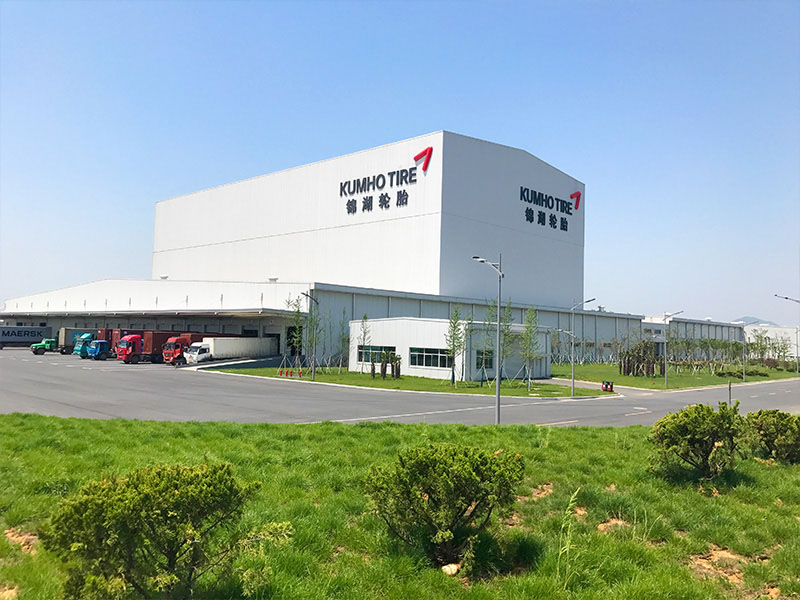
What Is a Rack Supported Building?
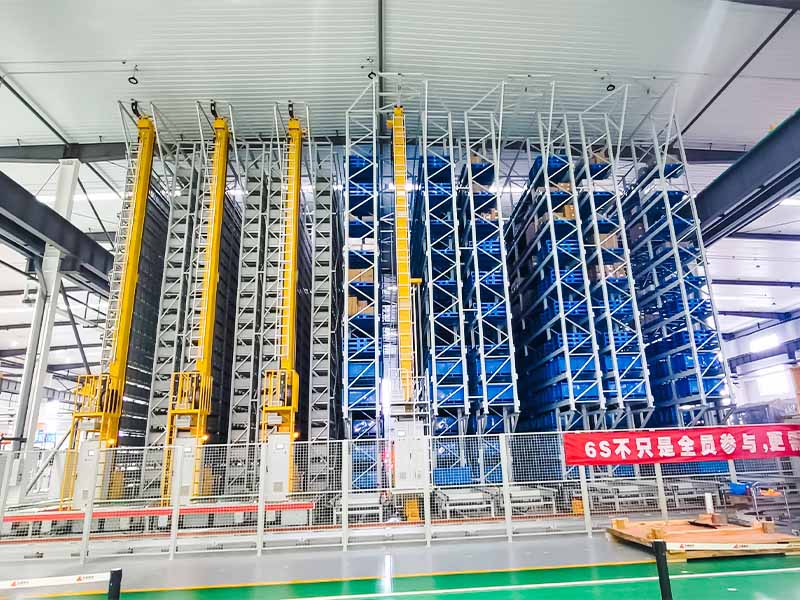
A rack supported building is an integrated warehouse structure where the storage racking system functions not only as storage equipment but also as the primary structural framework of the building.
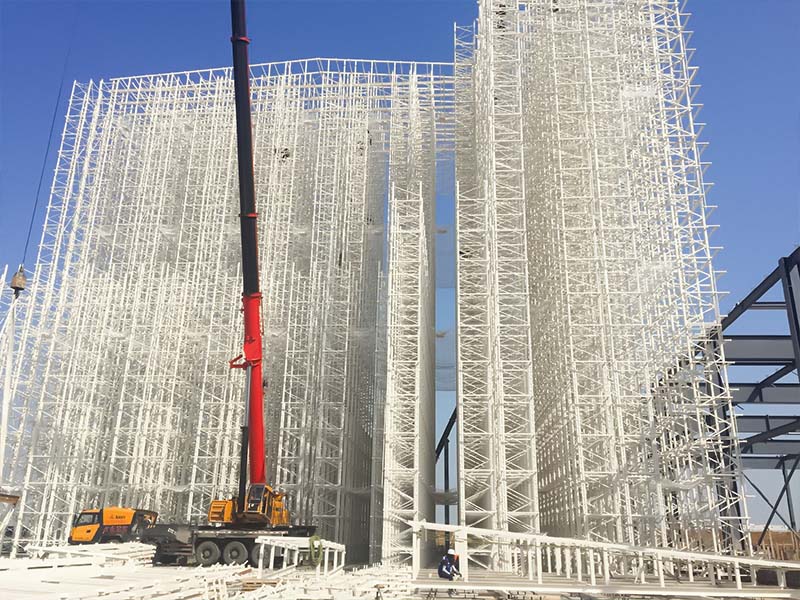
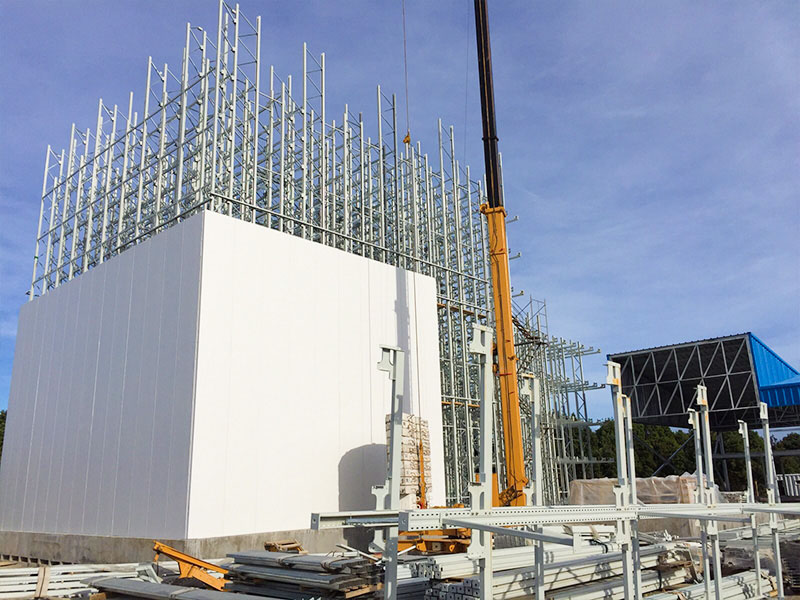
Unlike traditional warehouses that use independent steel columns and building structures, a rack clad warehouse eliminates separate structural columns by allowing the racking system to directly support the roof and wall panels.
This means the rack structure must handle both internal and external loads, including:
- Pallet and cargo weight
- Roof and wall structural loads
- Wind pressure
- Snow loads
- Seismic forces
Because of this design, rack supported warehouses are particularly suitable for projects requiring high-density storage and maximum land utilization.
Rack Supported Building vs Traditional Warehouse: Structural Differences
The fundamental difference between these two warehouse types lies in their structural design philosophy.
In conventional warehouse construction, the building and the storage racks are designed as two completely separate systems. The building structure supports environmental loads, while the racks only support stored goods.
In contrast, a rack supported building combines these two systems into one unified structure.
| Comparison Factor | Rack Supported Building | Traditional ASRS Warehouse |
|---|---|---|
|
Structural Design |
Racking serves as building framework |
Building and racking separated |
|
Load Bearing |
Supports cargo + roof + wall loads |
Supports cargo only |
|
Building Structure |
No independent structural columns |
Independent building columns required |
|
Construction Method |
Integrated construction |
Separate construction phases |
|
Space Efficiency |
Very high |
Moderate |
Main Advantages of Rack Supported Warehouse Systems
Compared with conventional warehouse construction, rack supported warehouse systems offer several important advantages.
1. Higher Space Utilization
Traditional warehouses require steel columns and safety clearances between the building and storage racks.
A rack supported building removes these limitations, allowing storage racks to extend directly to the building boundaries.
2. Lower Construction Cost
For large-scale projects, integrated warehouse construction can reduce total building investment by approximately 20% to 30%.
The savings mainly come from reduced structural steel consumption and simplified civil construction work.
3. Faster Construction Timeline
Since the warehouse structure and racking system are built simultaneously, project construction time can often be reduced by approximately one-third.
4. Better Land Utilization
This solution is highly valuable in regions where industrial land costs are high and storage density is critical.
5. Better Scalability
Modular system design allows easier future expansion as business storage demand increases.
Cost Comparison Between Rack Supported Building and Traditional Warehouse
From an investment perspective, the differences become more obvious in large automated warehouse projects.
| Cost Factor | Rack Supported Building | Traditional Warehouse |
|---|---|---|
|
Structural Steel Cost |
Lower |
Higher |
|
Civil Construction Cost |
Lower |
Higher |
|
Installation Time |
Shorter |
Longer |
|
Labor Cost |
Lower |
Higher |
|
Initial Investment |
20%–30% savings in large projects |
Higher |
Although project economics vary by design requirements, rack supported buildings generally provide better ROI in high-volume automated warehouse projects.
Key Planning Considerations Before Building a Rack Supported Warehouse
Successful implementation requires careful planning during the early design stage.
Important factors include:
- Product type and packaging specifications
- Pallet size and storage requirements
- Warehouse throughput requirements
- Site conditions and civil engineering limitations
- Automation equipment compatibility
- Future expansion planning
Among all design stages, structural calculation is one of the most critical engineering tasks.
Engineers must analyze the entire racking system as a single structural body while considering both internal operational loads and external environmental forces.
How to Successfully Build a Clad Rack Warehouse
As land costs rise and storage demands increase, more companies are turning to Clad Rack Warehouse solutions. This article explains the key steps involved in planning, building, and operating an efficient automated warehouse system.
Structural Design and Fire Protection Challenges
One of the biggest engineering challenges of a rack supported warehouse is structural complexity.
Since the racking system functions as part of the building structure, engineers must design the system to satisfy both warehouse equipment standards and building structural safety requirements.
Traditional cold-formed steel structures may not always meet fire resistance requirements. In many cases, composite steel-concrete structural solutions provide better fire performance and structural stability.
Fire protection design creates additional complexity.
A complete fire protection system typically includes:
- Automatic fire alarm systems
- Indoor and outdoor fire hydrant systems
- Automatic sprinkler systems
- Structural fire resistance design
- Emergency evacuation systems
The main challenge is integrating these systems without interfering with automated warehouse operation.
Construction Process and Project Management Challenges
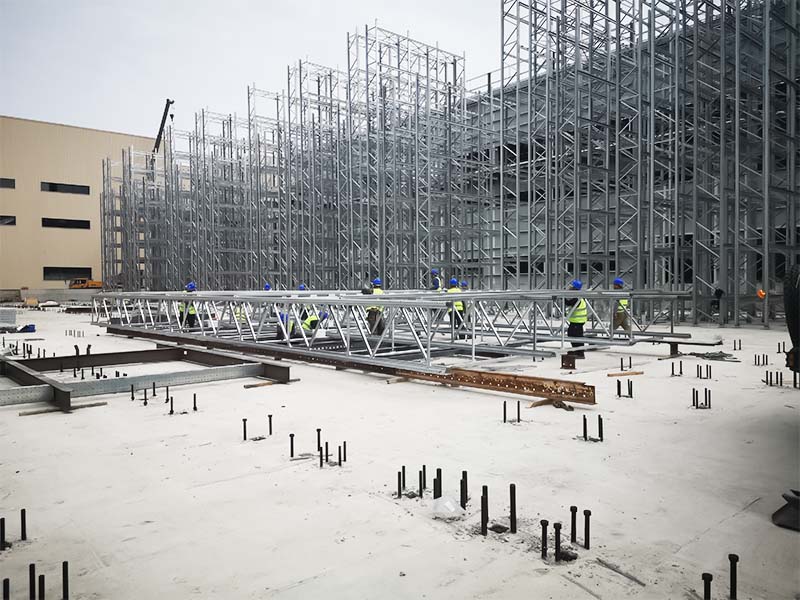
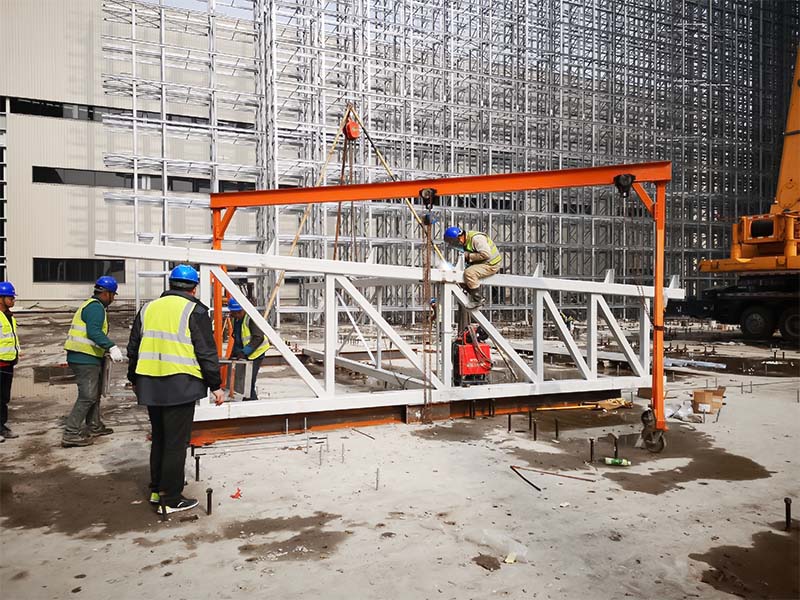
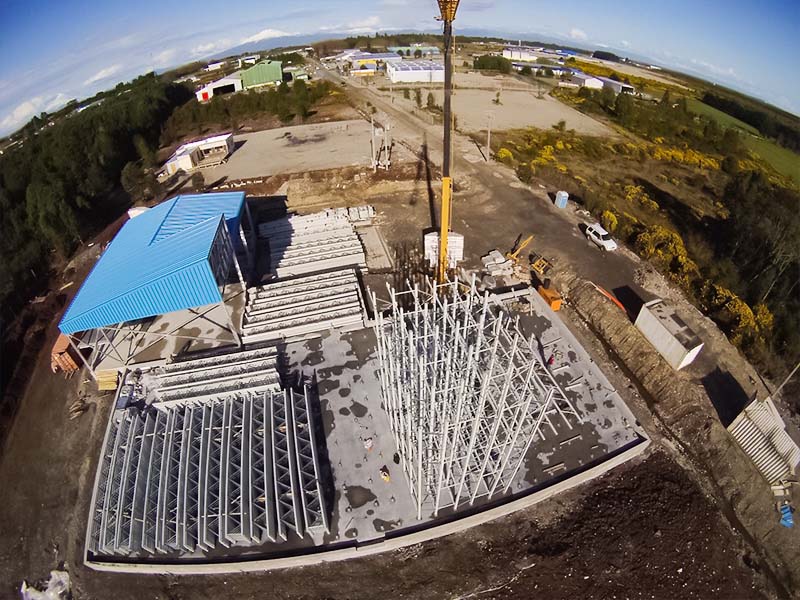
The construction process of a rack supported building requires highly coordinated project management.
Unlike traditional warehouses, installation work happens simultaneously across multiple disciplines.
Key construction challenges include:
- Cross-construction coordination
- Outdoor heavy lifting operations
- Modular installation scheduling
- Equipment and manpower coordination
- Large crane operation management
Installation precision is especially important for automated systems.
For ASRS stacker crane systems, rail horizontal and vertical accuracy directly affects long-term operational stability.
Intelligent System Integration Challenges
Modern warehouse automation goes far beyond mechanical equipment.
A complete intelligent warehouse system usually integrates multiple software systems working together.
| System | Main Function |
|---|---|
|
Warehouse Management System (WMS) |
Inventory management and stock visibility |
|
Warehouse Control System (WCS) |
Equipment control and automation execution |
|
SAP ERP |
Enterprise resource planning |
|
Manufacturing Execution System (MES) |
Manufacturing process coordination |
Advanced warehouse software should also support multiple operating modes:
- Manual control
- Semi-automatic control
- Fully automatic online operation
Real-time inventory visibility and intelligent reporting functions provide critical support for operational decision-making.
Is a Rack Supported Building the Right Choice for Your Project?
A rack supported building is often the ideal solution when businesses need:
- Maximum storage density
- Faster project delivery
- Lower overall construction investment
- Large-scale warehouse automation
- Better long-term return on investment
- Efficient land utilization
For companies planning large automated warehouse projects, rack supported warehouse systems often outperform traditional warehouse construction in both efficiency and long-term economic value.
Choosing the right warehouse structure early in the planning stage can significantly impact future operational performance and project profitability.
Why Choose HUAYIDE for Your Rack Supported Building Project?
Building a rack supported building requires more than warehouse equipment. It demands strong engineering expertise, project experience, and the ability to optimize solutions based on different operational requirements.
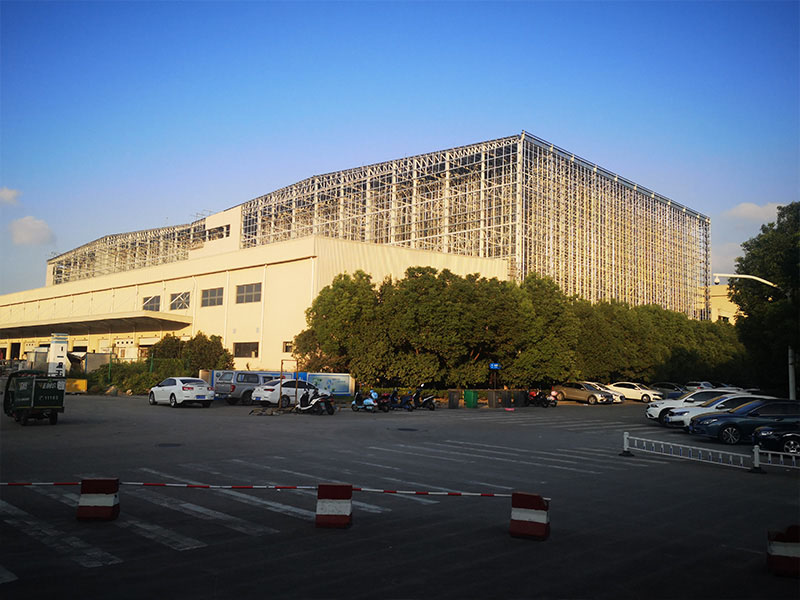
At HUAYIDE, we have completed multiple rack supported warehouse projects and help customers design solutions that balance efficiency, safety, and long-term investment value.
1. What HUAYIDE Can Offer
We support customers throughout the entire project process with:
- Proven experience in multiple rack supported building projects
- Factory visits and real project site visits in China
- Advanced testing centers for stacker crane and four-way shuttle systems
- Free customized warehouse planning and 3D simulation
- Online or on-site technical consultation with experienced engineers
- Complete one-stop service from design to installation and after-sales support
With extensive automation experience across different industries, HUAYIDE helps customers build warehouse solutions that are practical, cost-effective, and optimized for long-term performance.
If you are planning a rack supported warehouse project, our team is ready to help you find the right solution.
Contact HUAYIDE today and discuss your warehouse automation project with our experts.
FAQ
1. What is a rack supported building?
A rack supported building is a warehouse structure where the storage racking system serves as the main load-bearing framework of the building, supporting both stored goods and the building enclosure itself.
2. What is the difference between a rack supported building and a traditional warehouse?
In a traditional warehouse, the building structure and storage racks are separate systems. In a rack supported warehouse, the racking system becomes part of the building structure, improving space utilization and reducing construction costs.
3. How much does a rack supported warehouse cost?
Project cost depends on warehouse size, storage capacity, automation level, and structural design requirements. In large projects, rack supported building solutions can often reduce total construction costs by 20% to 30% compared with conventional warehouse construction.
4. Are rack supported buildings safe?
Yes. When properly engineered, rack supported buildings are designed to handle structural loads, seismic requirements, wind loads, and fire protection standards just like conventional industrial buildings.
5. When should a company choose a rack supported warehouse?
A rack supported warehouse is ideal when companies need high-density storage, limited land usage, faster construction timelines, and large-scale automated warehouse operations.