
Table of Contents
Contact Us
Recent Posts
Follow Us
Introduction
Running out of warehouse space is a problem almost every growing business eventually faces.
As inventory volume increases, many companies immediately consider moving to a larger warehouse or expanding their existing facility. Unfortunately, both options often involve major capital investment, rising land and rental costs, long construction timelines, and the risk of disrupting daily operations.
But here is something many warehouse managers overlook:
Increasing warehouse capacity does not always require a bigger building.
In many cases, the fastest and most cost-effective solution is simply learning how to use your existing warehouse space more efficiently.
By optimizing vertical storage, redesigning warehouse layout, improving inventory management, and implementing automation systems, businesses can dramatically increase storage density without adding extra floor space.
In this guide, we will walk through 12 proven strategies that can help you increase warehouse storage capacity while improving operational efficiency at the same time.
Quick Answer: How Can You Increase Warehouse Storage Capacity?
If your warehouse is running out of space, there are several proven ways to increase storage capacity without relocating:
- Increase vertical storage height with high-bay racking
- Install mezzanine floor systems
- Reduce aisle width using VNA racking
- Improve warehouse layout design
- Implement WMS inventory optimization
- Adopt high-density storage systems
- Use ASRS automation systems
- Deploy shuttle systems for compact storage
The best solution depends on your warehouse height, SKU variety, throughput requirements, inventory turnover rate, and long-term business growth plans.
Vertical Expansion — Maximize Warehouse Height Utilization
One of the fastest ways to increase warehouse storage capacity is making better use of vertical space.
If your warehouse floor structure can handle additional load capacity and local fire safety regulations allow, increasing storage height can immediately create more available storage positions.
However, simply installing taller racks while continuing to rely on traditional manual handling methods often introduces operational inefficiencies and safety risks. This is why many warehouses combine vertical expansion with automated storage solutions.
Vertical Storage Solution Comparison
| Warehouse Height | Recommended Solution | Storage Density Improvement | Ideal Application |
|---|---|---|---|
|
6–8 meters |
Steel Mezzanine Platform |
Up to 2x |
Small & medium warehouses |
|
12–24 meters |
ASRS High Bay Racking |
5x–10x |
Automated pallet storage |
|
30+ meters |
Rack Supported Warehouse |
4x–7x |
Large-scale automated warehouses |
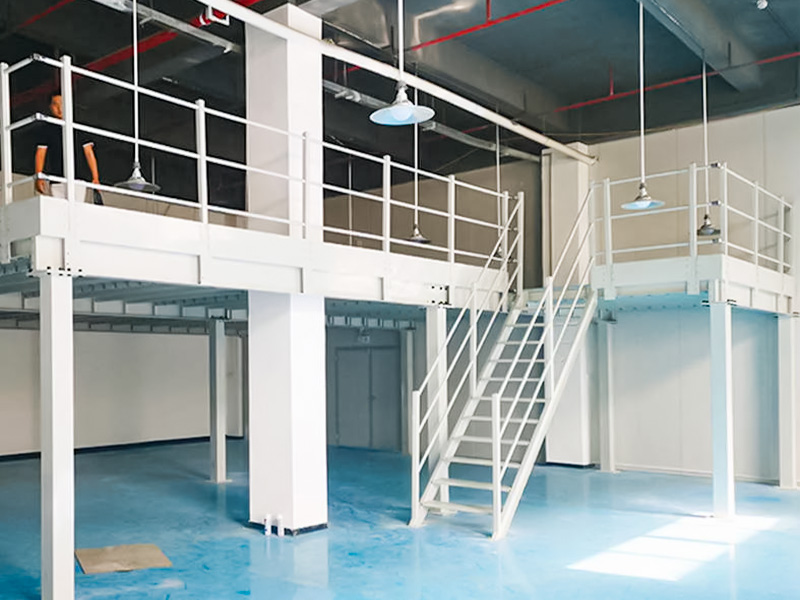
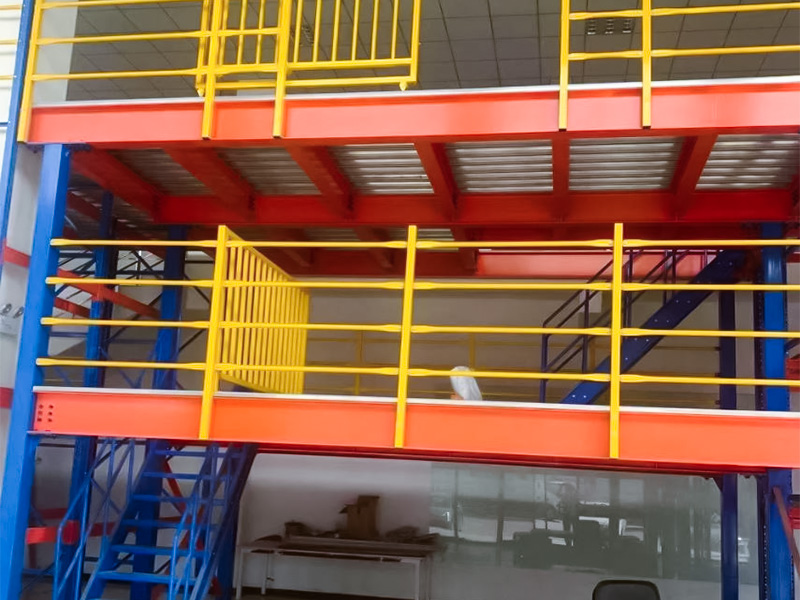
1. Steel Mezzanine Platform (Best for 6–8 Meter Warehouses)
For warehouses with ceiling heights between 6 and 8 meters, businesses that are not yet ready to invest in large-scale automation but need to quickly increase storage capacity often find steel mezzanine platforms to be a highly cost-effective solution.
Rather than expanding the physical warehouse space, a mezzanine system adds one or multiple additional floor levels within the existing facility, transforming a single-level warehouse into a multi-level storage structure and allowing the same floor area to serve multiple functions at the same time.
Typical applications include:
- Upper level for lightweight goods storage
- Upper level for order picking operations
- Lower level for regular pallet storage
- Lower level for packing stations or work areas
- Additional office or operational workspace
One of the biggest advantages of a steel mezzanine platform is its flexibility.
Load capacity, span dimensions, column spacing, and overall structural design can all be customized according to actual operational requirements.
Compared with large warehouse expansion projects, steel mezzanine systems typically require a shorter installation period and a more controllable investment budget, making them particularly suitable for small and medium-sized warehouses looking for fast capacity expansion.
2. ASRS High Bay Racking System (Best for Warehouses Above 12 Meters)
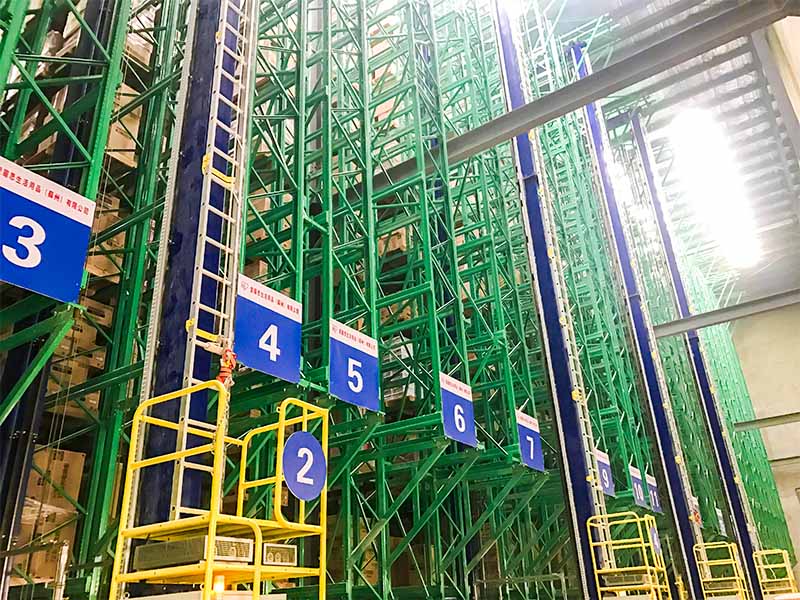
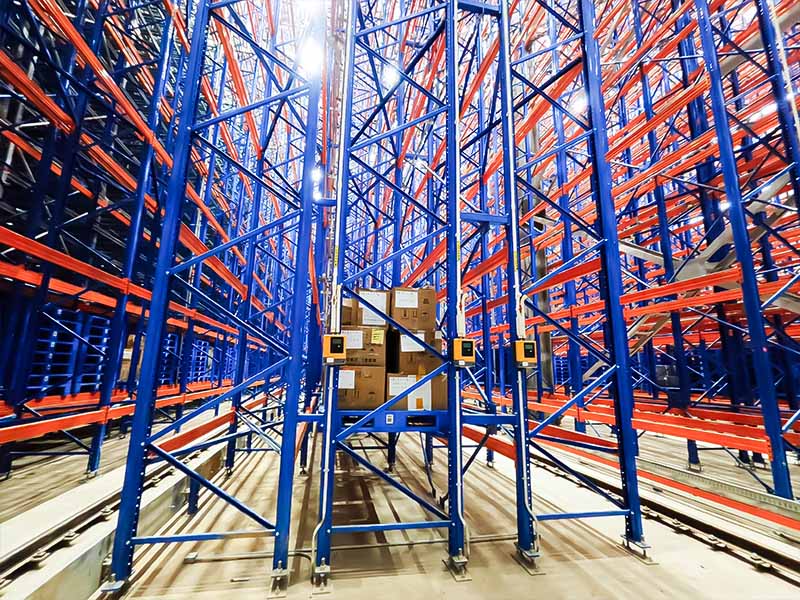
For warehouses with ceiling heights above 12 meters, ASRS (Automated Storage and Retrieval System) high-bay racking is one of the most effective solutions for significantly increasing storage capacity. By combining vertical space utilization, optimized warehouse layout, and intelligent automation systems, ASRS high-bay racking can typically improve storage capacity by 30% to several times compared with traditional warehouse storage systems.
The storage expansion capability of ASRS systems mainly comes from three key aspects.
2.1 Maximizing Vertical Space Utilization
The biggest advantage of ASRS high-bay racking lies in its ability to fully utilize warehouse height. Traditional warehouses usually rely on manual handling and forklift operations, which often limits practical storage height to only 2–3 meters.
In contrast, ASRS systems can be built at heights of 10 meters, 20 meters, or even higher, allowing businesses to fully utilize vertical warehouse space and achieve high-density three-dimensional storage. The modular rack structure also allows flexible upward expansion and can adapt to irregular warehouse layouts when necessary.
2.2 Optimizing Warehouse Layout and Storage Density
Traditional warehouse layouts require forklift operating aisles wider than 3 meters, which consumes a significant amount of floor space. ASRS systems rely on stacker cranes or AGVs to complete storage and retrieval operations automatically, eliminating the need for wide manual access aisles.
As a result, aisle width can often be reduced to approximately 1.6–2.2 meters, significantly increasing overall storage density and converting more warehouse floor area into usable pallet positions.
| Traditional Warehouse | ASRS Warehouse |
|---|---|
|
Manual forklift operation |
Automated stacker crane operation |
|
Aisle width > 3 meters |
Narrow aisle design (1.6–2.2 m) |
|
Lower storage density |
High-density storage layout |
|
Limited vertical utilization |
Maximum height utilization |
2.3 Equipment and System Coordination
The true efficiency of ASRS systems comes from coordination between automated equipment and intelligent warehouse management systems. Stacker cranes, shuttle systems, and AGVs replace traditional forklift operations, reducing dependence on manual ground operations and freeing additional floor space for dense storage layouts.
At the same time, integration with WMS enables dynamic storage location optimization. High-turnover inventory can automatically be allocated near outbound positions, while slow-moving inventory can be assigned to higher or less accessible storage locations, ensuring the warehouse continuously operates at maximum space efficiency.
Before implementing an ASRS high-bay warehouse, businesses should carefully evaluate floor load capacity, building height limitations, fire safety clearance requirements, and future expansion needs to ensure long-term operational safety and system scalability.
3. Rack Supported Warehouse System (Best for Warehouses Above 30 Meters)
A Rack Supported Warehouse (RSW) merges the storage rack with the building structure itself. Rack columns directly support the roof, and storage positions are built into the rack assembly — eliminating the dual footprint of a conventional steel frame plus separate internal racking.
Traditional Warehouse vs Rack Supported Warehouse
| Comparison Factor | Traditional Warehouse | Rack Supported Warehouse |
|---|---|---|
|
Internal Columns |
Required |
Eliminated |
|
Space Utilization |
50%–60% |
Up to 95%+ |
|
Building Height Limit |
Usually below 30m |
30m–45m+ |
|
Storage Density |
Standard |
Extremely High |
|
Automation Compatibility |
Moderate |
Excellent |
By combining a column-free interior, ultra-high-rise design, high-density configuration, and automation readiness, a Rack Supported Warehouse delivers an exponential leap in total storage capacity — making every square meter of land work dramatically harder.
Ideal Applications
Best suited for medium- to large-scale warehousing where:
- Land is expensive
- Maximum storage density is a critical requirement
- Automated, unmanned operations are the goal
Rack Supported Building vs Traditional ASRS Warehouse: Key Differences in Cost, Design and Construction
This article explains the major differences between rack supported warehouse systems and traditional ASRS warehouses, helping businesses make more informed investment decisions.
Horizontal Expansion — Optimize Warehouse Layout and Floor Space
Vertical expansion is not the only way to increase warehouse storage capacity.
In many warehouses, a significant amount of space is lost at ground level due to inefficient layout design and oversized aisle allocation.
In traditional warehouse operations, aisles often account for more than 40% of total floor space. Main forklift aisles, pedestrian walkways, safety clearance zones, and staging areas gradually reduce the amount of space actually available for storage.
However, aisle space should not simply be reduced blindly. The goal is to find the optimal balance between storage density, operational efficiency, and workplace safety. There are two major ways to optimize warehouse floor space.
1. Warehouse Layout Optimization
Besides storage racks, every warehouse also contains non-storage functional areas such as:
- Receiving zones
- Temporary staging areas
- Quality inspection areas
- Packing stations
- Shipping zones
Although these areas do not directly store inventory, they often occupy a surprisingly large percentage of warehouse floor space. One of the most effective optimization methods is integrating these operational areas vertically.
1.1 Steel Mezzanine Platform for Functional Area Integration
A steel mezzanine platform is not only useful for increasing storage capacity.
It can also help consolidate multiple operational functions into the same footprint.
For example:
Instead of dedicating separate floor space for packing operations, businesses can place packing stations underneath the mezzanine platform while utilizing the upper level for storage, office space, or picking operations.
This allows a single warehouse area to serve multiple operational purposes simultaneously.
Example of Space Integration
| Traditional Layout | Optimized Layout |
|---|---|
|
Separate packing area |
Packing station under mezzanine |
|
Separate storage area |
Storage above mezzanine |
|
Independent office space |
Office integrated on upper level |
|
Single floor usage |
Multi-level space utilization |
By reorganizing warehouse functions vertically, businesses can significantly reduce non-storage space occupation while increasing overall storage capacity.
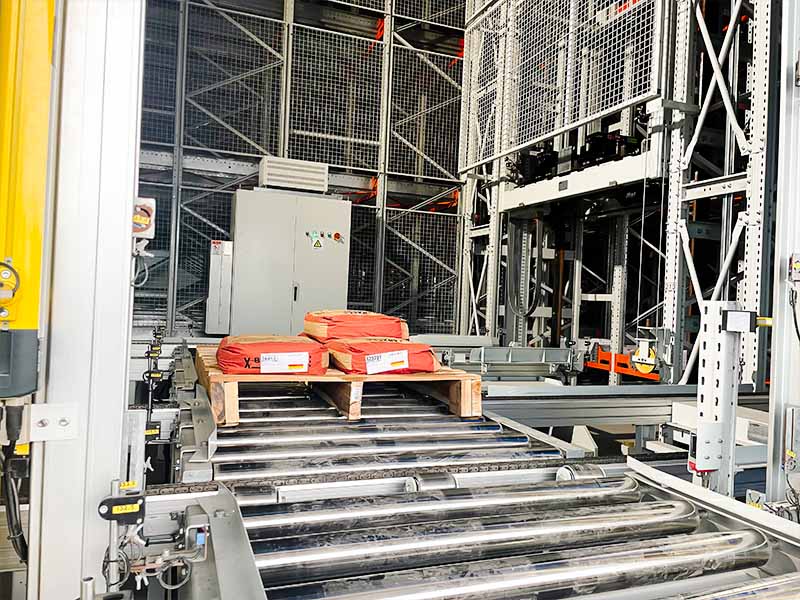
1.2 Pallet Conveyor System for Workflow Optimization
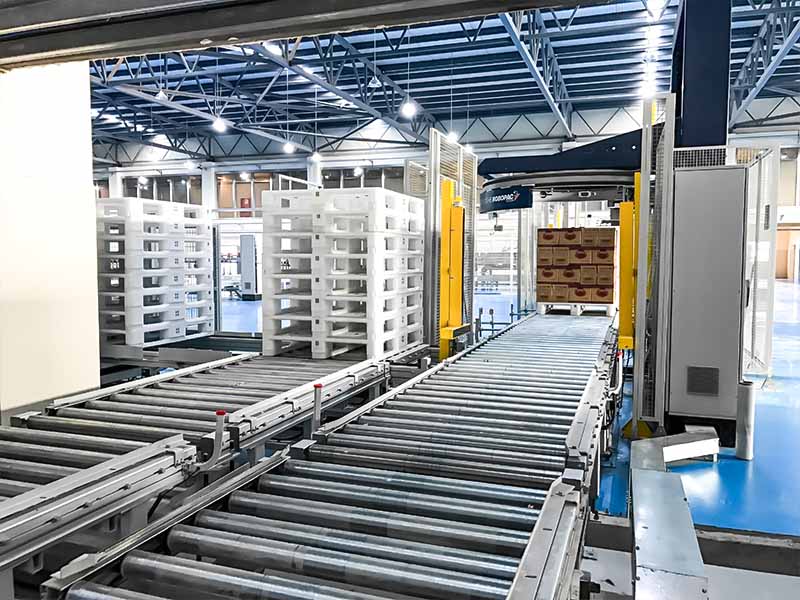
Another highly effective method for warehouse layout optimization is implementing a pallet conveyor system.
Instead of relying on forklifts to repeatedly transport goods between different warehouse areas, conveyor systems create a continuous automated material flow connecting multiple operational zones.
Typical connected areas include:
- Receiving area
- Storage area
- Picking stations
- Packing zone
- Shipping area
A standard pallet conveyor system may include:
- Roller conveyors
- Chain conveyors
- Transfer units
- Vertical lifts
- Sorting modules
By automating material movement between different work zones, businesses can significantly reduce forklift traffic inside the warehouse.
As forklift dependency decreases, the amount of floor space reserved for forklift buffer zones and transportation aisles can also be reduced.
The result is a more compact warehouse layout with more available storage space.
2. Warehouse Aisle Optimization
Aisle design plays a critical role in warehouse space utilization.
In traditional warehouses, standard counterbalance forklifts typically require aisle widths of 3.5 meters or more in order to perform 90-degree turning movements when handling pallets.
This means every row of racking requires a large amount of non-storage space.
By upgrading storage equipment and changing material handling methods, aisle width can often be significantly reduced.
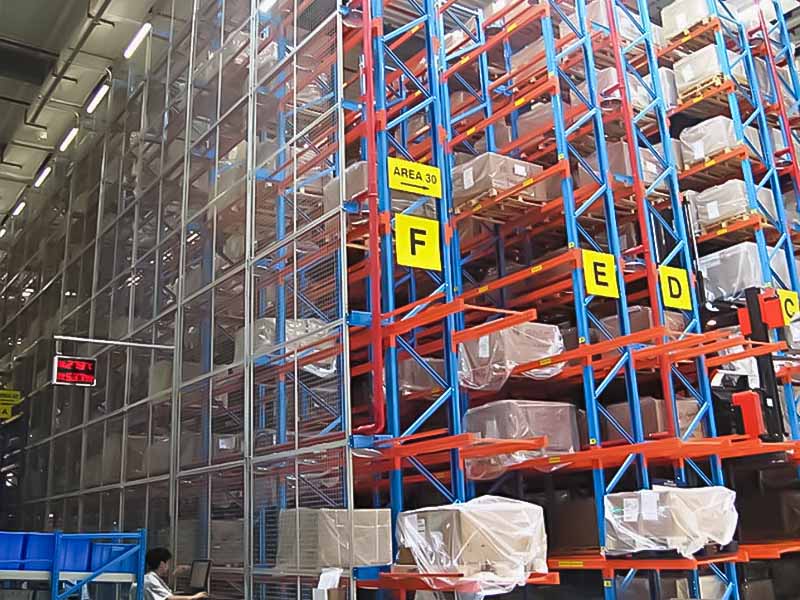
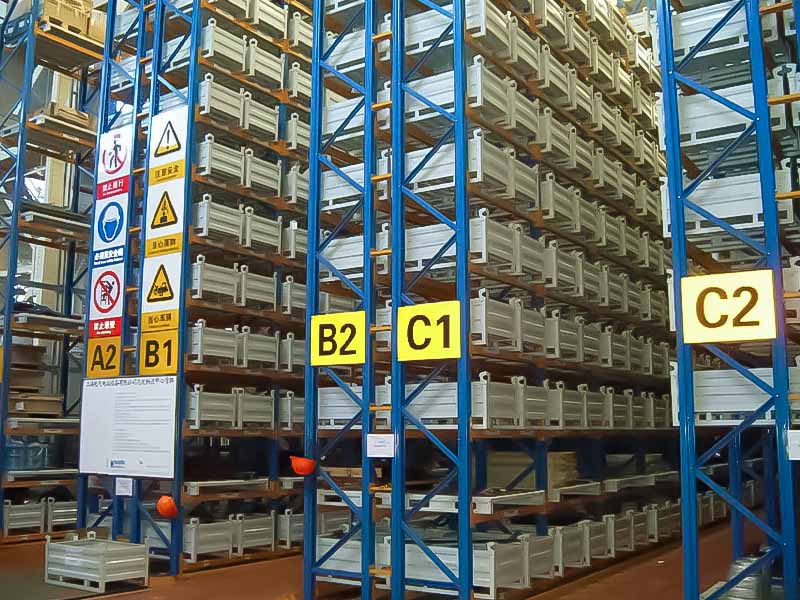
2.1 Very Narrow Aisle (VNA) Racking System
Traditional forklifts require wide aisles for turning and positioning.
However, when warehouses switch to VNA forklifts, three-way forklifts, or AGV systems, aisle width can often be reduced to approximately 1.6 meters.
This is where Very Narrow Aisle (VNA) Racking Systems become highly effective.
Standard Racking vs VNA Racking
| Comparison Factor | Standard Pallet Racking | VNA Racking |
|---|---|---|
|
Aisle Width |
3.5m+ |
1.5m–2m |
|
Storage Density |
Standard |
30%+ Higher |
|
Equipment Required |
Standard forklift |
VNA forklift / AGV |
|
Floor Space Utilization |
Moderate |
High |
With narrower aisle requirements, warehouses can install additional rows of storage racks within the same building footprint.
In many cases, total storage capacity can increase by more than 30%.
By combining VNA racking with three-way forklifts or automated AGV systems, warehouses can significantly reduce wasted aisle space while maintaining efficient pallet handling.
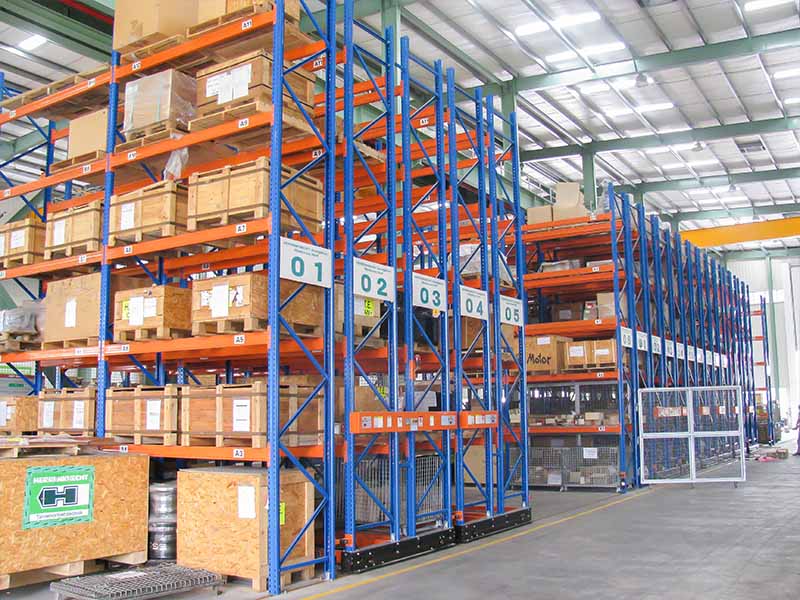
2.2 Mobile Racking System
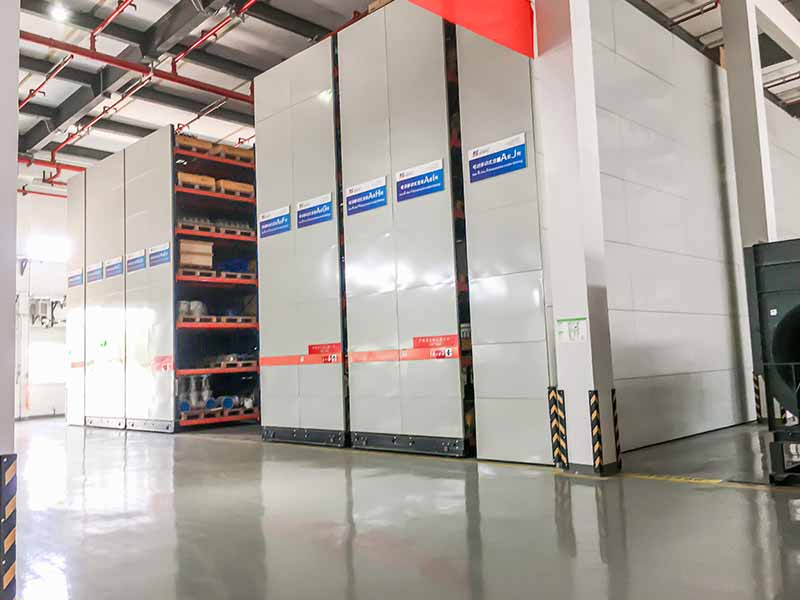
A mobile racking system provides another highly efficient approach to aisle space optimization.
In traditional racking systems, fixed aisles must remain permanently open between every rack row.
Mobile racking works differently. Each rack row is installed on a rail-guided moving base, allowing multiple rack rows to remain tightly compacted together when not in use.
No permanent aisle space is required. When operators need access to a specific storage lane, the system temporarily opens a single working aisle through manual or motorized movement. After access is completed, the racks move back into position and the aisle disappears.
Why Mobile Racking Saves Space
- No permanently reserved aisle space
- Higher storage density than fixed racking systems
- Nearly double the space utilization in some applications
- Ideal for low-frequency inventory storage
This solution works particularly well for:
- Archive storage
- Spare parts warehouses
- Document management facilities
- Cold storage applications
- Low-turnover inventory storage
One important limitation should be considered.
Because racks must move before operators can access inventory, retrieval efficiency is lower than conventional pallet racking systems. For this reason, mobile racking systems are best suited for low-frequency inventory environments where maximizing storage density is more important than retrieval speed.
Optimize Inventory Management to Unlock Hidden Warehouse Capacity
Even after optimizing warehouse infrastructure and storage equipment, there is still another critical factor that directly impacts warehouse capacity: inventory management.
Many warehouses encounter the same frustrating situation: The warehouse seems large enough on paper, yet space shortages and overstocking problems continue to happen.
In most cases, the issue is not insufficient warehouse capacity. The real problem is inefficient inventory allocation.
When products are stored without proper organization, valuable storage space becomes fragmented, operational efficiency decreases, and available warehouse capacity is gradually wasted.
Optimizing inventory management often unlocks storage capacity that already exists but is simply being underutilized.
1. Dynamic Inventory Allocation with WMS
The most effective way to solve inventory imbalance is implementing a Warehouse Management System (WMS).
One of its most important functions is ABC inventory classification. Products are automatically categorized based on historical inbound and outbound frequency.
| Inventory Category | Product Characteristics | Recommended Storage Position |
|---|---|---|
|
A Category |
High-frequency, fast-moving inventory |
Front rows, lower-level positions, near shipping area |
|
B Category |
Medium turnover inventory |
Standard storage locations |
|
C Category |
Slow-moving inventory |
Remote zones, upper rack positions, dense storage area |
Once classification is completed, the system automatically allocates storage locations based on operational priority.
High-turnover products are positioned in the most accessible storage locations, while slow-moving inventory is relocated to less frequently accessed storage areas.
This allows warehouse space to be used more efficiently while reducing unnecessary travel distance during picking operations.
1.1 The Real Advantage of WMS: Continuous Dynamic Optimization
The biggest advantage of a WMS is not simple inventory visibility. Its real value lies in continuous dynamic optimization. Every time inventory is stored, picked, replenished, or relocated, the system automatically recalculates storage allocation in the background. For example:
- Fast-moving products automatically receive priority storage positions
- Replenished hot-selling products return to optimal storage locations
- Slow-moving inventory gradually moves away from high-access zones
- Storage allocation continuously adjusts without manual intervention
This means warehouse space is constantly being optimized in real time. Instead of relying on periodic manual adjustments, the system ensures the warehouse operates in its most efficient state every day.
Another point is that the WMS system can also set up inventory age warnings, automatically generate slow-moving reports, and push a list of SKUs that have not been sold for more than a set number of days to the manager to promote your clearance actions.
2. Optimize Storage Methods Based on Product Characteristics
Not every product should be stored using the same storage strategy. Different inventory types require different storage systems. Choosing the wrong storage method often leads to wasted warehouse space, poor accessibility, and unnecessary capacity loss.
Factors that typically influence storage system selection include:
- Product dimensions
- SKU quantity
- Inventory turnover frequency
- Product weight
- Palletized or non-palletized storage
- Batch storage requirements
- FIFO or LIFO inventory requirements
Selecting a storage system that matches your actual inventory characteristics is one of the most overlooked ways to improve warehouse capacity. Read the following article to learn how to choose the right warehouse storage system for you.
13 Common Warehouse Storage Systems: How to Choose the Best One
Explore 13 popular warehouse storage systems to boost logistics efficiency & inventory accuracy. Learn how to select the ideal storage solution for your warehouse automation needs.
Increase Storage Capacity Through Automation and System Integration
Optimizing warehouse structure and improving inventory management can significantly increase storage capacity.
However, the greatest efficiency gains are achieved when storage equipment, automation systems, and intelligent software work together as one integrated system.
Modern warehouse automation solutions not only improve operational efficiency but also unlock storage density that traditional warehouse systems simply cannot achieve. Below are several automation solutions capable of dramatically increasing warehouse storage capacity.
1. Four-Way Shuttle System
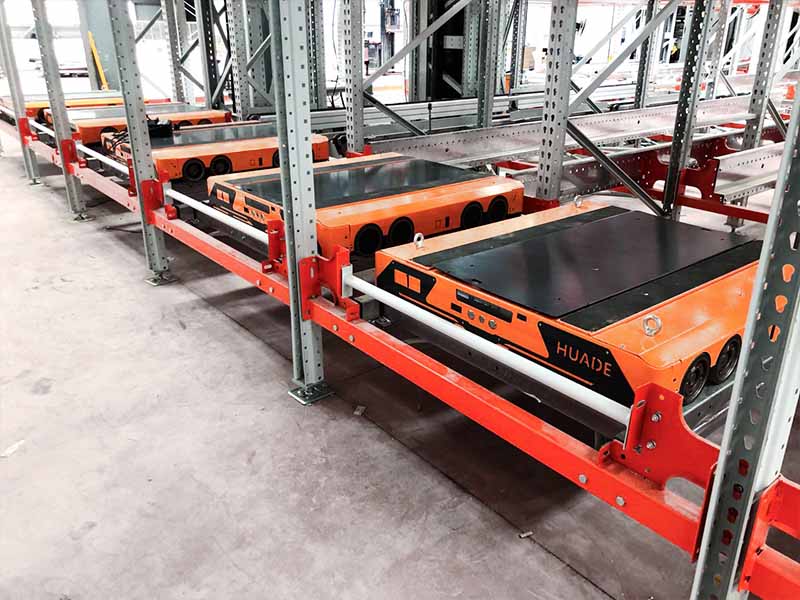
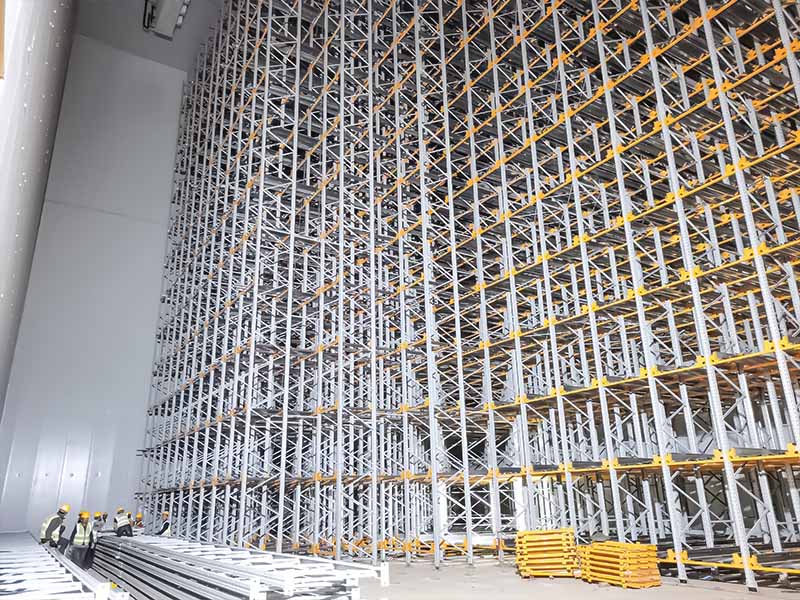
Among modern high-density storage solutions, the Four-Way Shuttle System has become one of the most efficient methods for maximizing warehouse space utilization.
In traditional warehouse racking systems, each storage lane requires dedicated forklift access. This means a significant portion of warehouse floor space must be permanently reserved for equipment movement rather than storage.
A Four-Way Shuttle System fundamentally changes this storage structure. Instead of relying on forklifts to enter storage aisles, autonomous shuttle vehicles operate directly inside the racking system and can move freely in four directions:
- Forward
- Backward
- Left
- Right
Vertical level changes are completed through a lift system.
Because the shuttle operates inside the racking structure itself, the system eliminates the need for traditional forklift access aisles within the storage area. This allows nearly the entire rack structure to be converted into usable storage space.
1.1 Why Four-Way Shuttle Systems Increase Storage Capacity
Key storage advantages include:
- No fixed forklift access aisles required
- High-density storage configuration
- 2–6 deep pallet storage arrangement
- Extremely small pallet clearance (≤25 mm)
- Cross-aisle movement between rack rows
- Multi-level autonomous operation through lift integration
Compared with conventional pallet racking systems, storage density can typically increase by 2 to 3 times.
1.2 Space Utilization Comparison
| Comparison Factor | Traditional Pallet Racking | Four-Way Shuttle System |
|---|---|---|
|
Internal Forklift Aisles |
Required |
Eliminated |
|
Storage Density |
Standard |
2x–3x Higher |
|
Multi-Depth Storage |
Limited |
2–6 Deep Positions |
|
Space Utilization |
Moderate |
Extremely High |
|
Automation Level |
Low |
Fully Automated |
Another major advantage is system scalability. Because the system adopts a modular design, future warehouse expansion can be achieved by simply adding:
- Additional rack rows
- Additional storage levels
- More shuttle vehicles
- Extended storage aisles
No major building reconstruction is required. The system can continue expanding alongside business growth while keeping investment costs under control.
2. Mother-Child Shuttle System
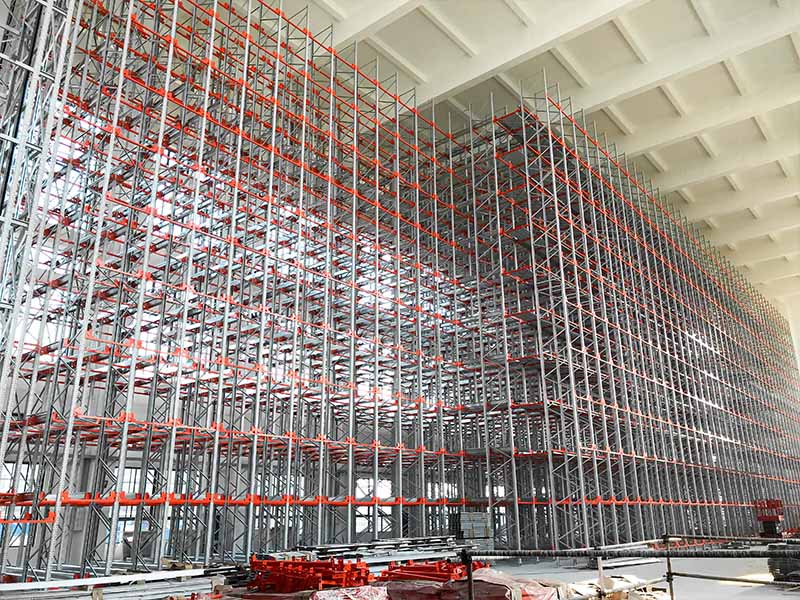
A Mother-Child Shuttle System increases storage capacity by combining high-density storage design with intelligent automated material handling.
In traditional warehouses, forklifts require wide operating aisles — often more than 3 meters — to complete turning and pallet positioning operations. This creates a large amount of non-storage space.
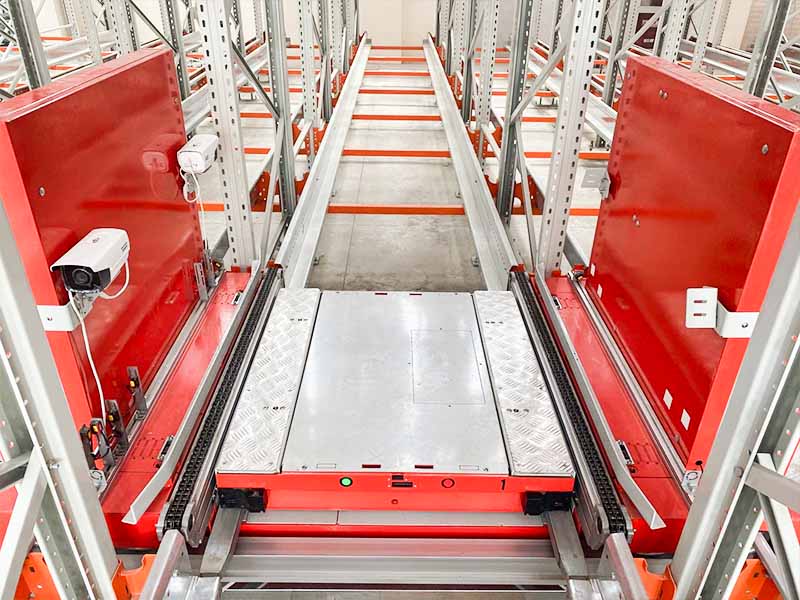
The Mother-Child Shuttle System removes this limitation through a human-machine separation operating model. Forklifts no longer enter deep storage aisles.
Instead:
- Forklifts operate only at aisle entry points
- The mother shuttle performs horizontal transport
- The child shuttle enters deep storage lanes for pallet handling
- Internal storage aisles no longer require forklift access space
This allows one main aisle to serve multiple storage lanes, dramatically reducing wasted floor space.
2.1 Key Storage Capacity Advantages
The system provides several major benefits:
- Dense multi-lane storage layout
- Minimal aisle space requirements
- High storage density configuration
- Cross-floor operation through lift integration
- Suitable for irregular warehouse building layouts
- Low building height and floor load restrictions
Because the system can utilize vertical space very efficiently, warehouses can create multi-floor dense storage layouts while maximizing storage capacity within a limited building footprint.
2.2 Intelligent Software Coordination
When integrated with WMS and WCS systems, the Mother-Child Shuttle System can automatically optimize storage allocation through intelligent scheduling algorithms.
This enables:
- Automatic storage lane allocation
- Dynamic storage location optimization
- Idle space reallocation
- Reduced wasted storage positions
- Maximum rack utilization efficiency
The combination of dense storage and intelligent software scheduling significantly improves overall warehouse capacity.
3. Radio Shuttle System
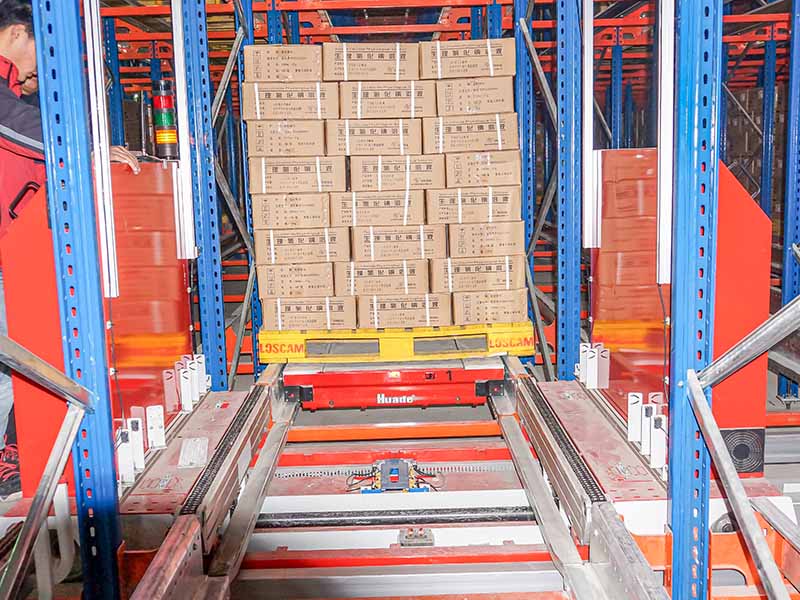
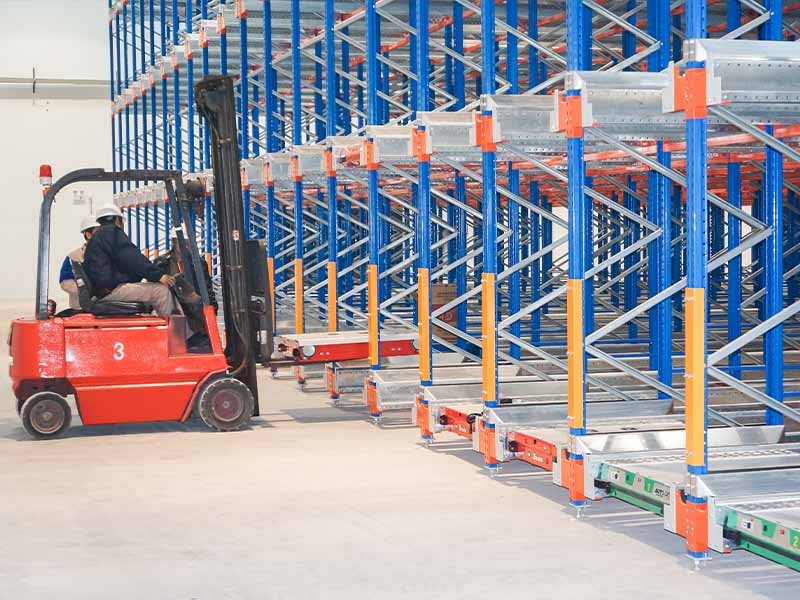
For businesses looking to increase warehouse storage capacity without completely rebuilding their existing warehouse infrastructure, a Radio Shuttle System is often one of the most cost-effective automation upgrade options.
Unlike conventional pallet storage systems, radio shuttles operate directly inside storage lanes and automatically complete pallet storage, retrieval, and relocation tasks.
Forklifts no longer need to enter the rack structure itself. Instead, forklifts only deliver pallets to the rack entrance while the shuttle completes internal movement automatically. This dramatically reduces aisle space requirements.
In many cases, aisle width can be reduced to approximately 0.8 to 1.2 meters, significantly improving floor space utilization.
3.1 Why Radio Shuttle Systems Save Space
The system improves storage density through:
- Multi-depth pallet storage design
- Dense matrix storage arrangement
- Reduced aisle spacing between rack rows
- High-density pallet positioning inside storage lanes
- Double-deep or multi-deep storage configuration
Compared with traditional warehouse layouts:
- Horizontal space utilization typically improves by 30%+
- Additional rack rows can often be added within the same warehouse footprint
- Storage capacity increases significantly without warehouse expansion
Another major advantage is implementation flexibility.
Because the system usually requires only minor modifications to existing rack structures, investment costs remain relatively low while deployment time is much shorter than full warehouse automation projects. This makes radio shuttle systems particularly attractive for companies beginning their warehouse automation journey.
4. Pallet Conveyor System + WMS + WCS Integration
No warehouse automation system can function efficiently without reliable material flow.
No matter which storage solution is deployed, goods still need to move continuously between receiving, storage, picking, packing, and shipping areas.
This is where a Pallet Conveyor System becomes essential.
A conveyor system connects multiple warehouse operation zones into one continuous automated material flow. Typical conveyor modules include:
- Roller conveyors
- Chain conveyors
- Transfer units
- Vertical lifts
- Sorting modules
By automating pallet transportation, businesses significantly reduce forklift dependency and can further minimize floor space reserved for manual equipment movement.
How to Choose the Right Pallet Conveyor System for Your Warehouse?
This guide will walk you through the key factors to consider, introduce you to the most popular system types, and help you match your unique warehouse needs to the perfect solution.
4.1 The Intelligence Layer Behind Warehouse Automation
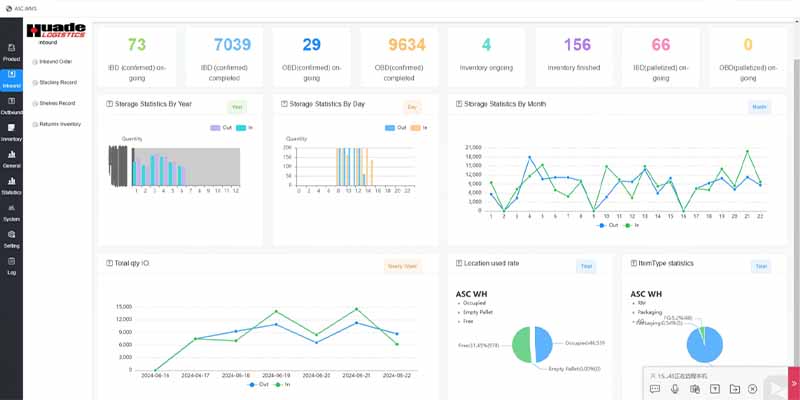
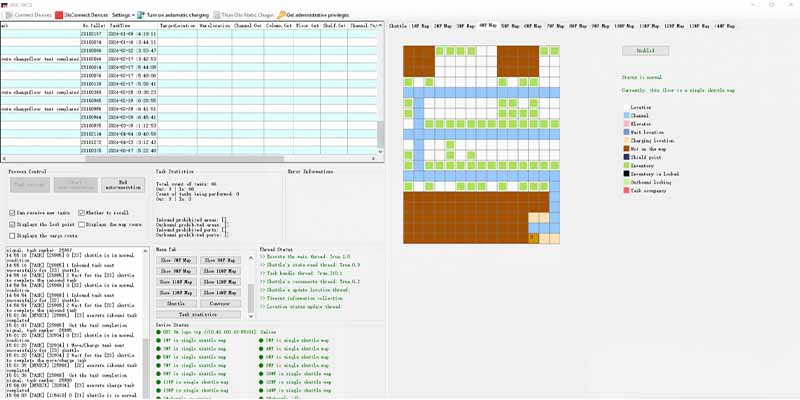
All automation hardware ultimately relies on software coordination. Two systems play the central role:
WMS (Warehouse Management System)
Responsible for:
- Inventory management
- Storage allocation strategy
- Order management
- Inventory optimization
WCS (Warehouse Control System)
Responsible for:
- Equipment communication
- Device command execution
- Task decomposition
- Coordinating shuttles, stacker cranes, conveyors, and lifts
Together, WMS and WCS allow every piece of equipment to operate under one unified control system.
The result is a warehouse where storage equipment, material handling systems, and software continuously work together to maximize storage capacity while maintaining high operational efficiency.
Conclusion: Smarter Warehouse Space Creates Greater Capacity
As a one-stop warehouse automation solution provider, HUAYIDE does not simply offer individual pieces of equipment.
What we provide is a fully integrated warehouse system where every rack structure, every conveyor line, every storage location, and every automation device operates under one unified intelligent control system.
Our goal is not to place a collection of machines inside your warehouse. Our goal is to design the storage solution that best fits your actual warehouse operation and maximizes every available inch of your existing space.
From high bay racking systems to shuttle systems, from conveyor systems to WMS software, every optimization ultimately answers the same question: How can you maximize the storage capacity of your existing warehouse?
The answer is rarely moving to a bigger warehouse.
Real warehouse expansion comes from deploying smarter equipment, using more precise system algorithms, and implementing more standardized operational management — allowing every square meter of warehouse space to generate its maximum value.
If your warehouse is facing storage capacity pressure, feel free to consult HUAYIDE’s engineering team. We are ready to help design the most suitable storage solution for your business.
Contact HUAYIDE today and discuss your warehouse automation project with our experts.
FAQ
How can I increase warehouse storage capacity without expanding my building?
You can improve storage capacity by using vertical storage systems, optimizing warehouse layout, reducing aisle space, improving inventory management, and adopting high-density storage solutions.
Which warehouse storage system saves the most space?
High-density systems such as ASRS, Four-Way Shuttle Systems, and Rack Supported Warehouses typically provide the highest storage density.
Can warehouse automation improve storage capacity?
Yes. Automated systems reduce aisle space requirements, improve storage allocation accuracy, and allow warehouses to utilize vertical space much more efficiently.
Is upgrading my existing warehouse better than relocating?
In many cases, optimizing your current warehouse is far more cost-effective than moving to a larger facility, especially when automation and intelligent storage systems are properly implemented.