Introduction
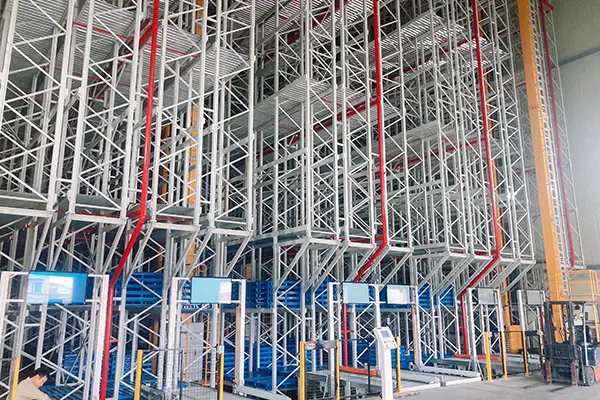
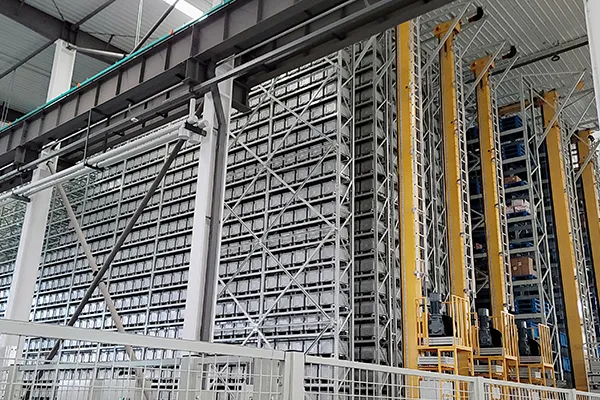
Pallet Conveyor System is the unsung hero of modern warehouse operations, silently streamlining the movement of goods from receiving docks to storage racks, and from packing stations to shipping bays. In an era where e-commerce demands lightning-fast order fulfillment and supply chain efficiency is make-or-break for businesses, selecting the right material handling solution can mean the difference between a warehouse that hums with productivity and one that stumbles under bottlenecks and delays. Whether you’re scaling up your operations, renovating an existing facility, or building a warehouse from the ground up, understanding the nuances of pallet conveyor systems is the first step toward optimizing your workflow. This guide will walk you through the key factors to consider, introduce you to the most popular system types, and help you match your unique warehouse needs to the perfect solution.
Assessing Your Warehouse’s Core Needs
Before diving into the specifics of different conveyor systems, it’s critical to conduct a thorough audit of your warehouse’s current and future requirements. Rushing into a purchase without this groundwork can lead to investing in a system that either overcomplicates your operations or fails to keep up with demand. Here are the foundational questions to answer:
Volume and Throughput Requirements
The number of pallets your warehouse processes daily, weekly, and during peak seasons is the single most important factor in choosing a conveyor system. A small-scale distributor handling 50 pallets a day has vastly different needs than a large e-commerce fulfillment center moving 5,000 pallets during holiday rushes.
- Low-volume operations: If your daily throughput hovers below 200 pallets, a simple, modular system may suffice, allowing you to expand later as needed.
- High-volume operations: Facilities processing 1,000+ pallets daily require robust, high-speed systems with minimal downtime risks, often integrated with automated sorting and storage solutions.
- Peak season variability: Warehouses with seasonal spikes (e.g., retail, holiday goods) need systems that can handle surges without sacrificing accuracy. Look for scalable designs or temporary add-ons that can be activated during busy periods.
Pallet Specifications and Load Characteristics
Not all pallets are created equal, and your conveyor system must be built to accommodate the unique dimensions, weight, and material of the pallets you use.
- Pallet size: Standard GMA pallets (48×40 inches) are common in North America, but if you handle Euro pallets (1200×800 mm) or custom-sized pallets, ensure the conveyor’s width and spacing can adapt.
- Load weight: Light loads (under 500 lbs) can be supported by basic roller systems, while heavy loads (2,000 lbs or more) require chain-driven conveyors or specialized heavy-duty rollers.
- Pallet condition: Damaged, warped, or uneven pallets can jam roller systems. If your warehouse frequently uses reconditioned pallets, a chain conveyor with a flat top surface may be more forgiving.
Layout and Space Constraints
Your warehouse’s physical layout—including ceiling height, column placement, and the flow between receiving, storage, picking, and shipping—will dictate the type of conveyor system you can install.
- Straight-line workflows: If your warehouse has a linear layout with clear, unobstructed paths, a pallet roller conveyor can efficiently move goods from one end to the other.
- Complex routing: For facilities with multiple turns, elevation changes, or need to divert pallets to different zones, a combination of chain conveyors and transfer units may be necessary.
- Vertical space: If floor space is limited but ceiling height is ample, consider systems that integrate with mezzanines or vertical lift modules, using conveyors to move pallets between levels.
Exploring the Most Effective Pallet Conveyor System Types
Once you’ve mapped out your warehouse’s needs, it’s time to explore the most common conveyor systems and their ideal use cases. Each type has distinct advantages, and many warehouses combine multiple systems to create a seamless workflow.
Pallet Roller Conveyor: The Versatile Workhorse
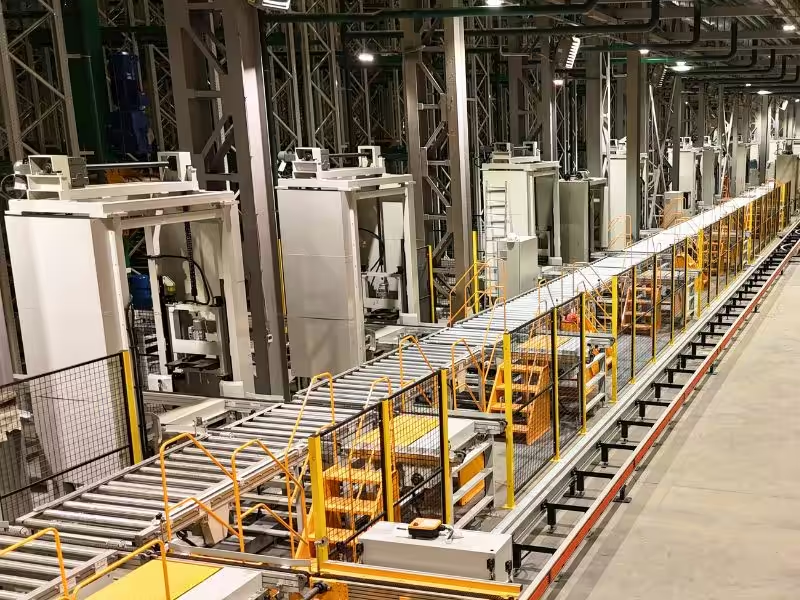
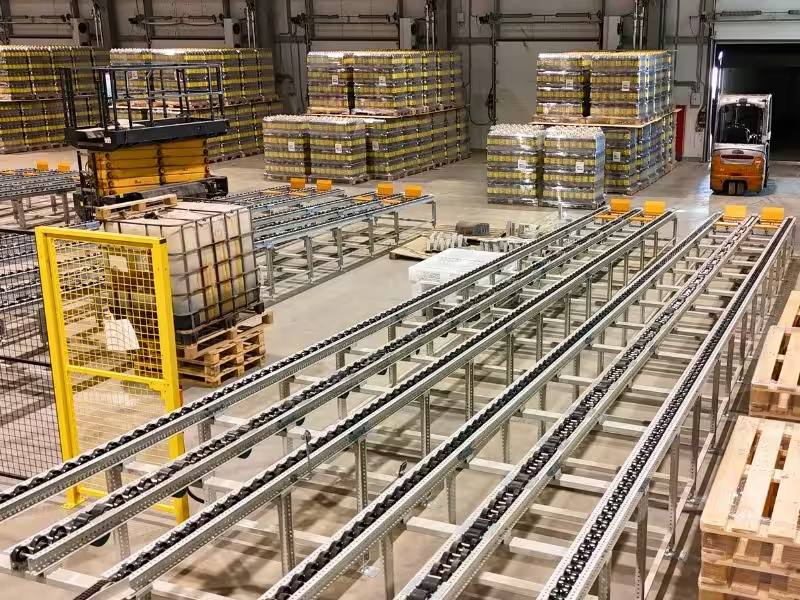
Pallet Roller Conveyor is the first choice for many warehouses thanks to its simplicity, affordability, and adaptability. Composed of a series of rotating rollers mounted on a frame, this system uses gravity or motorized power to move pallets along a path.
- Gravity roller conveyors: Best for short, downhill sections or manual push applications, these systems require no electricity and are easy to install and reconfigure. They’re ideal for small warehouses or areas where power access is limited.
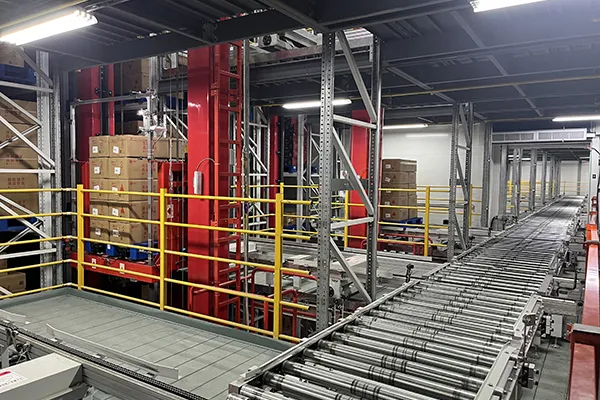
- Motorized roller conveyors: Powered by electric motors, these systems can handle longer distances, heavier loads, and consistent speeds. They’re often integrated with sensors and controls to automate pallet stops, starts, and diverts, making them perfect for medium to high-volume operations.
- Ideal use cases: Transporting pallets between receiving and storage, moving goods to packing stations, or creating accumulation zones where pallets can wait before being sorted.
Pallet Chain Conveyor: The Heavy-Duty Specialist
When your warehouse deals with heavy loads, uneven pallets, or harsh environments, Pallet Chain Conveyor steps in as the rugged, reliable solution. Instead of rollers, this system uses one or more chains to drag pallets along a steel frame, providing a stable surface that can handle challenging conditions.
- Key advantages: Unlike roller conveyors, chain systems are less prone to jamming from damaged pallets. They can also operate in extreme temperatures (e.g., cold storage for food or pharmaceuticals) and are resistant to dust, debris, and moisture.
- Types of chain conveyors:
- Single-strand chain conveyors: Suitable for light to medium loads, these are often used in assembly lines or packaging areas.
- Double-strand chain conveyors: Designed for heavy loads (up to 10,000 lbs or more), they’re common in manufacturing plants and bulk storage facilities.
- Ideal use cases: Moving heavy machinery parts, transporting pallets through washdown areas, or integrating with automated storage and retrieval systems (AS/RS) for high-density storage.
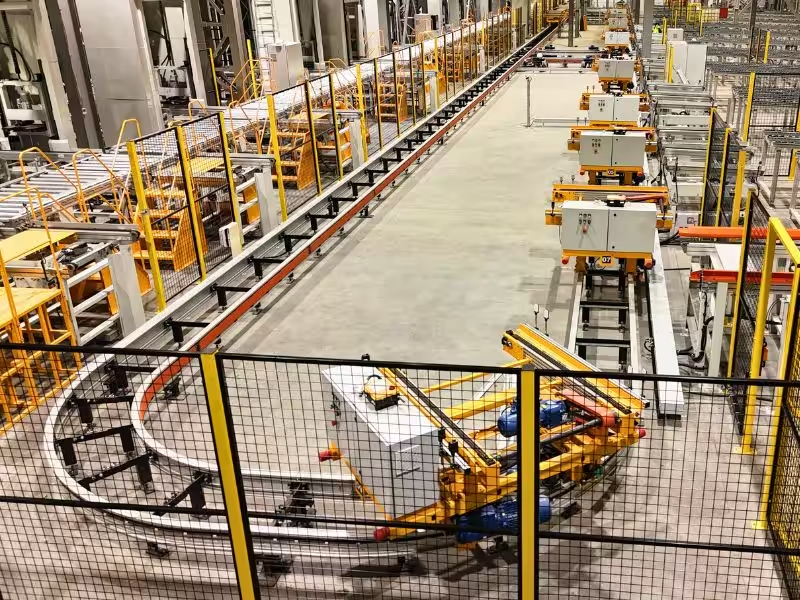
Rail Guided Vehicle (RGV): The Automated Flexibility Solution
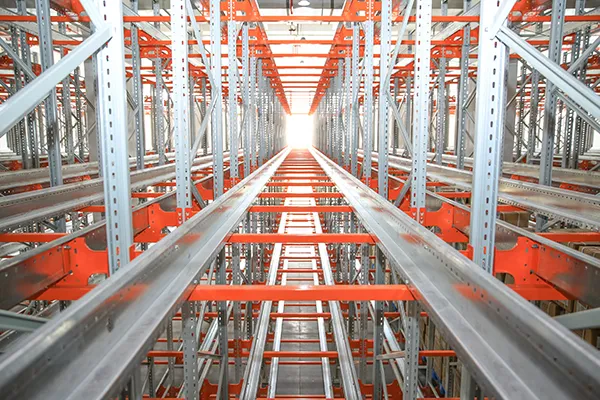
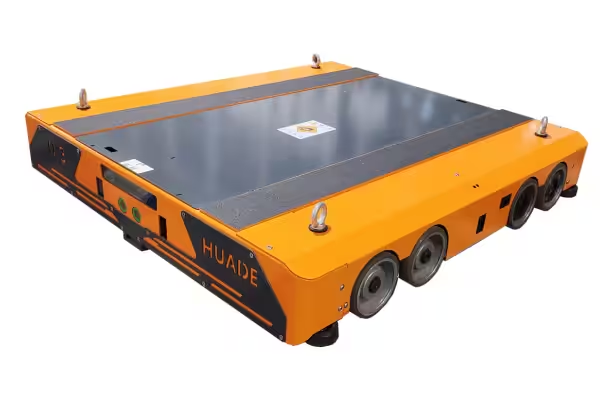
For warehouses that need maximum flexibility and space optimization, Rail Guided Vehicle (RGV) systems offer a dynamic alternative to fixed conveyors. These automated vehicles travel along embedded floor rails or overhead tracks, picking up, transporting, and dropping off pallets without the need for a continuous conveyor line.
- Key benefits:
- Space efficiency: RGVs eliminate the need for long, fixed conveyor runs, freeing up floor space for additional storage or workstations.
- Scalability: Adding more vehicles or extending the rail system is often easier than modifying a fixed conveyor line, making RGVs ideal for growing warehouses.
- Integration with automation: RGVs can be seamlessly integrated with warehouse management systems (WMS), AS/RS, and sorting machines to create a fully automated workflow.
- Ideal use cases: High-density storage facilities, warehouses with multiple storage zones, or operations where pallets need to be transported between distant areas of the facility.
Comparing System Types: A Quick Reference Table
To help you quickly compare the three most popular pallet conveyor systems, here’s a side-by-side breakdown of their key features:
| Feature | Pallet Roller Conveyor | Pallet Chain Conveyor | Rail Guided Vehicle (RGV) |
| Load Capacity | 500–5,000 lbs | 1,000–10,000+ lbs | 2,000–8,000 lbs |
| Speed | 50–150 ft/min | 30–100 ft/min | 40–200 ft/min |
| Space Requirements | High (fixed line) | High (fixed line) | Low (flexible routing) |
| Maintenance | Low (replace rollers) | Medium (lubricate chains) | Medium (vehicle servicing) |
| Cost | Low to medium | Medium to high | High (automated technology) |
| Best For | General, medium-volume use | Heavy loads, harsh environments | Flexible, automated workflows |
Integrating Automation and Future-Proofing Your Investment
In today’s fast-paced logistics landscape, a pallet conveyor system isn’t just a standalone piece of equipment—it’s a critical component of a larger, interconnected warehouse ecosystem. To ensure your investment pays off for years to come, consider how your system can integrate with automation and adapt to future growth.
- Warehouse Management System (WMS) Integration
A modern conveyor system should be compatible with your WMS, allowing for real-time tracking of pallets, automated routing, and data-driven insights into workflow efficiency. For example, when a pallet arrives at the receiving dock, the WMS can send a signal to the conveyor system to route it directly to the correct storage zone, eliminating manual sorting and reducing errors.
- Scalability and Modularity
Look for systems with modular components that can be easily expanded or reconfigured as your business grows. Modular roller conveyors, for instance, let you add sections or change the layout without a complete overhaul. RGV systems can be upgraded by adding more vehicles or extending the rail network, ensuring your system can keep up with increased throughput or new operational needs.
- Employee Training and Safety
Even the most advanced conveyor system is only as effective as the team operating it. Prioritize systems that come with comprehensive training resources for your staff, and ensure the design includes safety features like emergency stop buttons, guardrails, and sensor-based collision avoidance. A well-trained team will not only operate the system more efficiently but also reduce the risk of accidents and downtime.
Finalizing Your Decision: From Evaluation to Implementation
Once you’ve narrowed down your options, it’s time to take the final steps toward selecting and installing your pallet conveyor system. Here’s how to ensure a smooth transition:
- Request on-site assessments: Reputable conveyor manufacturers will offer to send a specialist to your warehouse to evaluate your layout, test your pallets, and recommend a customized solution. This on-site expertise can uncover issues you may have missed during your initial audit.
- Test with a pilot program: If possible, start with a small-scale pilot of your chosen system. This allows you to test its performance in a real-world setting before committing to a full installation. For example, you could install a short section of pallet roller conveyor in your receiving area to see how it handles your daily volume.
- Plan for installation and downtime: Coordinate with the manufacturer to schedule installation during a period of low activity, minimizing disruption to your operations. Ensure your team is trained and ready to operate the system as soon as it’s up and running.
- Establish a maintenance schedule: Regular maintenance is key to extending the lifespan of your conveyor system. Work with the manufacturer to create a schedule for inspections, lubrication, and part replacements, and assign a team member to oversee these tasks.
Conclusion: Investing in Long-Term Efficiency
Choosing the right pallet conveyor system is more than just a purchase—it’s an investment in your warehouse’s long-term efficiency, productivity, and profitability. By starting with a thorough assessment of your needs, exploring the strengths of different system types, and prioritizing scalability and integration, you can select a solution that not only meets your current requirements but also adapts to the challenges of tomorrow. Whether you opt for the versatility of a pallet roller conveyor, the ruggedness of a pallet chain conveyor, or the flexibility of an RGV system, the right choice will transform your warehouse into a well-oiled machine that keeps pace with the demands of modern commerce. Click to find the solution that suits you.