
Table of Contents
Contact Us
Recent Posts
Follow Us
Introduction
Many warehouses run out of storage space long before they run out of products. Expanding a warehouse or building a new facility is expensive, which is why many businesses choose drive in pallet racking to increase storage capacity without increasing their warehouse footprint.
But is a drive in racking system always the right choice? How does it compare with selective pallet racking, pallet flow racks, or shuttle racking systems? And what factors influence drive in pallet racking prices?
This complete guide answers those questions by explaining how drive in pallet racking works, where it performs best, how it compares with other high-density storage systems, and what you should know before investing.
What Is Drive In Pallet Racking?
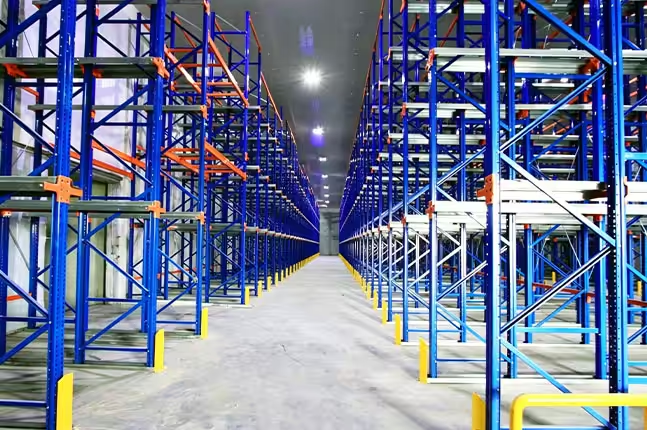
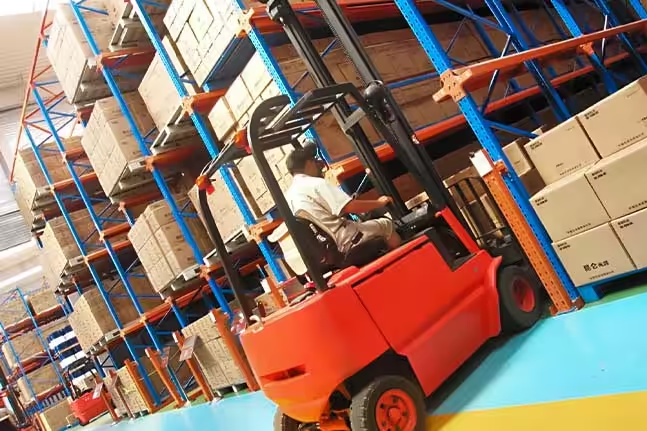
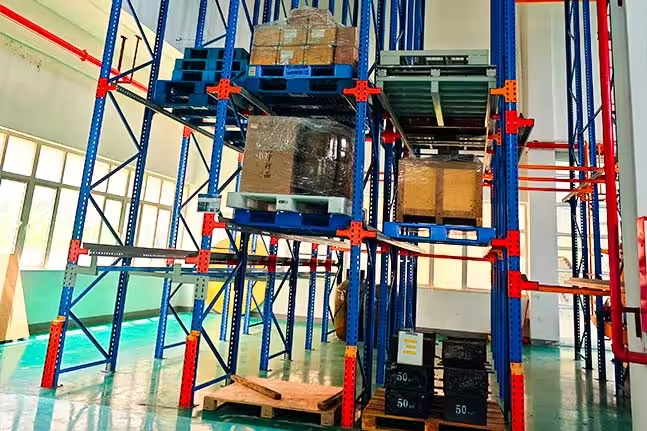
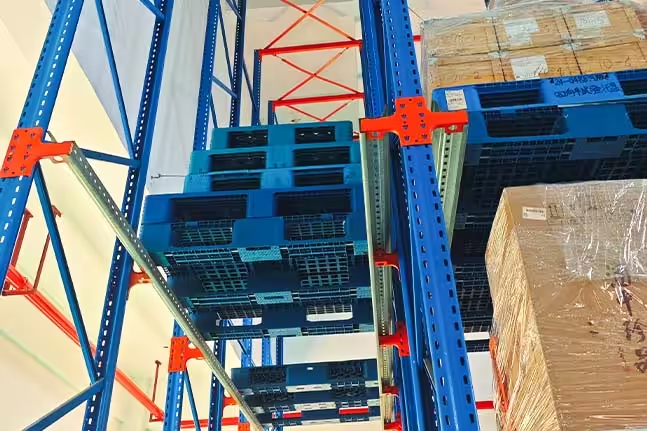
Drive in pallet racking is a high-density warehouse storage system designed to maximize pallet storage by minimizing aisle space. Instead of providing direct access to every pallet, multiple pallets are stored in deep lanes, allowing forklifts to drive directly into the rack structure for loading and unloading.
Compared with selective pallet racking, a drive in racking system can significantly increase storage density, making it an ideal solution for warehouses that handle large volumes of similar palletized products. It is widely used in cold storage, food and beverage, manufacturing, and other industries where maximizing warehouse space is a priority.
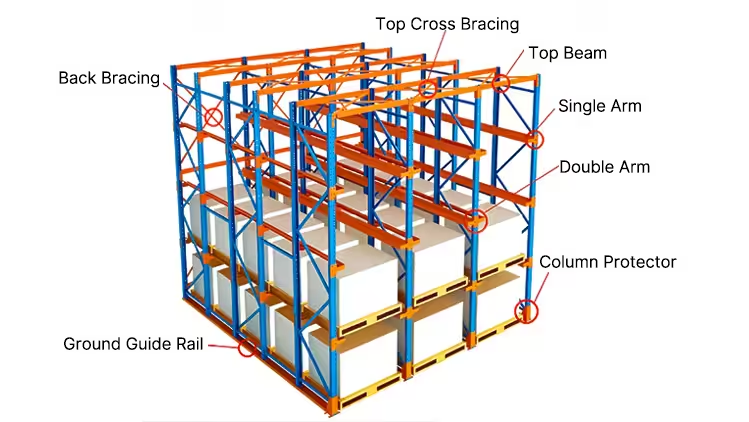
Main Components of a Drive-In Racking System
A standard drive in pallet racking system consists of several structural and safety components that work together to ensure stability, load capacity, and safe forklift operation.
| Component | Function |
|---|---|
|
Upright Frames |
Form the primary load-bearing structure of the rack. |
|
Support Arms (Rails Supports) |
Hold the pallet rails securely on both sides of each lane. |
|
Pallet Rails |
Support pallets while allowing forklifts to travel inside the storage lane. |
|
Top Beams & Bracing |
Improve structural rigidity and overall stability. |
|
Guide Rails |
Help guide forklift wheels and reduce accidental rack impacts. |
|
Safety Accessories |
Including column protectors, end stops, and guard rails to improve operational safety. |
How Does Drive In Pallet Racking Work?
A drive-in racking system typically operates on the Last-In, First-Out (LIFO) inventory principle. Forklifts enter the storage lane from one side, placing pallets one after another along the support rails. As new pallets are loaded, earlier pallets are positioned deeper inside the lane.
When retrieving inventory, the forklift removes the pallet closest to the aisle first before accessing those stored further inside. Because loading and unloading take place from the same entrance, drive in pallet racking is best suited for warehouses storing large quantities of the same SKU where strict FIFO inventory rotation is not required.
This storage method delivers exceptional space utilization but also requires experienced forklift operators to work safely within narrow rack lanes.
Drive-In vs. Drive-Through Racking
Although the names are similar, drive-in and drive-through pallet racking are designed for different inventory management strategies.
| Feature | Drive-In Racking | Drive-Through Racking |
|---|---|---|
|
Inventory Method |
LIFO |
FIFO |
|
Forklift Access |
One side only |
Both sides |
|
Storage Density |
Very High |
High |
|
Ideal For |
Bulk storage of identical products |
Products requiring stock rotation |
|
Typical Applications |
Cold storage, beverages, seasonal inventory |
Food processing, pharmaceuticals, fast-moving goods |
If your warehouse requires First-In, First-Out (FIFO) inventory rotation, drive-through racking is generally a better option. If maximizing storage density at the lowest investment cost is the priority, drive-in pallet racking is often the more economical solution.
Benefits of Drive In Pallet Racking
Drive in pallet racking is one of the most cost-effective high-density storage solutions available today. By reducing the number of access aisles, it allows warehouses to store significantly more pallets within the same footprint while keeping investment costs relatively low.
Although it is not suitable for every operation, a drive-in racking system offers clear advantages for warehouses handling large quantities of the same products with moderate inventory turnover.
Maximize Warehouse Storage Capacity
One of the biggest advantages of drive in pallet racking is its exceptional storage density. Because forklifts travel directly inside the rack lanes, fewer aisles are required, allowing more floor space to be dedicated to pallet storage.
Compared with selective pallet racking, a drive in racking system can typically increase storage capacity by 30%–60%, depending on the warehouse layout and pallet configuration.
Lower Storage Cost per Pallet
Increasing storage density means more pallet positions can be created without expanding the warehouse. This reduces the storage cost per pallet and helps delay or eliminate the need for additional warehouse space.
For businesses facing rising land prices or warehouse rental costs, drive in pallet racking offers an attractive return on investment.
Cost-Effective High-Density Storage Solution
Among all high-density storage systems, drive-in racking is one of the most economical options. It delivers excellent space utilization without requiring automation equipment such as pallet shuttles, conveyors, or stacker cranes.
For companies with limited budgets, it provides an affordable way to improve warehouse capacity while maintaining reliable performance.
Ideal for Cold Storage Warehouses
Cold storage facilities are expensive to build and operate, making every cubic meter of space valuable. Drive in pallet racking maximizes storage density while reducing unused refrigerated air volume, helping improve energy efficiency.
This makes it a popular solution for frozen food, meat, dairy products, and other temperature-controlled inventory.
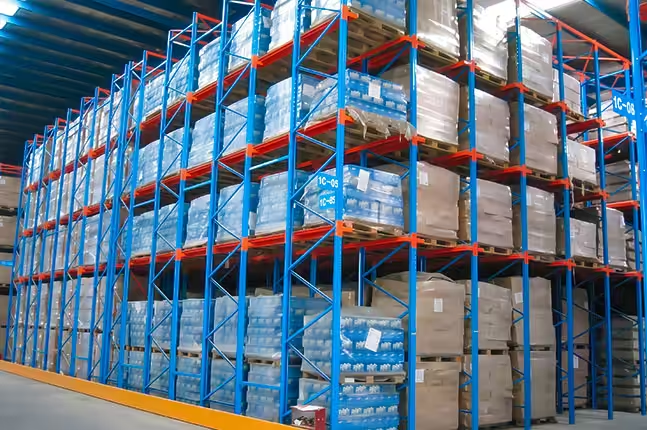
Suitable for Bulk Storage of Standardized Products
A drive in pallet racking system performs best when storing large quantities of identical palletized goods. Industries such as food and beverage, chemicals, paper, packaging, and manufacturing often use this solution because products are received and shipped in full pallet loads rather than individual cases.
Common Applications of Drive-In Pallet Racking
Drive in pallet racking is best suited for warehouses that store large volumes of palletized products with relatively few SKUs. It is especially effective when maximizing storage density is more important than providing direct access to every pallet.
Because it typically operates on a Last-In, First-Out (LIFO) basis, drive-in racking systems are widely used in industries where products are stored and shipped in full pallet loads rather than picked individually.
Typical Industries and Applications
| Industry | Why Drive In Pallet Racking Works Well |
|---|---|
|
Cold Storage & Frozen Food |
Maximizes expensive refrigerated space while reducing energy costs. |
|
Food & Beverage |
Ideal for storing large quantities of standardized palletized products such as bottled drinks, canned foods, and packaged goods. |
|
Manufacturing |
Efficient for raw materials, work-in-progress inventory, and finished products stored in bulk. |
|
Chemical Industry |
Suitable for palletized chemical materials and industrial products with low SKU variety. |
|
Paper & Packaging |
Supports high-volume pallet storage while improving warehouse space utilization. |
|
Seasonal Inventory |
Perfect for bulk stockpiling of promotional or seasonal products before peak demand. |
Typical Product Characteristics
A drive-in racking system performs best when inventory shares the following characteristics:
- Large quantities of the same SKU
- Full-pallet storage and retrieval
- Standard pallet sizes and weights
- Medium to low inventory turnover
- No strict FIFO inventory requirement
- Batch receiving and shipping operations
Common Warehouse Scenarios
Drive in pallet racking is commonly installed in warehouses where storage capacity is the primary concern. Typical applications include refrigerated warehouses, beverage distribution centers, food processing facilities, paper mills, chemical plants, and manufacturing warehouses.
For businesses that need to increase pallet capacity without expanding their warehouse footprint, drive in pallet racking provides one of the most practical and economical storage solutions.
Drive In Pallet Racking vs. Other High-Density Storage Systems
Drive in pallet racking is one of the most cost-effective and widely used high-density storage solutions available today. By eliminating multiple access aisles and allowing forklifts to drive directly into storage lanes, it significantly increases warehouse space utilization while keeping investment costs relatively low.
However, no storage system is ideal for every warehouse. Compared with other drive-in racking systems and high-density storage solutions, each option offers different advantages in terms of storage density, accessibility, investment cost, and operational efficiency.
The following comparisons will help you determine which solution best fits your warehouse requirements.
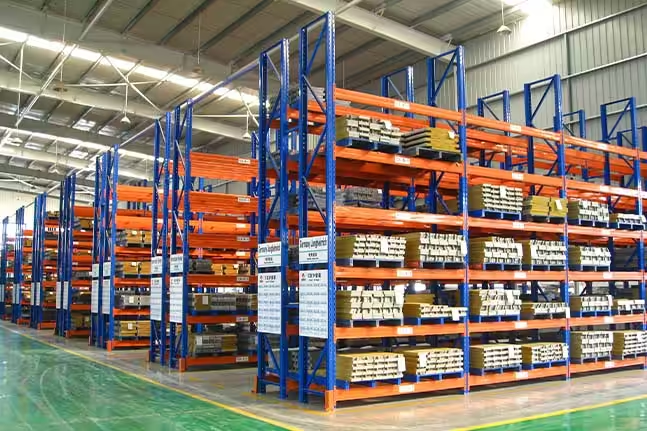
Drive In Pallet Racking vs. Selective Pallet Racking
1. Storage Density
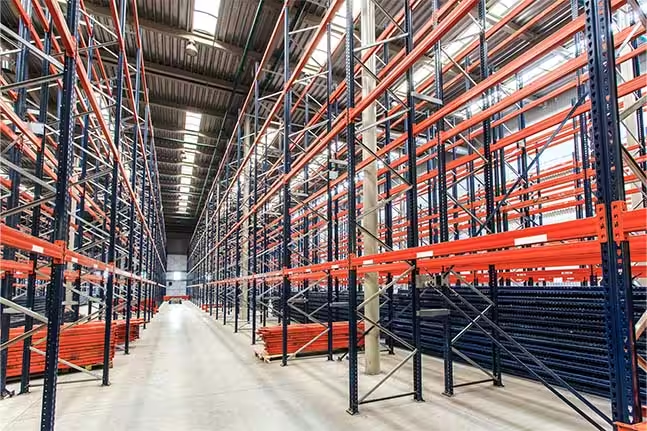
Drive in pallet racking provides a much higher storage density than selective pallet racking. By eliminating most access aisles, it can achieve approximately 75%–90% space utilization, compared with 40%–50% for selective pallet racking. This makes it an excellent choice for warehouses where maximizing storage capacity is the primary objective.
2. Storage Efficiency
Selective pallet racking provides direct access to every pallet and supports 100% FIFO (First-In, First-Out) inventory management. It is ideal for warehouses handling a large number of SKUs and frequent picking operations.
In contrast, drive in racking follows the LIFO (Last-In, First-Out) principle. Because forklifts must enter the storage lane to retrieve pallets, deeper loads can only be accessed after removing the pallets stored in front. It is therefore best suited for bulk storage of low-SKU products.
3. Cost and Structure
Selective pallet racking consists of independent rack bays, so localized damage generally does not affect adjacent sections. It also works with standard forklifts and requires less operator precision.
By comparison, drive in pallet racking uses a continuous rack structure without conventional cross beams. Since forklifts operate inside the rack lanes, operator skill is more critical, and accidental impacts may affect a larger section of the system.
Drive In Pallet Racking vs. Push Back Racking
1. Storage Density
Both systems provide high-density pallet storage with space utilization typically ranging from 60% to 80%. However, push back racking is generally limited to five pallets deep per lane due to the travel distance of the nested carts, while drive in pallet racking can normally accommodate up to seven pallets deep or more, depending on the design.
2. Storage Efficiency
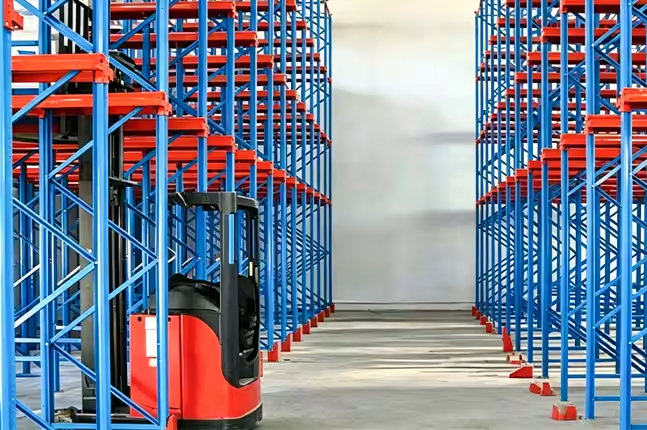
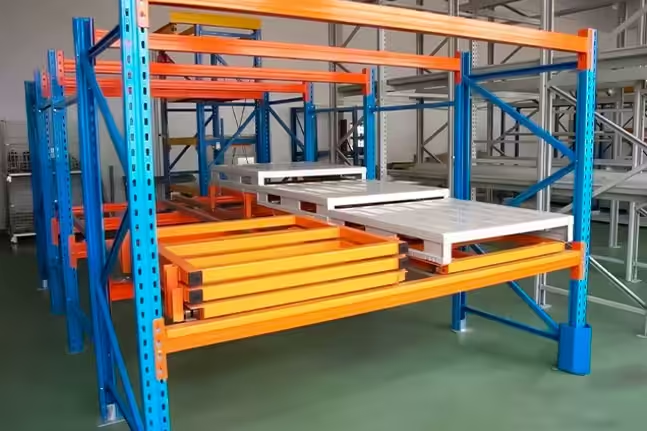
Push back racking allows forklifts to load and unload pallets from the aisle without entering the rack structure. Pallets are automatically pushed backward on inclined carts, resulting in faster operation, lower collision risk, and reduced forklift skill requirements.
By comparison, drive in racking systems require forklifts to enter the storage lanes, making operations slower and more dependent on experienced operators.
3. Cost and Structure
Push back racking requires additional components such as nested pallet carts and inclined guide rails, making it more expensive than drive in pallet racking. It also demands higher manufacturing precision and more complex installation.
Drive In Pallet Racking vs. Pallet Flow Racking
1. Storage Density
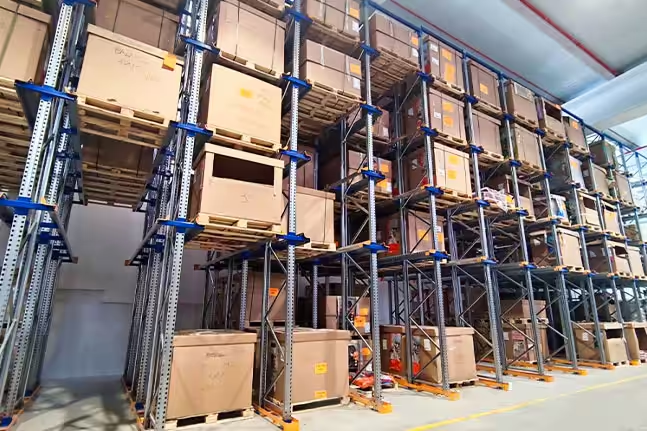
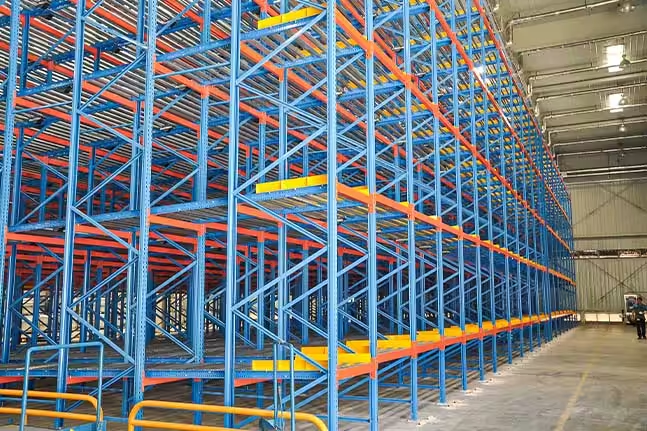
Pallet flow racking also offers excellent space utilization, typically around 85%, slightly higher than drive in pallet racking. Gravity rollers automatically move pallets from the loading side to the picking side, maximizing lane utilization while supporting FIFO inventory rotation.
2. Storage Efficiency
Because pallet flow racking operates on a FIFO basis, it is ideal for industries such as food, beverages, pharmaceuticals, and cold chain logistics where inventory turnover is critical.
In contrast, drive in pallet racking follows a LIFO workflow and is better suited for bulk storage with lower inventory turnover.
3. Cost and Structure
Pallet flow systems require inclined roller tracks, speed controllers, and braking devices, resulting in significantly higher investment costs and longer installation times. They also require high-quality pallets to ensure smooth gravity movement.
By comparison, drive-in racking has a simpler structure, making it a more economical solution for high-density pallet storage.
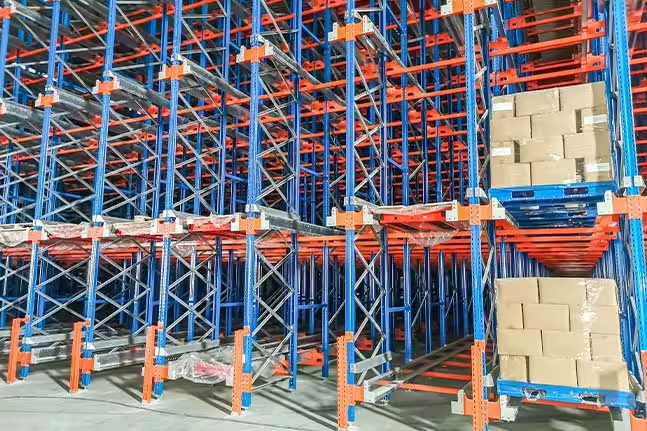
Drive In Pallet Racking vs. Pallet Shuttle Racking
1. Storage Density
Both systems achieve extremely high storage density, often exceeding 80% warehouse space utilization. However, pallet shuttle racking can support ultra-deep storage lanes and higher rack elevations because shuttle carts travel automatically inside the rack structure without forklift entry.
As a result, pallet shuttle systems generally offer greater storage capacity in large automated warehouses.
2. Storage Efficiency
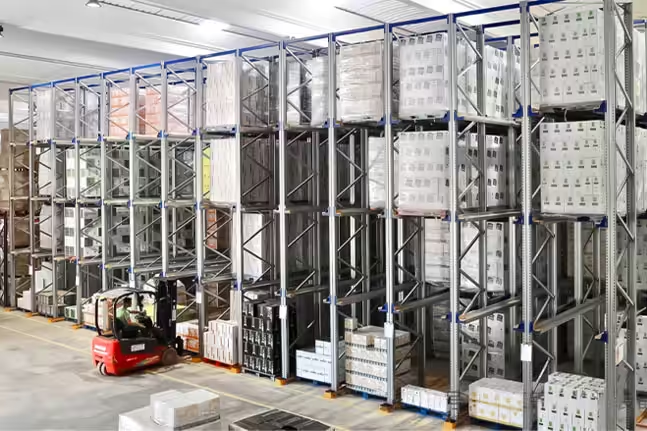
Pallet shuttle racking uses battery-powered shuttle carts controlled remotely or integrated with WMS/WCS software. Forklifts remain outside the storage lanes, significantly improving throughput while virtually eliminating rack impact caused by forklifts.
Compared with pallet shuttle systems, drive in pallet racking relies entirely on forklift operation, resulting in lower handling efficiency and higher operational risk.
3. Cost and Structure
Pallet shuttle racking requires shuttle carts, guide rails, charging systems, lifts, and control software. Consequently, both the initial investment and long-term maintenance costs are considerably higher than those of drive-in pallet racking.
For warehouses requiring high throughput and automation, pallet shuttle systems are often the preferred solution despite their higher cost.
Drive In Pallet Racking vs. Mobile Pallet Racking
1. Storage Density
Mobile pallet racking maximizes storage capacity by using movable rack bases that require only a single working aisle. Space utilization typically exceeds 70%, although some floor area must be reserved for the rail system and rack movement.
In comparison, drive in pallet racking generally achieves even higher storage density because no movable aisle is required.
2. Storage Efficiency
Mobile pallet racking requires the rack rows to move before forklifts can access the desired storage lane. This makes it better suited for warehouses with low picking frequency and a wide variety of SKUs.
By contrast, drive in pallet racking offers faster pallet handling for medium-turnover operations involving large quantities of similar products.
3. Cost and Structure
Mobile pallet racking requires rails, electric drive motors, control systems, and safety devices, resulting in a significantly higher investment cost and ongoing energy consumption.
For businesses seeking an economical high-density storage solution, drive in pallet racking remains one of the most cost-effective options available.
Is Drive In Pallet Racking Right for Your Warehouse?
Not every warehouse benefits from drive in pallet racking. While it is one of the most economical high-density storage solutions, its performance depends on factors such as inventory characteristics, warehouse layout, forklift operation, and inventory management requirements.
If your warehouse matches the following conditions, a drive in racking system can significantly improve storage capacity and reduce overall storage costs.
Ideal Applications
1. Cold Storage Warehouses
Cold storage facilities have high construction and operating costs, making every cubic meter of storage space valuable. Drive in pallet racking maximizes storage density by reducing aisle space and making full use of the warehouse height, allowing more pallets to be stored within the same refrigerated area.
Its compact storage layout also reduces the volume of refrigerated air inside the warehouse, helping lower energy consumption. Since frozen foods, meat, dairy products, and other cold-storage goods are typically stored in full pallet loads with relatively low SKU variety, the LIFO operating principle of a drive-in racking system is often an ideal fit.
2. Food, Beverage, and Chemical Industries
Many products in the food, beverage, and chemical industries are stored and shipped in standardized pallets with large inventory volumes and relatively few SKUs. Drive in pallet racking allows these pallets to be stored in deep lanes, making it ideal for bulk storage while maximizing warehouse utilization.
It is particularly suitable for products such as bottled water, canned beverages, packaged foods, plastic resin, and bagged chemical materials, where inventory is typically received and shipped by the pallet rather than through individual case picking.
3. Seasonal and Bulk Inventory Storage
Businesses that build inventory ahead of seasonal demand often require large storage capacity for a limited period. Drive in pallet racking provides an economical way to accommodate these temporary inventory peaks without expanding warehouse space.
Because seasonal products are usually stored and shipped in batches rather than individually picked, the LIFO storage method aligns well with their operating requirements while helping reduce storage costs.
When Drive In Pallet Racking Is NOT the Best Choice
Although drive in pallet racking offers excellent storage density, it may not be suitable for the following warehouse environments.
1. Warehouses with a Large Number of SKUs
If your warehouse stores hundreds or thousands of SKUs with only a few pallets per item, direct access to every pallet becomes more important than storage density. In this case, selective pallet racking or other systems designed for high picking flexibility are generally more appropriate.
2. Operations Requiring Strict FIFO Inventory Management
Industries such as food processing, pharmaceuticals, and certain chemical applications often require First-In, First-Out (FIFO) inventory rotation to ensure product freshness, traceability, and regulatory compliance.
Since drive in pallet racking typically operates on a LIFO basis, older pallets may become blocked behind newer inventory, making FIFO management difficult and increasing the risk of product expiration or stock rotation errors.
3. Warehouses with Limited Clear Height
A drive in racking system is most effective in warehouses with sufficient vertical space. If the building has limited clear height, the system cannot fully utilize its storage density advantage, resulting in a lower return on investment.
In addition, insufficient ceiling clearance may interfere with fire sprinkler systems and limit the lifting height of forklifts, making conventional selective pallet racking a more practical solution.
Estimating the Return on Investment (ROI)
One of the biggest advantages of drive in pallet racking is its ability to reduce warehouse costs by increasing storage capacity without expanding the building.
A simple way to estimate the return on investment is:
Annual Space Cost Savings = Storage Area Saved × Warehouse Rent (or Opportunity Cost per Square Meter)
Estimated Payback Period = Total System Investment ÷ Annual Space Cost Savings
For many warehouses handling bulk pallet storage, the investment in drive-in pallet racking can often be recovered within one to two years through improved space utilization alone.
If drive in pallet racking isn’t the right fit for your warehouse, there are many other storage solutions to consider. Explore our comprehensive guide to compare the most common warehouse storage systems and find the best solution for your operation.
13 Common Warehouse Storage Systems: How to Choose the Best One
Explore 13 popular warehouse storage systems to boost logistics efficiency & inventory accuracy. Learn how to select the ideal storage solution for your warehouse automation needs.
Drive In Pallet Racking Prices: What Affects the Cost?
When searching for drive-in pallet racking prices, you’ll quickly notice that quotations can vary significantly from one supplier to another. That’s because drive in pallet racking is not a standard off-the-shelf product—each system is custom-designed based on your warehouse layout, pallet specifications, load capacity, and operational requirements.
To receive an accurate quotation, it’s important to understand the key factors that influence the total project cost.
Key Factors That Affect Drive In Pallet Racking Prices
A professional supplier will typically provide an initial estimate based on the number of pallet positions or the total steel tonnage required. The following factors have the greatest impact on drive-in pallet racking prices.
1. Steel Specifications and Material Consumption
The dimensions of the uprights, steel thickness, load capacity, and surface finish (powder coating or hot-dip galvanizing) all have a significant impact on cost.
For example, a system designed to store 1-ton pallets in 10-meter-deep lanes requires considerably less steel than one designed for 1.5-ton pallets in 20-meter-deep lanes.
2. Lane Depth and Rack Height
Deeper storage lanes require longer pallet rails, additional upright frames, and more structural components. Although this increases the initial investment, it also improves storage density, so the optimal design should balance capacity with overall cost-effectiveness.
3. Safety Components
Safety accessories such as column protectors, guide rails, rear bracing, top ties, and end stops are essential for protecting both the rack structure and forklift operations.
Depending on the project, these components can account for 15%–20% of the total system cost. While they add to the initial investment, they should never be omitted, as they are critical to the long-term safety and durability of a drive-in racking system.
4. Floor Conditions
The condition of the warehouse floor also affects the overall project cost. Uneven or low-strength concrete may require floor repairs, leveling work, or specialized guide rail installation before the rack system can be installed.
5. Transportation and Installation
Freight charges, on-site installation, and project commissioning are also important cost considerations. For overseas projects, transportation and professional installation services often account for more than 10% of the total contract value.
Need a customized drive in pallet racking solution?
Share your warehouse specifications with HUAYIDE, and our engineering team will provide a tailored layout design and quotation based on your storage requirements.
What Information Should You Prepare Before Requesting a Quote?
To receive an accurate quotation for drive in pallet racking, it’s helpful to prepare the following information before contacting a supplier:
- Pallet dimensions (L × W × H)
- Maximum loaded pallet weight
- Type of goods being stored
- Warehouse clear height and available floor area
- Floor condition and load-bearing capacity
- Forklift model and maximum lifting height
- Expected lane depth
- Total number of pallet positions required
The more complete your project information is, the faster a supplier can develop an optimized rack layout and provide an accurate quotation.
Why Choose HUAYIDE for Your Drive In Pallet Racking Project?
Choosing the right supplier is just as important as selecting the right storage system. At HUAYIDE, we provide more than just rack manufacturing—we deliver complete warehouse storage solutions tailored to each customer’s operational requirements.
From initial consultation and system design to manufacturing, installation, and after-sales support, our experienced engineering team works closely with customers to ensure every drive-in pallet racking project is safe, efficient, and built for long-term performance.
Why Global Customers Choose HUAYIDE
- One-Stop Warehouse Solution – From planning and engineering to manufacturing, installation, and commissioning, everything is managed by one experienced team.
- Factory-Direct Manufacturing – With in-house production in China, we maintain strict quality control while offering highly competitive pricing.
- Customized Rack Design – Every drive-in racking system is engineered according to your pallet size, load capacity, warehouse dimensions, and operational requirements.
- Compliance with International Standards – Our racking systems are manufactured in accordance with EN, ANSI, and JIS standards, while our automated equipment is CE certified.
- Extensive Industry Experience – We have successfully delivered warehouse storage and automation solutions for customers across a wide range of industries worldwide.
- Fast Engineering Response – Receive a customized storage solution and quotation within 36 hours after submitting your project requirements.
- Comprehensive After-Sales Support – In addition to the standard warranty, we offer long-term maintenance services, technical support, and lifecycle assistance to maximize the performance of your warehouse system.
Ready to Optimize Your Warehouse?
Whether you’re planning a new warehouse or upgrading an existing facility, our engineering team can help you design the most suitable drive in pallet racking solution based on your operational needs and budget.
Contact HUAYIDE today to receive a customized warehouse layout, professional technical consultation, and a competitive quotation for your project.
Frequently Asked Questions About Drive In Pallet Racking
1. What is drive in pallet racking?
Drive in pallet racking is a high-density storage system that allows forklifts to drive directly into storage lanes to load and retrieve pallets. It operates on a Last-In, First-Out (LIFO) basis and is ideal for storing large quantities of the same SKU while maximizing warehouse space.
2. What is the difference between drive-in and drive-through pallet racking?
The main difference is the inventory flow.
Drive in pallet racking is accessed from one side only and follows the LIFO principle.
Drive-through pallet racking is accessible from both ends of the rack and supports FIFO (First-In, First-Out) inventory rotation.
Drive-through systems are typically chosen when stock rotation is more important than maximizing storage density.
3. Is drive in pallet racking suitable for FIFO inventory management?
Not typically. Most drive in racking systems operate using the LIFO method because pallets are loaded and retrieved from the same aisle.
If your warehouse requires strict FIFO inventory rotation, pallet flow racking or drive-through racking is generally a better choice.
4. What industries commonly use drive-in pallet racking?
Drive in pallet racking is widely used in industries that store large volumes of palletized products, including:
- Cold storage and frozen food
- Food and beverage
- Manufacturing
- Chemical processing
- Paper and packaging
- Seasonal inventory storage
5. How much does drive in pallet racking cost?
There is no standard price because every drive in pallet racking project is custom designed.
The total investment depends on factors such as:
- Rack dimensions
- Pallet weight
- Storage depth
- Steel specifications
- Warehouse floor conditions
- Transportation and installation requirements
Providing detailed warehouse information is the best way to obtain an accurate quotation.
6. What forklifts are used with drive in pallet racking?
Counterbalance forklifts and reach trucks are commonly used, depending on the warehouse layout and rack design.
Because forklifts operate inside the rack lanes, experienced operators and properly installed guide rails are recommended to improve safety and reduce rack damage.
7. How deep can a drive in pallet racking system be?
The maximum lane depth depends on pallet dimensions, load capacity, forklift operation, and warehouse layout.
In most applications, storage lanes are designed to accommodate up to seven pallets deep, although customized solutions can be developed for specific project requirements.
8. Is drive in pallet racking suitable for cold storage warehouses?
Yes. Drive in pallet racking is one of the most popular storage solutions for cold storage facilities because it maximizes storage density, reduces refrigerated space requirements, and helps lower energy consumption.
It is particularly suitable for frozen food, meat, dairy products, and other palletized goods stored in bulk.
9. How long does it take to install a drive in pallet racking system?
Installation time varies depending on the warehouse size, rack height, number of pallet positions, and site conditions.
After evaluating your project requirements, HUAYIDE can provide an estimated installation schedule as part of the project proposal.
10. How do I choose the right drive in pallet racking supplier?
When selecting a supplier, consider the following factors:
- Engineering and design capabilities
- Manufacturing quality
- Compliance with international standards
- Installation experience
- After-sales support
- Successful project references
- Response time for quotations and technical assistance
Working with an experienced supplier helps ensure that your drive in pallet racking system is safe, efficient, and optimized for long-term performance.