
Table of Contents
Contact Us
Recent Posts
Follow Us
Introduction
Expired products hidden at the back of warehouse racks. Slow order picking during peak seasons. High cold storage costs but limited storage capacity. These are common challenges for warehouses that rely on traditional storage systems.
Many businesses know that flow racks can improve warehouse efficiency, but choosing the right system isn’t always straightforward. Should you invest in a carton flow rack or pallet flow racks? Which solution best fits your products, warehouse layout, and operational goals?
This guide explains how flow racks work, compares their applications, advantages, and limitations, and helps you choose the right solution—or the right combination—to improve storage density, picking efficiency, and FIFO inventory management.
What Are Flow Racks?
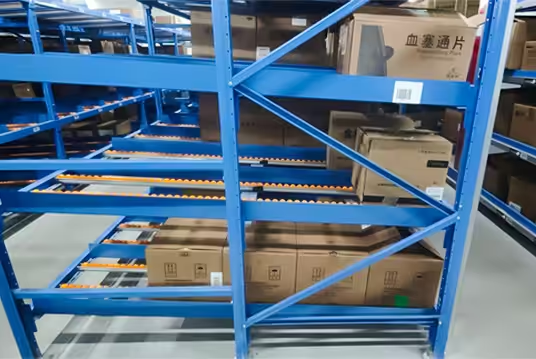
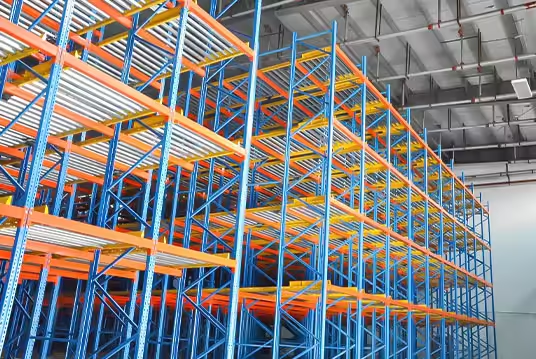
Flow racks are gravity-fed warehouse storage systems designed to move products automatically from the loading side to the picking side using inclined roller tracks. Also known as gravity flow racks, they support first-in, first-out (FIFO) inventory rotation without requiring motors or external power.
Depending on the type of goods being stored, flow racks are generally divided into two categories: carton flow racks for cartons, totes, and plastic bins, and pallet flow racks (also known as roller pallet racking) for palletized loads. Both systems improve warehouse efficiency by reducing travel time, increasing storage density, and streamlining material handling.
1. How Do Flow Racks Work?
The operating principle of flow racks is simple. Products are loaded from the higher end of an inclined lane and move forward under the force of gravity until they reach the picking position. As soon as the front item is removed, the remaining products automatically advance to the discharge end.
This gravity-driven design creates a continuous FIFO workflow while separating replenishment and picking operations. The result is faster order fulfillment, better inventory control, and fewer manual handling tasks.
2. Why Choose Flow Racks?
Flow racks are widely used in distribution centers, manufacturing facilities, food and beverage warehouses, pharmaceutical storage, and other operations that require efficient product rotation. By using gravity-based movement, they provide a simple yet effective way to improve storage efficiency and inventory control.
Compared with traditional static shelving systems, flow racks offer several operational advantages:
2.1 Higher Storage Density
Flow racks use inclined storage lanes and reduce the need for multiple access aisles. This compact storage design allows warehouses to utilize available space more efficiently, especially in facilities where storage capacity is limited or warehouse space is expensive.
2.2 Faster Picking and Better FIFO Management
With a separate loading side and picking side, flow racks create a natural first-in, first-out (FIFO) workflow. Products automatically move toward the picking face, reducing walking distance and helping operators quickly locate and retrieve items.
This makes them particularly suitable for industries with strict expiration date requirements, including food, beverages, pharmaceuticals, and cold chain logistics.
2.3 No Power Required and Low Maintenance
Unlike automated storage equipment that relies on motors or electrical systems, gravity flow racks operate through product weight and gravity. This reduces energy consumption, operating costs, and potential equipment failures.
2.4 Easy Integration with Warehouse Automation
Flow racks can be integrated with warehouse technologies such as barcode systems, pick-to-light systems, sensors, conveyors, and warehouse management systems (WMS) to improve inventory visibility and picking accuracy.
| Benefit | How Flow Racks Improve Operations |
|---|---|
|
Storage Density |
Maximizes available warehouse space with compact storage lanes |
|
FIFO Management |
Automatically rotates inventory based on product arrival sequence |
|
Picking Efficiency |
Reduces operator travel distance and improves order fulfillment speed |
|
Energy Efficiency |
Operates without motors or external power |
|
Automation Compatibility |
Works with conveyors, sensors, and WMS integration |
3. Types of Flow Racks
Based on the type of products stored and load requirements, flow rack systems are mainly divided into two categories: carton flow racks and pallet flow racks.
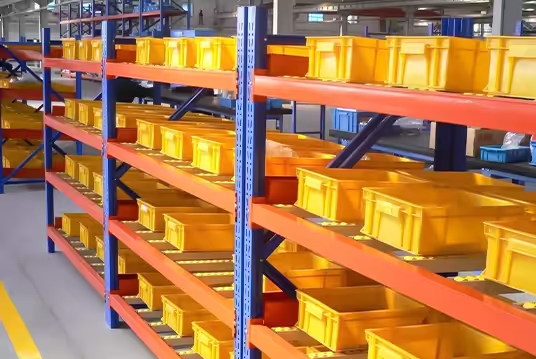
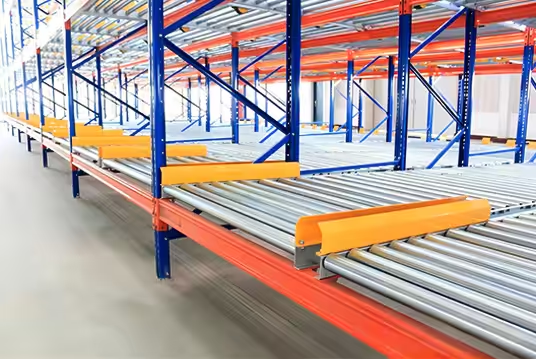
Although both systems use gravity-based movement and follow the FIFO (first-in, first-out) principle, they are designed for different warehouse applications. Carton flow racks focus on fast picking of small items, while pallet flow racks are designed for high-density storage of full pallets.
| Feature | Carton Flow Rack | Pallet Flow Rack |
|---|---|---|
|
Storage Unit |
Cartons, totes, plastic bins, small containers |
Full pallets |
|
Main Purpose |
Order picking and item replenishment |
High-density pallet storage |
|
Load Capacity |
Light to medium loads |
Heavy pallet loads |
|
Typical Operation |
Manual picking |
Forklift-based loading and unloading |
|
Best Applications |
E-commerce, retail, manufacturing lines |
Food & beverage, cold storage, distribution centers |
Carton Flow Rack: The Solution for Fast Picking Operations
1. What Is a Carton Flow Rack?
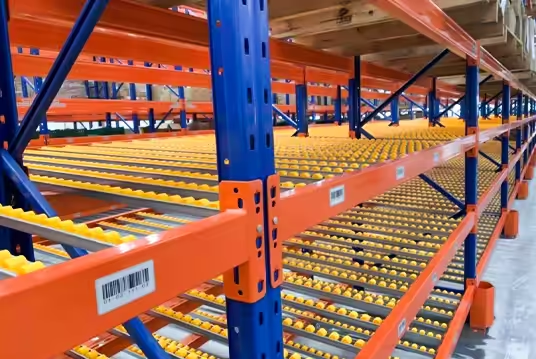
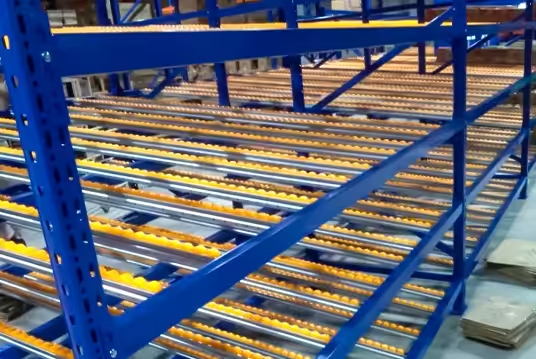
A carton flow rack is a gravity-fed storage system designed for cartons, totes, bins, and small containers. It uses inclined roller tracks or flow rails installed on each storage lane, allowing products to automatically move from the replenishment side to the picking side.
Unlike traditional static shelving, a carton flow rack separates the loading and picking areas. Workers replenish products from the rear side, while pickers collect items from the front side, creating a continuous FIFO (first-in, first-out) workflow.
This design makes carton flow racks especially effective for operations that require fast order fulfillment, frequent picking, and accurate inventory rotation.
2. Where Are Carton Flow Racks Used?
Carton flow racks are widely used in industries with high SKU volumes and frequent picking requirements.
| Industry | Application | Why Choose Carton Flow Rack |
|---|---|---|
|
E-commerce Fulfillment |
High-frequency order picking and SKU management |
Reduces walking distance and improves picking efficiency |
|
Distribution Centers |
Fast sorting and replenishment operations |
Separates replenishment from picking activities |
|
Retail Warehouses |
Daily product replenishment for stores |
Supports FIFO rotation for fast-moving goods |
|
Manufacturing |
Line-side material supply and parts picking |
Provides easy access to components and reduces manual handling |
|
Food & Pharmaceutical |
Expiration-sensitive product management |
Helps maintain FIFO inventory control |
3. Advantages of Carton Flow Rack
- Faster picking efficiency: Products automatically move to the picking face, reducing operator movement and search time.
- Better inventory rotation: FIFO operation helps prevent product aging and improves stock control.
- Separated replenishment and picking: Operators can restock without interrupting picking activities.
- Easy automation integration: Can be combined with barcode systems, pick-to-light solutions, sensors, and warehouse management systems (WMS).
- Cost-effective storage solution: Compared with fully automated picking systems, carton flow racks provide an efficient solution with lower investment requirements.
4. Limitations of Carton Flow Rack
Although carton flow racks are highly efficient for small-item picking, they are not suitable for every type of product.
- Limited load capacity: Mainly designed for light and medium-weight goods.
- Requires regular product shapes: Cartons, totes, and containers need stable dimensions to move smoothly on roller tracks.
- Not ideal for heavy pallet storage: Large or irregular loads are better suited for pallet flow racks.
Pallet Flow Rack: High-Density FIFO Pallet Storage
1. What Is a Pallet Flow Rack?
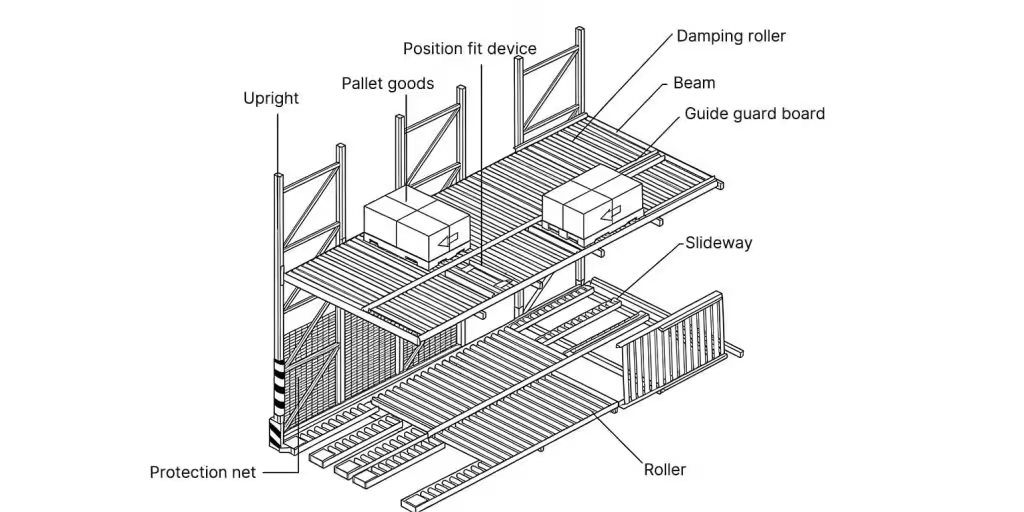
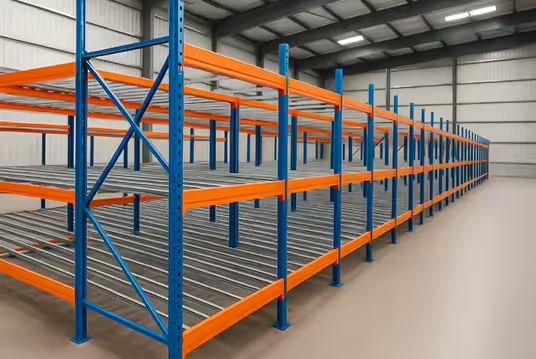
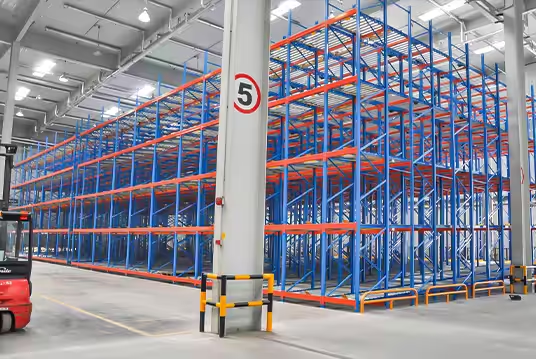
A pallet flow rack is a heavy-duty gravity storage system designed for palletized goods. It is built on a pallet racking structure equipped with inclined roller tracks, allowing pallets to move automatically from the loading side to the unloading side through gravity.
Also known as roller pallet racking or a gravity pallet rack system, pallet flow racks use controlled braking devices and pallet separators to regulate pallet movement, ensuring safe operation and reliable FIFO (first-in, first-out) inventory rotation.
Unlike conventional selective pallet racking, pallet flow racks reduce the number of required aisles and maximize storage density, making them ideal for warehouses that handle large quantities of the same products.
2. How Do Pallet Flow Racks Work?
The working principle of a pallet flow rack is simple:
- Forklifts load pallets from the replenishment side.
- Pallets move slowly along inclined roller tracks under gravity.
- Braking systems control the moving speed to ensure safe operation.
- The first pallet reaches the picking side and is removed first.
- Remaining pallets automatically move forward to the picking position.
This continuous movement creates an efficient FIFO workflow while reducing forklift travel distance and improving warehouse throughput.
3. Where Are Pallet Flow Racks Used?
Pallet flow racks are mainly used in industries that require high storage density, fast inventory turnover, and strict FIFO management.
| Industry | Typical Applications | Main Benefits |
|---|---|---|
|
Food & Beverage |
Dairy products, drinks, frozen food, packaged goods |
Prevents expiration and supports FIFO rotation |
|
Pharmaceutical |
Medicines and medical supplies |
Improves batch and expiration date control |
|
Cold Storage |
Frozen food and temperature-controlled warehouses |
Maximizes limited cold room space |
|
FMCG |
High-volume consumer goods |
Supports fast product turnover |
|
Chemical Industry |
Packaged raw materials and finished products |
Suitable for stable palletized loads |
|
Automotive & Logistics |
Distribution centers and component storage |
Improves pallet handling efficiency |
4. Advantages of Pallet Flow Rack
- High storage density: Compact lane design reduces aisle requirements and maximizes warehouse space utilization.
- Excellent FIFO management: Automatic pallet movement helps maintain product rotation and reduces aging inventory.
- Reduced forklift travel: Separate loading and unloading sides improve material flow efficiency.
- Low energy consumption: Gravity-driven operation requires no motors or external power.
- Suitable for large-volume storage: Ideal for warehouses storing large quantities of identical products.
5. Limitations of Pallet Flow Rack
Despite its advantages, pallet flow racks require careful planning and are not suitable for every warehouse.
- Higher initial investment: The system requires precision-engineered roller tracks, braking devices, and structural components.
- Requires standardized pallets: Pallet dimensions, weight distribution, and load stability must meet system requirements.
- More complex installation and maintenance: Proper slope design and regular inspection are important for reliable operation.
- Limited flexibility for many SKUs: Warehouses with extremely high SKU variety may require other storage solutions.
Carton Flow Rack vs. Pallet Flow Rack: What's the Difference?
Both carton flow racks and pallet flow racks use gravity-fed roller lanes to achieve first-in, first-out (FIFO) inventory rotation. However, they are designed to solve different warehouse challenges.
A carton flow rack focuses on improving order picking efficiency for cartons, totes, and small containers, while a pallet flow rack is built to maximize storage density and manage palletized inventory. Choosing the right system depends on your products, warehouse operations, and business goals.
1. Which Flow Rack Is Right for Your Warehouse?
Choose a carton flow rack if your warehouse handles a large number of SKUs, frequent order picking, or small packaged products that require fast and accurate fulfillment.
Choose pallet flow racks if your operation stores full pallets, requires maximum storage density, or needs strict FIFO management for high-volume inventory.
If your warehouse includes both pallet storage and piece picking, combining the two systems often provides the most efficient solution. Full pallets can be stored in pallet flow racks, while cartons and smaller items are picked from carton flow racks, creating a highly productive warehouse workflow.
Integrating Carton Flow Racks and Pallet Flow Racks
Many warehouses face a common challenge: full pallets need high-density storage, while individual cartons require fast and efficient picking. Relying on a single storage system often means compromising either storage capacity or picking productivity.
By integrating carton flow racks and pallet flow racks, businesses can combine the strengths of both systems. Full pallets are stored in high-density pallet lanes, while cartons and smaller items are picked from dedicated carton flow racks, creating a more efficient and flexible warehouse operation.
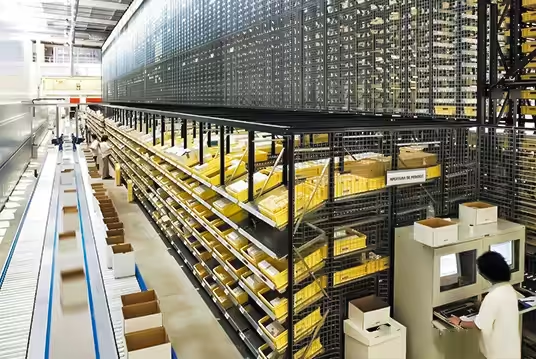
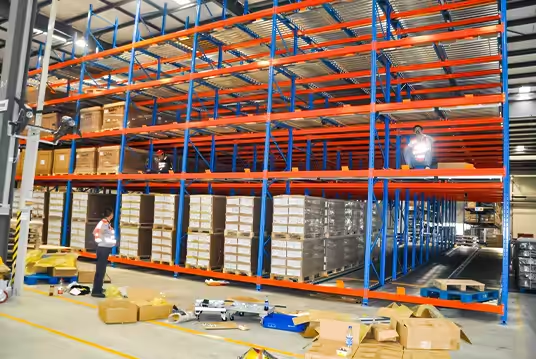
Option 1: Vertical Integration (Most Common)
In high-bay warehouses, the two systems can be installed within the same racking structure.
- Lower levels: Carton flow racks for ergonomic, high-frequency order picking.
- Upper levels: Pallet flow racks for high-density pallet storage using forklifts or lifting equipment.
This configuration maximizes both storage capacity and picking efficiency without increasing the warehouse footprint.
Option 2: Zoned Warehouse Layout
Another approach is to divide the warehouse into separate storage and picking zones.
- Pallet flow racks are used for bulk pallet storage.
- Carton flow racks are dedicated to order fulfillment and piece picking.
- Conveyors, AGVs, or other material handling systems connect the two areas for continuous product flow.
This layout is well suited to large distribution centers and warehouses with high daily throughput.
Option 3: Carton Flow Modules Within Pallet Racking
Carton flow modules can also be integrated into standard pallet racking systems. Full pallets are stored above, while gravity-fed carton flow lanes are installed below for case or piece picking.
As inventory is replenished from the pallet storage above, cartons automatically move to the picking face, maintaining continuous FIFO replenishment and reducing manual handling.
Benefits of an Integrated Flow Rack System
| Benefit | Operational Value |
|---|---|
|
Higher Storage Density |
Maximizes vertical warehouse space while maintaining easy product access |
|
Faster Order Fulfillment |
Separates replenishment from picking to improve workflow efficiency |
|
Better Inventory Control |
Maintains FIFO inventory rotation for both pallets and cartons |
|
Greater Operational Flexibility |
Supports both bulk storage and piece picking within one system |
|
Easy Automation Integration |
Compatible with conveyors, AGVs, AS/RS, and warehouse management systems (WMS) |
How to Choose the Right Flow Rack
Choosing the right flow rack depends on your products, warehouse layout, throughput requirements, and operational goals. Answer the following questions to identify the solution that best fits your business.
1. What Type of Products Do You Store?
| If You Store... | Recommended Solution |
|---|---|
|
Full pallets |
Pallet Flow Rack |
|
Cartons, totes, or bins |
Carton Flow Rack |
|
Both pallets and cartons |
Integrated Flow Rack System |
2. What Is Your Biggest Warehouse Challenge?
| Your Priority | Recommended Solution |
|---|---|
|
Increase storage capacity |
Pallet Flow Rack |
|
Improve picking efficiency |
Carton Flow Rack |
|
Achieve both objectives |
Integrated Flow Rack System |
3. What Are Your Warehouse Conditions?
| Warehouse Condition | Recommended Solution |
|---|---|
|
Limited budget or low warehouse height |
Carton Flow Rack |
|
High-bay warehouse with heavy pallet loads |
Pallet Flow Rack |
|
Large distribution center with mixed operations |
Integrated Flow Rack System |
4. Quick Selection Guide
Choose a carton flow rack if your operation focuses on fast order picking, frequent replenishment, and handling a large variety of SKUs.
Choose a pallet flow rack if your warehouse stores palletized goods in high volumes and requires maximum storage density with reliable FIFO inventory management.
If your warehouse needs both bulk pallet storage and efficient piece picking, an integrated flow rack system offers the most balanced and scalable solution.
Want to learn more about warehouse storage systems? You might be interested in the following article.
13 Common Warehouse Storage Systems: How to Choose the Best One
Explore 13 popular warehouse storage systems to boost logistics efficiency & inventory accuracy. Learn how to select the ideal storage solution for your warehouse automation needs.
Customized Flow Rack Solutions by HUAYIDE
With an in-house manufacturing facility and professional engineering team, HUAYIDE provides customized flow rack solutions tailored to different warehouse requirements. From carton flow racks for high-speed picking operations to pallet flow racks for high-density FIFO storage, we design and manufacture each system based on your product characteristics, storage capacity, warehouse layout, and operational goals.
Through complete project support including solution design, equipment manufacturing, installation guidance, and technical service, HUAYIDE helps businesses build more efficient, reliable, and scalable warehouse storage systems.
Need a flow rack solution for your warehouse? Contact HUAYIDE today for professional advice and a customized storage system proposal.
Frequently Asked Questions
1. What is a flow rack?
A flow rack is a gravity-fed storage system that automatically moves products from the loading side to the picking side using inclined roller tracks. It supports first-in, first-out (FIFO) inventory rotation and is widely used to improve warehouse efficiency, storage density, and order picking performance.
2. What is the difference between a carton flow rack and a pallet flow rack?
A carton flow rack is designed for cartons, totes, bins, and other small containers, making it ideal for fast order picking. A pallet flow rack is built for palletized loads and focuses on maximizing storage density while maintaining FIFO inventory management.
3. Are flow racks suitable for cold storage warehouses?
Yes. Pallet flow racks are commonly used in cold storage facilities because they maximize storage capacity while reducing forklift travel. Their FIFO operation also helps ensure proper inventory rotation for temperature-sensitive products such as food, beverages, and pharmaceuticals.
4. Can flow racks be integrated with warehouse automation systems?
Yes. Flow racks can be integrated with conveyors, AS/RS, AGVs, warehouse management systems (WMS), warehouse control systems (WCS), and pick-to-light technologies to create a more efficient and automated material handling solution.
5. How do I choose the right flow rack for my warehouse?
The best solution depends on your product type, storage volume, warehouse layout, and operational requirements. Carton flow racks are ideal for high-speed order picking, while pallet flow racks are better suited for high-density pallet storage. Warehouses that require both functions often benefit from an integrated flow rack system.