Introduction
A Mobile Racking System is not just another storage option on a warehouse manager’s checklist—it is the definitive answer to the most persistent and expensive problem in logistics today: the underutilization of valuable floor space. In conventional static racking configurations, every single aisle represents square meters that generate zero revenue, consuming up to half of a facility’s total footprint with empty air. A Mobile Racking System eliminates this inefficiency at its root by mounting entire rows of pallet racking onto motorized carriages that travel along floor-mounted rails, opening an aisle only where and when access is required. The result is a storage platform that can compress what was once two or even three separate aisles into a single dynamic access corridor. For warehouse operators facing escalating real estate costs, rising energy bills, and relentless pressure to do more with less, the question is no longer whether to consider a Mobile Racking System, but rather why any forward-thinking operation would choose anything else as its primary storage infrastructure.
Operating Principle
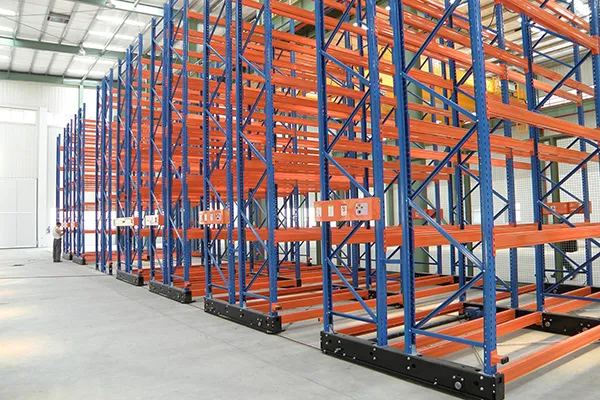
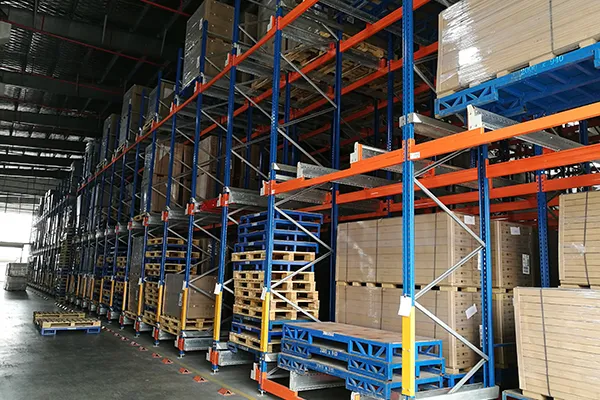
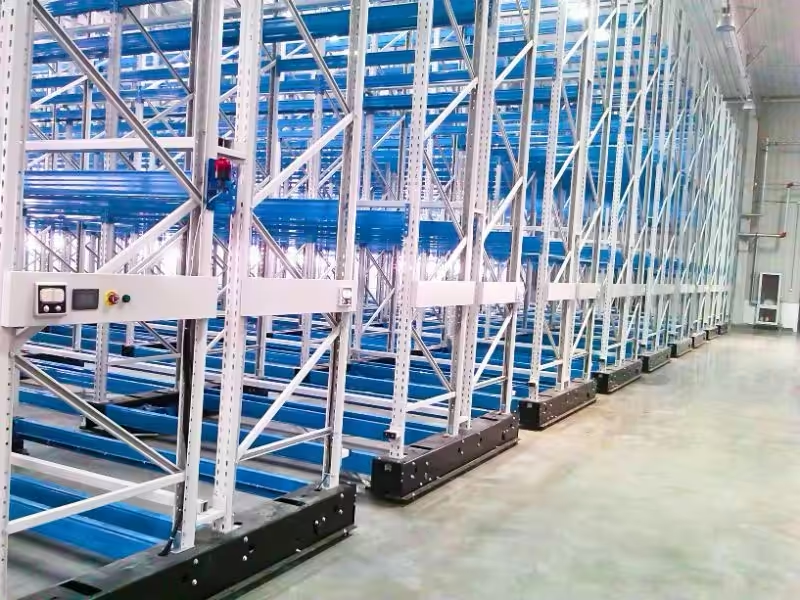
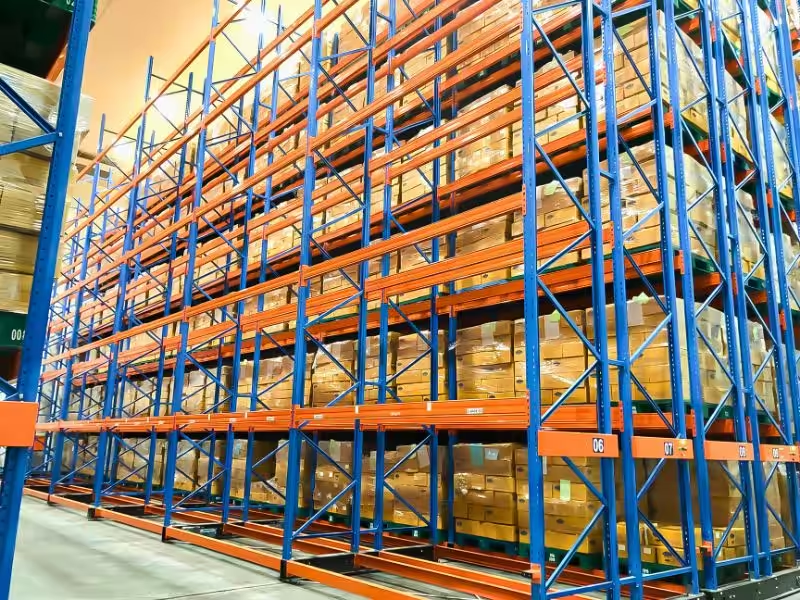
Understanding why a Mobile Racking System delivers such transformative results begins with grasping its elegantly simple operating principle. Multiple rows of racking are installed on mobile bases that travel along guide rails embedded in or bolted onto the warehouse floor. Each base is propelled by electric motors, activated by control panels or wireless remote units located at the aisle access points. When an operator needs to access a specific pallet position, they simply command the relevant aisle to open. The mobile rows on either side of the target aisle move apart, creating a working corridor precisely where it is needed. Once the operation is complete, the rows can be closed back together, eliminating the aisle and reclaiming that floor space for productive storage. This dynamic aisle creation is what allows a single Mobile Racking System to service dozens of racking rows through just one or two access corridors, multiplying the facility’s pallet capacity without expanding a single square meter of its physical boundaries.
Space Optimization
The headline benefit of any Mobile Racking System installation is the staggering gain in storage density, but the numbers deserve closer examination to fully appreciate the financial impact.
- Eighty Percent Floor Utilization: While conventional selective racking typically dedicates only forty to fifty percent of floor area to actual storage positions, a properly configured mobile racking installation can push that figure to eighty percent or higher. Every square meter of floor that previously existed solely to accommodate forklift travel lanes now supports pallet positions and generates measurable inventory capacity.
- Capacity Doubling Without Construction: For many existing warehouses, transitioning from static racking to a Mobile Racking System effectively doubles pallet capacity within the same building envelope. This eliminates the need for costly facility expansions, site acquisitions, or the operational disruption of relocating to a larger premises.
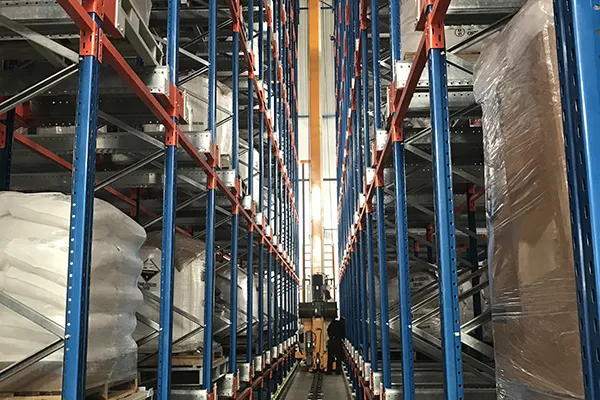
- Vertical Cube Exploitation: Mobile racking is not limited to single-level configurations. High-rise mobile systems can extend upward to heights of twelve meters or more, capturing the full vertical cube of a warehouse that sits idle in lower-density layouts. The combination of deep horizontal compression and aggressive vertical reach creates storage volumes that simply cannot be achieved with static alternatives.
For companies operating in urban logistics hubs where industrial real estate commands premium prices, the ability of a Mobile Racking System to extract maximum revenue-generating capacity from an existing facility is not merely an advantage—it is often the single factor that determines whether the operation remains financially viable.
Operational Flexibility Across Environments
A common misconception about Mobile Racking System technology is that it suits only slow-moving or archival inventory. Modern systems have decisively disproven this assumption through advances in drive speed, control intelligence, and integration capability.
- Variable Speed Drives: Contemporary mobile bases can travel at speeds exceeding five meters per minute during initial opening and closing movements, slowing only during the final approach phase when aisles are almost fully formed. This means an operator can summon a working aisle in seconds, not minutes.
- Multi-Aisle Operations: Larger installations can be segmented into multiple independently operating blocks, each with its own access corridor. While picking or replenishment occurs in one section, another aisle can be opened simultaneously in a different block, eliminating queue times and enabling continuous workflow.
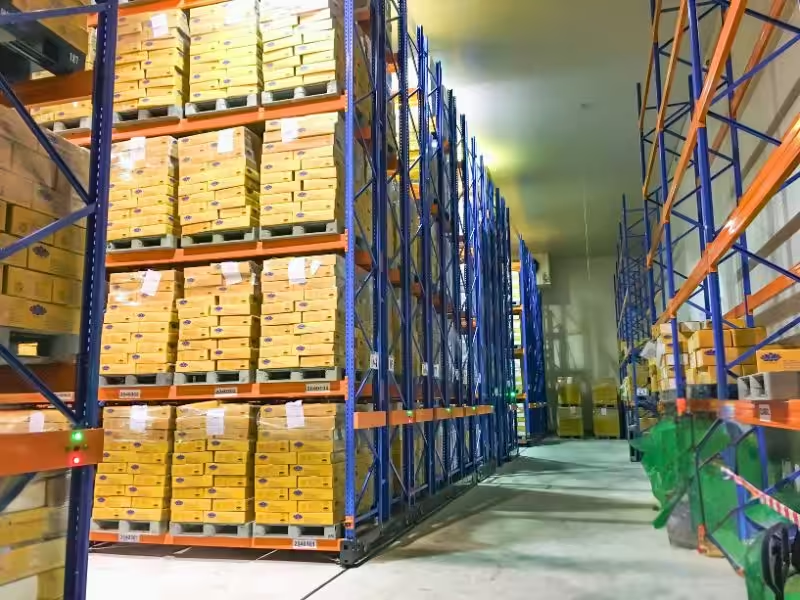
- Cold Storage Proficiency: The Mobile Racking System has proven particularly valuable in freezer and chiller applications, where space costs are amplified by insulation expenses and energy consumption. Specialized low-temperature models feature cold-rated motors, lubricants, and structural steel that maintain performance and safety integrity at temperatures down to minus thirty degrees Celsius. By compressing the required cold storage footprint, these systems reduce not only construction capital but also ongoing refrigeration costs in direct proportion to the square meters eliminated.
- Explosion-Proof and Specialized Configurations: For chemical storage, pharmaceutical raw materials, or other hazardous inventory, Mobile Racking System designs can incorporate explosion-proof motors, anti-static components, and specialized coatings that meet stringent regulatory standards while delivering the same density advantages.
Safety Engineering in Motion
Any storage system that involves moving heavy loads invites legitimate safety concerns, and the engineering rigor applied to a Mobile Racking System directly addresses these risks through multiple redundant safeguards.
- Obstacle Detection Systems: Modern mobile racking installations incorporate photoelectric sensors and pressure-sensitive safety edges along the leading faces of every moving row. If any object—a pallet, a forklift, or a person—enters the closing aisle during movement, the system detects the obstruction and immediately halts or reverses direction. This protection operates continuously and requires no active input from operators.
- Seismic Sensing and Response: In regions prone to earthquakes, specialized sensors continuously monitor ground vibration. Should tremors exceed a calibrated threshold, the Mobile Racking System automatically locks all rows in position, preventing the cascading movement that could otherwise cause load dislodgement or structural collapse. Combined with the inherent stability of the mobile base design, this seismic protection provides a level of safety that static high-bay racking often cannot achieve without extensive bracing.
- Anti-Tipping Geometry: The mobile bases are engineered with base width-to-height ratios and counterbalance designs that prevent tipping even under uneven loading or emergency stop conditions. Load-tested guide rails and anti-derail mechanisms ensure that mobile rows remain securely on their designated path regardless of operational stresses.
- Emergency Stop Integration: Strategically positioned emergency stop controls allow any worker in the vicinity to instantly immobilize all moving rows with a single action, providing a fail-safe shutdown capability that is immediately accessible without specialized training.
Energy Efficiency and Cost Reduction
While the space savings of a Mobile Racking System are immediately visible, the energy economics merit equal attention. Warehouse lighting represents a significant operational expense, and conventional static racking requires that entire aisles remain illuminated throughout working hours regardless of whether access is occurring. A Mobile Racking System fundamentally changes this calculation. Because aisles are only formed when and where needed, warehouse lighting can be configured with zoned controls that activate illumination only in the currently open access corridor. Motion sensors linked to the racking control system can trigger lighting exclusively during active operations, leaving closed racking faces in low-energy standby mode. Over the course of a year, the reduction in lighting energy consumption alone can generate substantial savings. When combined with the HVAC savings achieved in cold storage facilities that benefit from the reduced conditioned volume, the ongoing operational cost advantage of a Mobile Racking System reinforces the initial space optimization gains with recurring financial returns.
Inventory Security
Not all inventory is equal in value or sensitivity, and a Mobile Racking System offers an underappreciated security advantage. When rows are closed together, the racking effectively forms a solid storage block with no exposed aisles. Access to inventory within the closed block requires the deliberate action of opening a specific aisle through the control system. This creates a natural access control barrier that deters unauthorized browsing, reduces the risk of opportunistic theft, and provides a clear audit trail of which aisles were accessed and when. For warehouses storing high-value electronics, pharmaceutical products, or regulated substances, this inherent security characteristic of a Mobile Racking System translates into reduced inventory shrinkage and simplified compliance documentation. Furthermore, when integrated with warehouse management software, access permissions can be assigned per operator, per shift, or per product category, ensuring that sensitive inventory is only accessible to personnel with explicit authorization credentials. What appears on the surface as a space-saving mechanism also functions as a discreet but effective physical security infrastructure.
Integration with Modern Warehouse Management
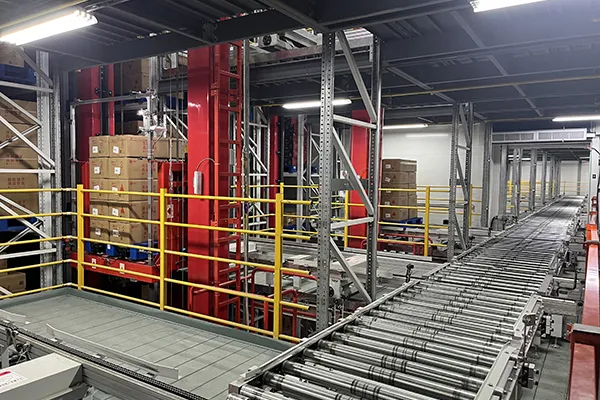
A contemporary Mobile Racking System is not an isolated mechanical installation but a digitally connected component of the warehouse’s broader information architecture. Control interfaces have evolved from simple push-button panels to touchscreen consoles and software applications that communicate bidirectionally with warehouse management systems. This integration enables intelligent aisle assignment based on pick lists, automatic aisle preparation before the operator arrives at the racking face, and real-time status monitoring that tracks which aisles are open, closed, or in motion. Data logging capabilities capture usage patterns over time, allowing logistics managers to identify which storage zones experience the highest access frequencies and to reorganize inventory placement for optimal efficiency. As warehouses progress toward Industry 4.0 standards, the Mobile Racking System provides a digital-ready platform that can interface with automated guided vehicles, robotic picking systems, and voice-directed workflows without requiring fundamental structural modifications. The investment made today in a connectivity-capable mobile racking installation positions the facility for the automation upgrades of tomorrow.
The Investment Justification
Procurement decisions in logistics inevitably circle back to financial justification, and the Mobile Racking System offers a compelling total cost of ownership narrative. The initial capital outlay for a mobile racking installation exceeds that of a comparable static selective racking configuration—this is undisputed. The motors, mobile bases, guide rails, and control systems add engineering complexity and cost that must be acknowledged upfront. However, when the analysis expands to include the avoided costs that a Mobile Racking System enables, the return on investment becomes remarkably favorable.
- Avoided Construction Costs: Building a new warehouse or expanding an existing one typically costs hundreds of dollars per square meter in construction, plus land acquisition, permitting, and operational disruption expenses. A mobile racking installation that doubles capacity within existing walls eliminates this entire category of expenditure.
- Reduced Lease Obligations: For operations that rent warehouse space, the ability to consolidate into a smaller facility or defer a move to larger premises translates into reduced monthly lease payments that compound annually. In high-cost industrial markets, the lease savings alone can recover the incremental cost of a Mobile Racking System within a remarkably short payback window.
- Ongoing Operational Savings: Lower lighting costs, reduced energy consumption in conditioned environments, minimized product damage through controlled access, and decreased labor requirements for travel and search all contribute to an operational cost profile that improves year after year.
For most warehouse operators, the payback period on a Mobile Racking System investment falls within a range that boardrooms find entirely acceptable, and the ongoing savings continue to accumulate long after the initial investment has been fully recovered.
Conclusion
Warehouse space has transitioned from a relatively abundant resource to a critical strategic constraint for logistics operations worldwide. Urbanization pushes industrial land further from population centers, construction costs escalate faster than general inflation, and the e-commerce-driven demand for storage capacity shows no signs of abating. In this environment, the Mobile Racking System represents not merely a product choice but a strategic declaration—a commitment to extracting maximum value from every square meter of facility space, to future-proofing storage capacity against business growth, and to operating with the efficiency that modern competitive pressures demand. Companies that adopt a Mobile Racking System as their primary storage platform position themselves to serve more customers, accommodate more inventory, and operate more profitably than competitors still struggling with the spatial inefficiencies of static racking. The warehouses that will lead their industries through the next decade of logistics evolution will be those that recognized early that space is too expensive to waste on empty aisles, and that the Mobile Racking System is the definitive tool for transforming that wasted space into productive capacity.