Introduction
The Stacker Cranes as the undisputed backbone of modern automated warehousing, fundamentally transforming how businesses store, retrieve, and manage inventory in an era defined by speed, accuracy, and space optimization. As global supply chains grow increasingly complex and consumer expectations for rapid delivery continue to escalate, the stacker crane system has evolved from a niche industrial curiosity into an indispensable component of competitive logistics operations. This sophisticated piece of automated storage and retrieval technology operates within narrow aisles of high-bay racking structures, moving vertically and horizontally with precision to handle pallets, totes, or cartons without human intervention. Understanding the multifaceted importance of the stacker crane in automated warehousing reveals why forward-thinking companies across industries—from e-commerce and pharmaceuticals to food processing and automotive manufacturing—are investing heavily in these systems to future-proof their distribution networks.
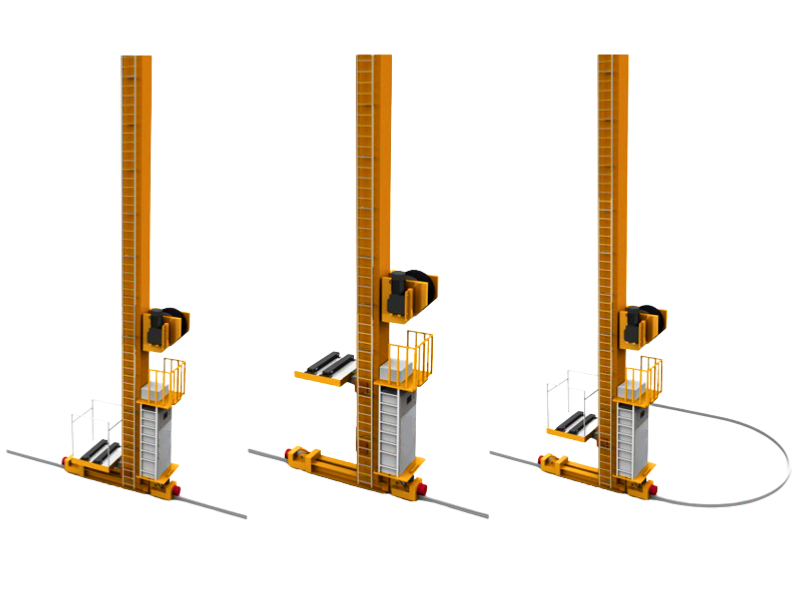
Stacker Crane and Its Core Function
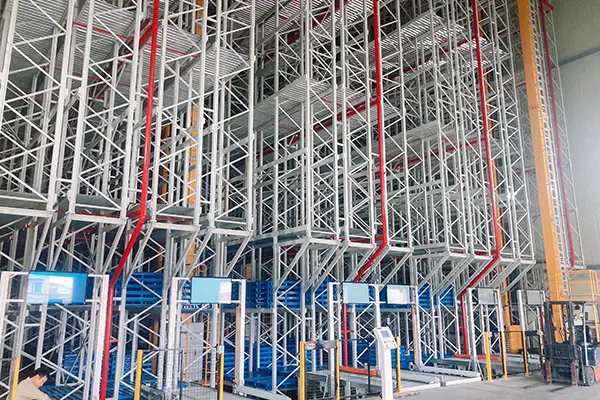
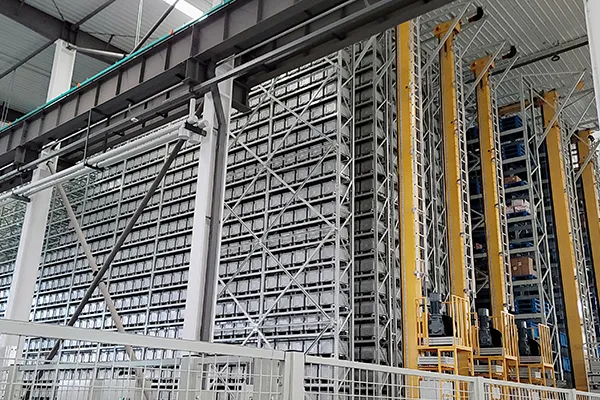
A stacker crane, often referred to as an AS/RS crane or automated storage and retrieval machine, is a computer-controlled device engineered to place and retrieve loads from designated storage locations within a racking structure. Unlike traditional forklifts that require wide operating aisles and skilled human operators, the stacker crane travels along a floor-mounted rail while being guided by an upper rail, achieving exceptional stability at remarkable heights. The machine consists of a mast structure, a carriage assembly equipped with load-handling devices such as telescopic forks or grippers, and an integrated control system that communicates with warehouse management software. This configuration allows a single stacker crane unit to service thousands of storage positions across multiple vertical levels, operating continuously with minimal supervision. The precision positioning capabilities of modern stacker crane systems ensure that every load transfer occurs within millimeter-level accuracy, eliminating the product damage and misplacement risks associated with manual handling methods.
Maximizing Warehouse Space Utilization
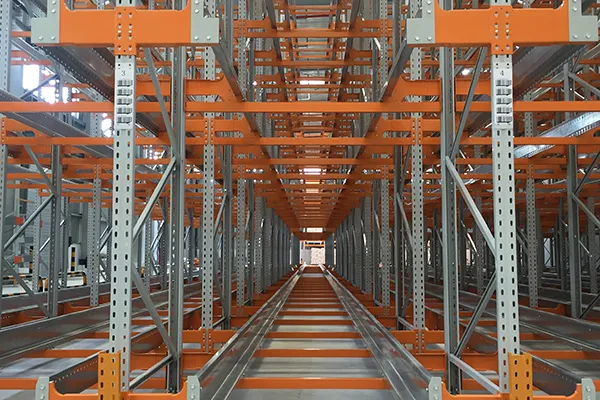
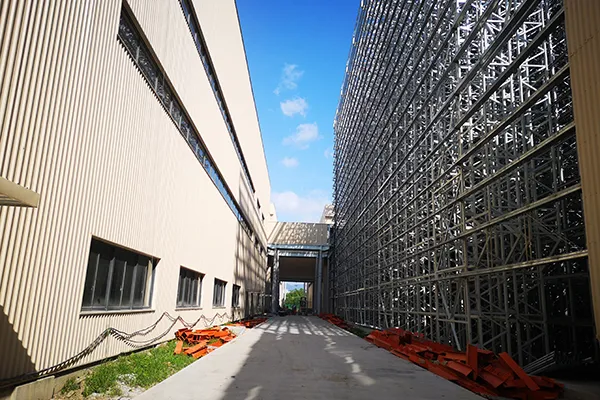
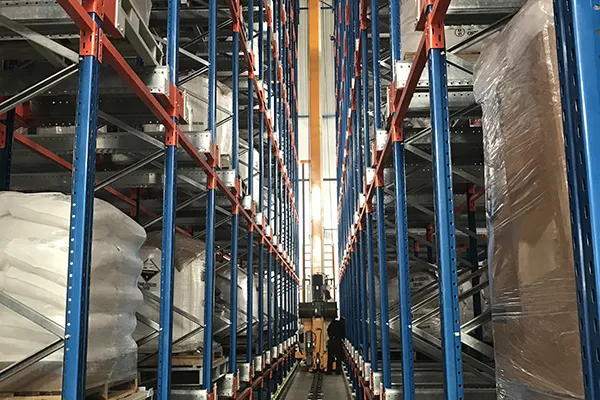
One of the most compelling arguments for deploying a stacker crane system lies in its unparalleled ability to maximize warehouse space utilization. In conventional warehouse setups, wide aisles must accommodate the turning radius and maneuvering requirements of counterbalance forklifts or reach trucks, consuming valuable floor area that could otherwise serve storage purposes. A stacker crane, by contrast, operates within an aisle scarcely wider than the load itself, typically between 1.2 and 1.8 meters depending on pallet dimensions and crane design. This dramatic reduction in aisle width translates directly into increased storage density. Furthermore, because the stacker crane is engineered to operate at heights far exceeding the reach of conventional material handling equipment—commonly servicing racking structures 30 meters tall or more—the system exploits the full vertical cube of a facility. The cumulative effect of narrow aisles and extreme vertical reach means that a warehouse equipped with stacker crane technology can store two to three times the inventory volume of a conventionally configured facility occupying the same footprint. For businesses facing rising real estate costs or constrained by existing building dimensions, this density advantage alone often justifies the investment in an automated storage and retrieval crane system.
- Narrow aisle operation reduces aisle width requirements by up to 60 percent compared to forklift-served racking
- Vertical reach exceeding 30 meters exploits overhead space that conventional equipment cannot access
- Storage density improvements of 100 to 200 percent over traditional warehouse configurations
- Reduced land and building costs through more efficient use of existing facility footprints
- Ability to accommodate inventory growth without physical expansion or relocation
Enhancing Operational Accuracy and Inventory Control
The stacker crane system brings a level of operational accuracy to warehouse processes that manual methods simply cannot match. Every movement of the crane is directed by warehouse control software that maintains a real-time digital map of every storage location, every load, and every transaction. When a retrieval command is issued, the stacker crane travels directly to the exact coordinate associated with the requested item, eliminating the search time and potential errors inherent in human-operated picking. This precision extends to putaway operations as well; the system automatically selects optimal storage locations based on pre-programmed logic considering factors such as product velocity, weight, dimensions, and compatibility constraints. The integration between stacker crane controls and enterprise resource planning or warehouse management systems creates a seamless information flow where inventory records update instantaneously with each crane movement. The result is perpetual inventory accuracy that often exceeds 99.5 percent, virtually eliminating the costly cycle counting, stock discrepancy investigations, and customer service failures that plague manually operated warehouses. For industries subject to strict regulatory oversight—pharmaceuticals, medical devices, food products—this level of traceability and accuracy is not merely beneficial but essential for compliance.
Driving Labor Efficiency and Workplace Safety
Labor availability and cost represent growing concerns for warehouse operators worldwide, and the stacker crane directly addresses both challenges. A single automated storage and retrieval crane can replace multiple forklift operators across multiple shifts, performing the work of loading and unloading storage positions continuously without fatigue, breaks, or shift changes. While the initial capital investment in a stacker crane system is substantial, the long-term reduction in labor costs—including wages, benefits, training, and management overhead—delivers compelling return on investment over the system’s operational life, which often spans two decades or more. Beyond pure cost considerations, the stacker crane fundamentally improves warehouse safety by removing human operators from hazardous environments. Forklift-related accidents remain one of the leading causes of serious workplace injuries in logistics operations, with risks including collisions, tip-overs, falling loads, and pedestrian strikes. By automating the storage and retrieval function within the racking aisles, the stacker crane eliminates these risks from the most dangerous zone of warehouse operations. Human personnel transition to supervisory and peripheral roles, interacting with the system primarily at designated pick-up and drop-off stations located at the perimeter of the automated storage area.
- Continuous 24/7 operation capability without shift premiums or overtime costs
- Elimination of forklift-related accidents within automated storage zones
- Reduced dependency on increasingly scarce skilled forklift operators
- Ergonomic improvements through elimination of repetitive manual lifting and reaching
- Consistent performance regardless of external factors such as weather, fatigue, or staffing fluctuations
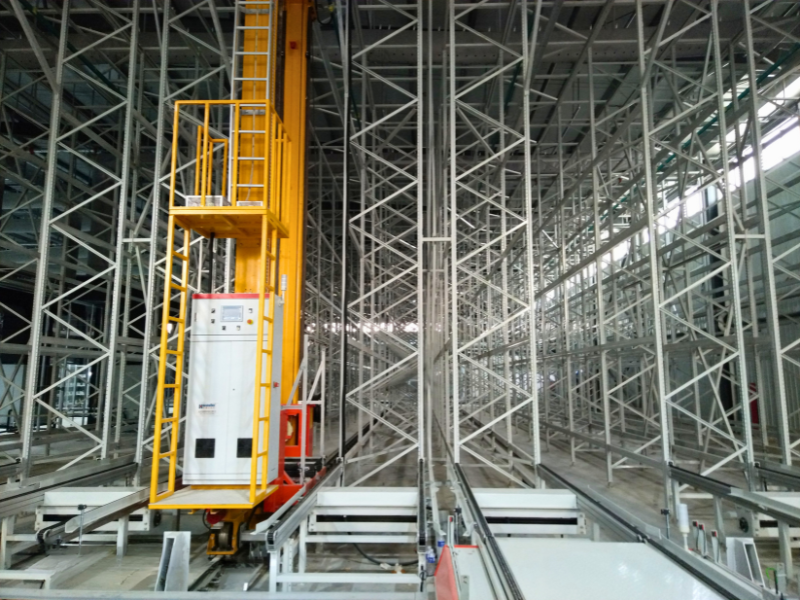
Enabling Cold Storage and Harsh Environment Operations
Cold storage warehouses present uniquely challenging working conditions that make stacker crane automation particularly valuable. Operating at temperatures ranging from minus 18 degrees Celsius for frozen storage to 2 degrees Celsius for chilled products, these environments are uncomfortable at best and hazardous at worst for human workers. Employee turnover in cold storage facilities runs significantly higher than in ambient warehouses, and productivity suffers as workers require frequent warm-up breaks and contend with bulky protective clothing that restricts movement. A stacker crane system engineered for cold storage operates unaffected by temperature extremes, maintaining full productivity regardless of conditions within the freezer chamber. Specialized components—including low-temperature rated steel, cold-appropriate lubricants, and heated control cabinets—ensure reliable performance in sub-zero environments. The stacker crane also contributes to cold chain integrity by minimizing door openings and air exchange; because loads are transferred through small, sealed ports at the system perimeter rather than through large roll-up doors that admit ambient air, temperature stability improves and energy consumption for refrigeration decreases. Similar advantages apply in other harsh environments such as high-temperature storage, dust-intensive operations, or facilities handling hazardous materials where minimizing human exposure is a priority.
Supporting High-Throughput Order Fulfillment
The stacker crane system excels not only in storage density but also in throughput capability, making it ideally suited for distribution operations where order fulfillment speed directly impacts customer satisfaction and competitive positioning. Modern stacker cranes achieve horizontal travel speeds exceeding 180 meters per minute and vertical lift speeds above 60 meters per minute, with acceleration and deceleration profiles optimized for energy efficiency and load stability. Dual-cycle operation—where the crane deposits one load and retrieves another in a single trip into the aisle—effectively doubles throughput compared to single-cycle operation. Advanced control algorithms sequence retrieval and putaway commands to minimize non-productive travel, grouping transactions by proximity and priority. For operations requiring extremely high throughput, multiple stacker cranes can be deployed within the same aisle, with control systems managing traffic flow to prevent interference while maximizing collective productivity. The predictable, consistent cycle times of automated storage and retrieval cranes enable precise order cut-off times and reliable delivery commitments that manual operations struggle to guarantee.
Integrating with Broader Automation Ecosystems
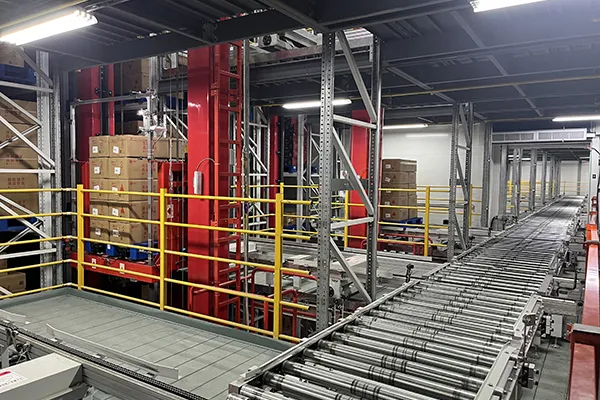
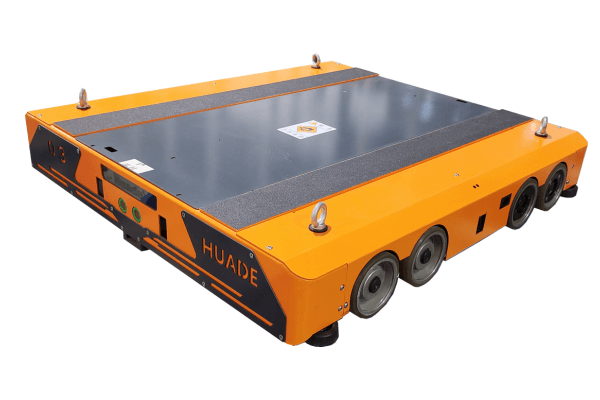
A stacker crane does not operate in isolation; its true importance in automated warehousing emerges through integration with complementary automation technologies. Conveyor systems transport loads between the crane pick-up and drop-off stations and receiving, shipping, or value-added service areas. Automated guided vehicles or autonomous mobile robots extend automated material flow beyond the fixed crane aisles. Palletizing and depalletizing robots prepare loads for entry into the automated storage system or reconfigure them for outbound shipment. The stacker crane serves as the central hub of this interconnected automation ecosystem, with warehouse execution software orchestrating the movement of goods across all subsystems to achieve end-to-end process automation. This integration capability means that a stacker crane investment creates a platform for progressive automation, allowing businesses to start with core storage and retrieval automation and expand into adjacent processes as needs evolve and budgets permit.
The Reliability Factor in Stacker Crane Systems
The reliability of a stacker crane directly determines the reliability of the warehouse operation it supports. A well-engineered automated storage and retrieval crane from a reputable manufacturer delivers availability rates exceeding 98 percent, with scheduled maintenance windows planned during non-operational hours to minimize disruption. Key reliability features include robust mechanical design with generous safety factors, industrial-grade electrical components rated for continuous duty cycles, redundant safety systems that prevent cascading failures, and onboard diagnostics that detect developing issues before they cause unplanned downtime. The table below summarizes the critical reliability characteristics that distinguish premium stacker crane systems from commodity alternatives.
| Reliability Feature | Operational Benefit | Impact on Warehouse Performance |
| Heavy-duty mast construction | Maintains alignment precision over decades of use | Consistent load handling accuracy without recalibration |
| Industrial-grade drive systems | Continuous operation without overheating or degradation | Sustained throughput during peak demand periods |
| Predictive maintenance sensors | Early detection of component wear or misalignment | Reduced unplanned downtime and emergency repair costs |
| Redundant safety circuits | No single point of failure can cause unsafe conditions | Operator confidence and regulatory compliance assurance |
| Remote diagnostic capability | Technical support can assess issues without on-site visits | Faster problem resolution and reduced service call costs |
Future-Proofing Warehouse Operations
Investing in a stacker crane system represents a long-term strategic commitment that positions a warehouse for future success. As e-commerce continues its relentless growth trajectory, as labor markets tighten further, and as customer expectations for delivery speed continue to compress, the advantages of automated storage and retrieval become increasingly pronounced. A stacker crane installed today will continue delivering value for twenty years or more, adapting to evolving inventory profiles, throughput requirements, and integration demands through software updates and modular hardware enhancements. The system provides a scalable platform where additional cranes, extended racking, or enhanced control capabilities can be added incrementally as business volumes grow. This future-proofing characteristic transforms the stacker crane from a tactical equipment purchase into a strategic infrastructure investment that compounds in value over time.
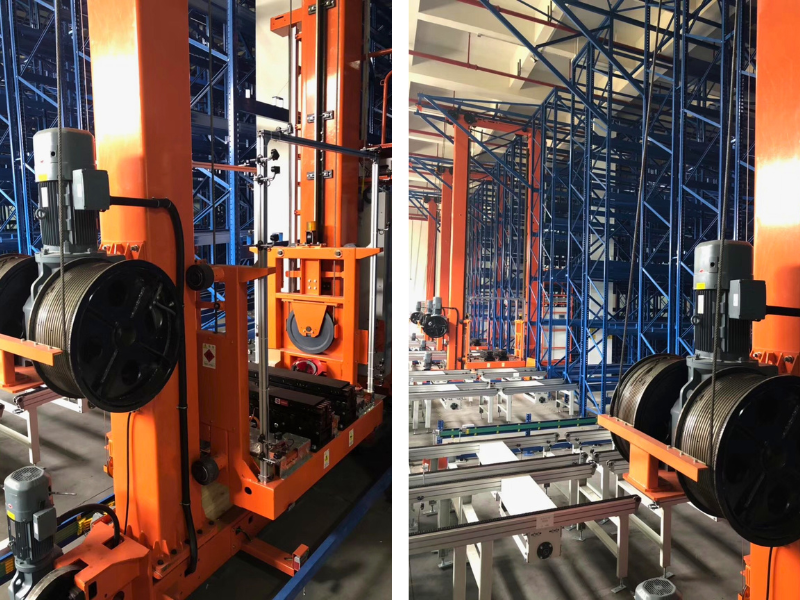
Conclusion
The importance of the stacker crane system in automated warehousing cannot be overstated. From maximizing storage density and ensuring inventory accuracy to reducing labor dependency and enabling safe cold storage operations, the stacker crane delivers a breadth of benefits that address the most pressing challenges facing modern logistics operations. As a central component of integrated automation ecosystems, the automated storage and retrieval crane creates a platform for continuous improvement and scalable growth. For businesses evaluating their warehouse automation strategy, the stacker crane represents not merely an option to consider but a foundational technology to prioritize. We invite you to contact our team of automation specialists to explore how a customized stacker crane solution can transform your warehouse operations, improve your competitive position, and deliver measurable return on investment for decades to come.