Introduction
Pallet Shuttle Racking represents a revolutionary leap in high-density storage technology, combining the structural integrity of conventional pallet racking with the speed and precision of motorized shuttle cars. In an era where warehouse space commands premium prices and supply chain velocity determines market advantage, this semi-automated system offers a compelling middle ground between manual deep-lane storage and full-scale automation. A Pallet Shuttle Racking system empowers a single forklift operator to load and retrieve pallets from lanes that extend dozens of positions deep, with a battery-powered shuttle doing the heavy lifting inside the tunnel. For logistics managers seeking to maximize every square meter of floor space without the multimillion-dollar commitment of a fully automated storage and retrieval system, understanding the advantages of Pallet Shuttle Racking is the key to unlocking transformative operational gains.
The Mechanics Behind the Efficiency
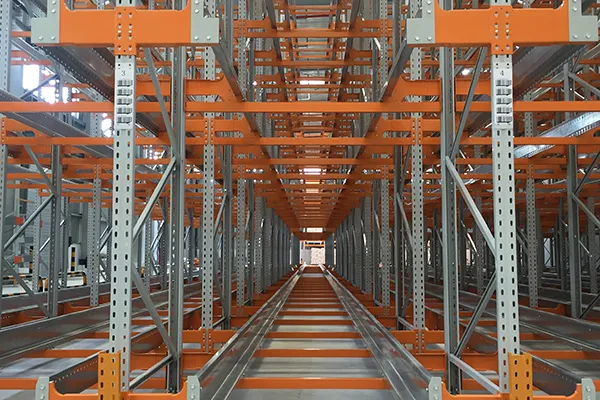
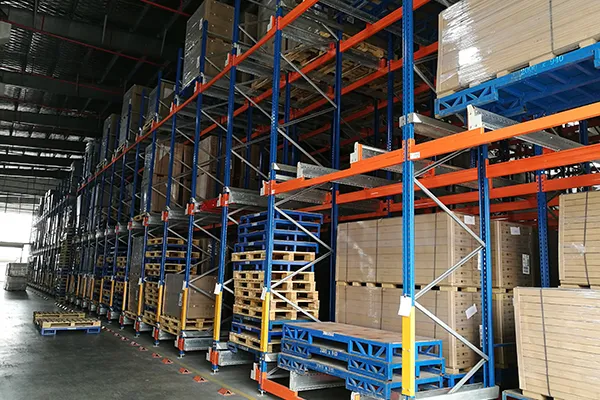
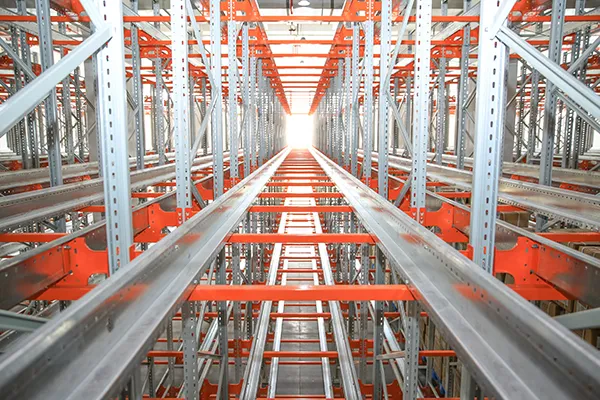
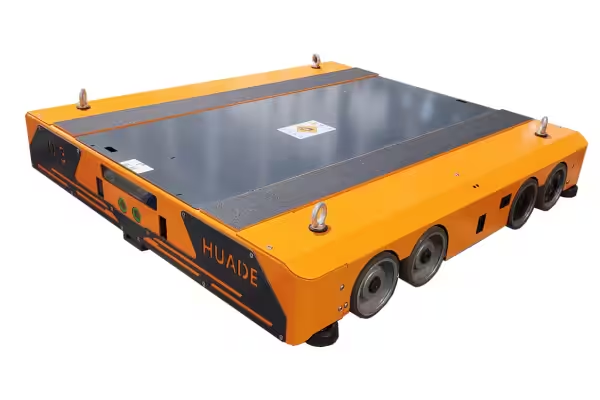
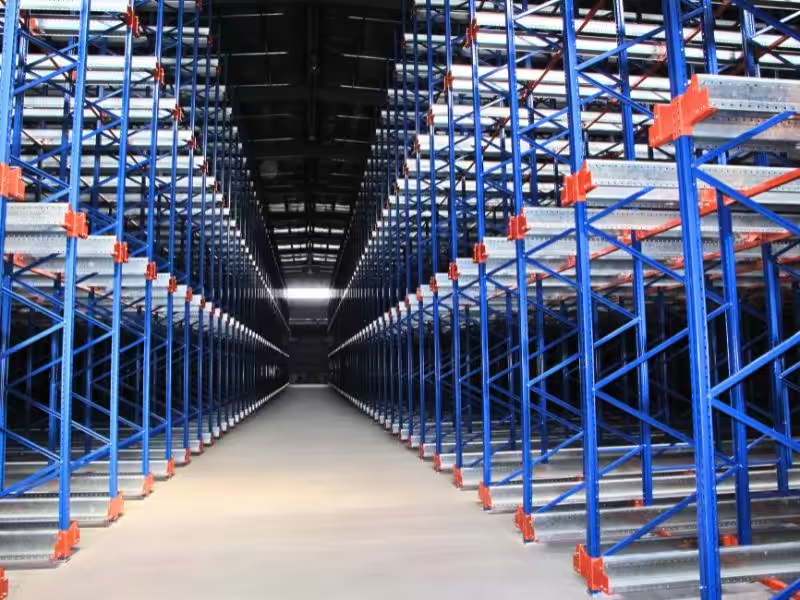
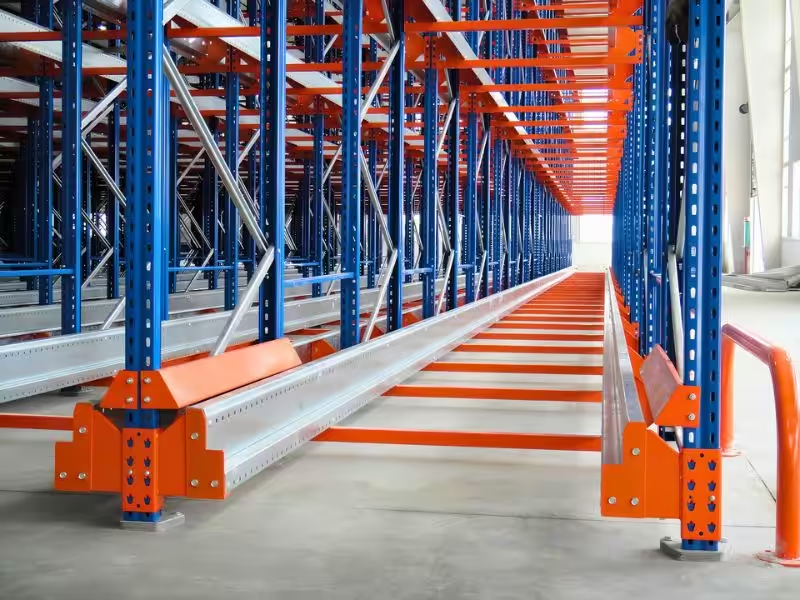
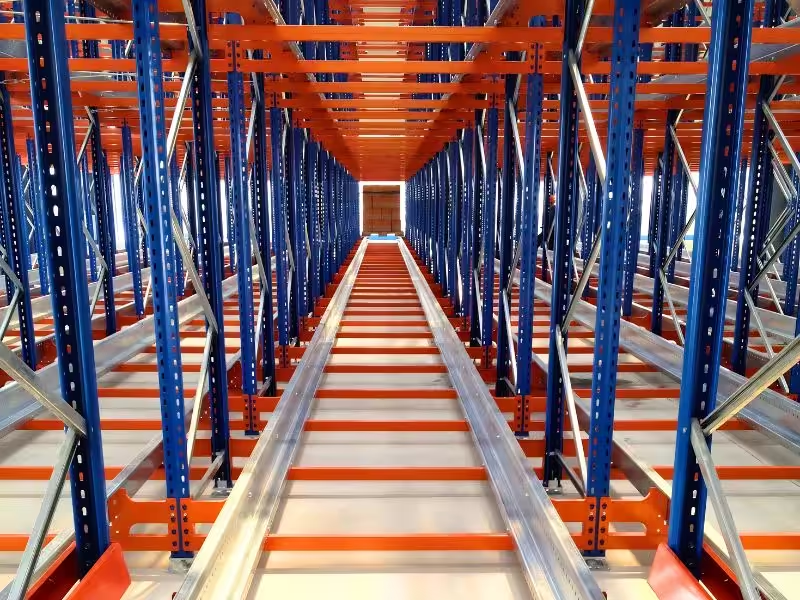
Before diving into the benefits, it is essential to understand how Pallet Shuttle Racking functions. The system consists of deep storage lanes constructed from heavy-duty racking frames, with rails running along the lane floor. A motorized shuttle car travels along these rails, lifting pallets slightly off the rail surface and transporting them to the desired position within the lane. The forklift operator simply places the shuttle into the lane at the front face, loads a pallet onto the rails, and commands the shuttle via a wireless remote control or tablet interface. The shuttle then carries the pallet to the deepest available position and returns to the face for the next load. When retrieving pallets, the process reverses, with the shuttle bringing stored pallets to the front where the forklift can extract them. This elegantly simple mechanism eliminates the need for forklifts to drive into the racking structure, unlocking a cascade of operational advantages that define the Pallet Shuttle Racking value proposition.
Unmatched Storage Density
The most immediate and quantifiable benefit of a high-density Pallet Shuttle Racking system is the dramatic increase in storage capacity within the same building footprint.
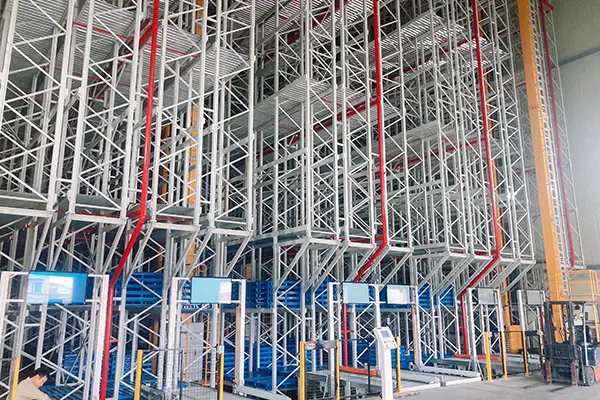
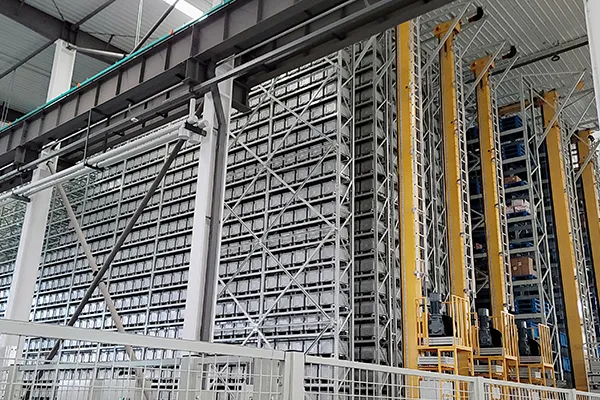
- Deep Lane Configuration: Unlike selective racking, which requires an aisle for every bay, shuttle racking lanes can extend twelve, twenty, or even forty pallet positions deep. Each lane serves as its own storage tunnel, and multiple lanes can be stacked vertically and arranged side by side, compressing an enormous volume of inventory into a compact area.
- Eliminated Internal Aisles: Because the shuttle travels within the lane itself, there is no need for forklift access aisles between racking rows. A warehouse that previously accommodated a single row of back-to-back selective racking can now house multiple deep lanes of Pallet Shuttle Racking, often increasing pallet capacity by sixty to eighty percent on the same floor area.
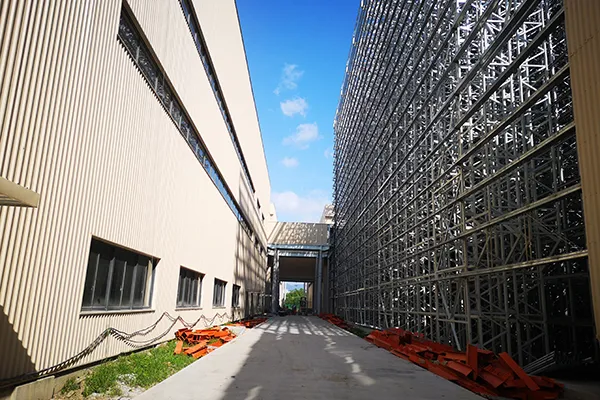
- Vertical Optimization: Shuttle systems can be installed in racking structures that reach heights of twelve meters or more, capitalizing on vertical cube space that remains underutilized in lower-density configurations.
For cold storage and freezer warehouses where every cubic meter carries an exponentially higher construction and energy cost, the density gains of Pallet Shuttle Racking translate directly into millions of dollars in saved capital expenditure and ongoing operational expense.
Dramatic Throughput Improvements
Storage density alone would mean little if the system were slow to operate. Pallet Shuttle Racking delivers impressive throughput speeds that often surpass both manual deep-reach operations and some entry-level automated systems.
- Reduced Forklift Travel Time: In a conventional drive-in racking system, the forklift must travel deep into the racking structure with each pallet, navigating between uprights at low speed and with extreme caution. A Pallet Shuttle Racking setup eliminates this entirely—the forklift never leaves the front face of the racking, depositing pallets at the lane entrance and immediately returning for the next load. The shuttle does the deep travel, and it does so at speeds far exceeding forklift capability inside confined tunnels.
- Simultaneous Operations: Shuttles can operate independently of the forklift. While one shuttle is transporting a pallet to the back of a lane, the forklift operator can retrieve another shuttle from a completed retrieval lane, reposition it, and begin loading a different lane. This parallel processing capability means that a single forklift operator using multiple shuttles can achieve throughput rates that would require several operators in a traditional drive-in environment.
- Consistent Cycle Times: Shuttles do not tire, do not slow down as shifts progress, and maintain identical cycle times whether it is the first pallet or the thousandth of the day. This consistency is invaluable for operations running multiple shifts where human performance variability can create bottlenecks.
FIFO and LIFO Flexibility
One of the most persistent operational headaches in deep-lane storage is the rigidity of inventory rotation. Traditional drive-in racking is inherently a last-in, first-out system—the last pallet loaded into a lane is the first one that can be retrieved. This works for products with long shelf lives or minimal date sensitivity, but it becomes a liability for food, beverage, pharmaceutical, or other date-sensitive inventory. Pallet Shuttle Racking provides flexibility that drive-in systems cannot match.
- With a shuttle system, pallets can be loaded from one side of the racking and retrieved from the opposite side, creating a first-in, first-out flow lane without the complexity of gravity rollers or the expense of automated conveyor systems.
- Alternatively, for products that do not require strict rotation, the same lane can be operated in LIFO mode, with loading and retrieval occurring from the same face.
- This dual-mode capability means that a single Pallet Shuttle Racking installation can accommodate multiple product categories with different rotation requirements, adapting to seasonal inventory shifts without physical reconfiguration.
Enhanced Safety and Reduced Product Damage
Warehouse safety is a non-negotiable priority, and drive-in racking systems have long been associated with elevated risk profiles. Forklifts entering narrow racking tunnels face constant hazards: upright impacts, overhead obstructions, and the inherent instability of maneuvering heavy loads in confined spaces. Pallet Shuttle Racking fundamentally changes this risk equation.
- Forklift Stays in Open Aisles: The forklift operates exclusively at the racking face, in a wide, well-lit aisle with full visibility. The risk of striking racking uprights, dislodging structural components, or catching forks on beams is virtually eliminated.
- Reduced Product Handling Damage: Every time a forklift enters a drive-in lane to deposit or retrieve a pallet, there is an opportunity for product damage—pallet edges strike racking, loads shift during tight turns, and forks misalign with pallet openings. The shuttle handles pallets with consistent, programmed precision, lifting and lowering smoothly without the variability of human operation.
- Operator Fatigue Reduction: Remaining in the forklift cab on a level, open aisle floor is significantly less fatiguing than repeatedly navigating into dark, confined racking tunnels. Reduced fatigue correlates directly with reduced accident rates and improved decision-making over the course of a shift.
Energy Efficiency and Cold Storage Suitability
The operational economics of Pallet Shuttle Racking become particularly compelling in temperature-controlled environments. Cold storage warehouses consume enormous amounts of electricity, and every forklift movement generates heat that the refrigeration system must remove. Because shuttle systems dramatically reduce the distance that forklifts travel, they also reduce the heat load introduced into the cold space. Additionally, modern shuttle cars are powered by long-life lithium-ion batteries that charge quickly during idle periods and consume minimal energy per pallet movement. Some shuttle models recover energy during braking, further improving efficiency. When evaluated over a ten-year operational life, the energy savings attributable to a Pallet Shuttle Racking system in a freezer warehouse can offset a significant portion of the initial capital investment.
Scalability and System Flexibility
Logistics operations are rarely static. Product lines change, seasonal peaks arrive, and company growth demands capacity expansion. Pallet Shuttle Racking offers a degree of scalability that fixed automation and even some conventional racking configurations cannot match.
- Incremental Investment: A company can start with a single shuttle and a modest racking block, then add additional shuttles and lanes as volume grows. Each shuttle can service multiple lanes, so increasing throughput does not require a proportional increase in equipment investment.
- Portable Shuttles: The shuttle car is not permanently assigned to any single lane. An operator can lift a shuttle out of one lane with the forklift and place it into another lane in seconds. This portability allows shuttles to be deployed where the work is, following peak activity across the warehouse floor.
- Lane Depth Reconfiguration: As inventory profiles evolve, lane depths can often be adjusted within the same racking structure by relocating the shuttle stop positions or modifying the lane layout. This provides a level of future-readiness that heavy fixed-path automation lacks.
Integration with Warehouse Management Systems
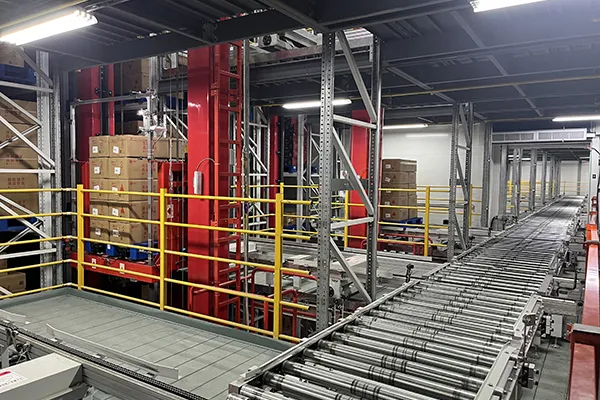
Modern Pallet Shuttle Racking has evolved far beyond the simple radio remote control. Today’s shuttles communicate with tablet-based control interfaces that provide real-time visibility into lane inventory, shuttle battery status, and operational productivity metrics. These control systems can integrate with warehouse management software and enterprise resource planning platforms, enabling directed put away and retrieval, automatic inventory tracking by lane and by position, and performance analytics that identify optimization opportunities. For companies that anticipate a future upgrade path toward full automation, this digital backbone provides a foundation that can be extended rather than replaced.
Investment Costs
Evaluating the total cost of ownership for a Pallet Shuttle Racking system requires a holistic view. The upfront cost includes the racking structure, the shuttle cars, the charging infrastructure, and the control software. Compared to drive-in racking, this represents a higher initial expenditure. However, when the analysis extends to include space savings, throughput gains, energy reductions, damage avoidance, and safety improvements, the return on investment becomes compelling. For many operations, the payback period falls within two to three years, particularly in cold storage applications or high-cost real estate markets where maximizing pallet positions per square meter is the primary financial lever.
Organizations considering a Pallet Shuttle Racking investment should examine their inventory rotation requirements, their throughput targets, and their physical space constraints. For operations with relatively low SKU counts but high pallet volumes per SKU—a profile common in food and beverage, chemical manufacturing, and cold chain logistics—shuttle racking aligns almost perfectly with operational needs. Companies that have made the transition report not only measurable efficiency gains but also a marked improvement in workplace culture, as operators shift from high-stress tunnel navigation to a more controlled and predictable workflow.
Conclusion
The advantages of Pallet Shuttle Racking are not theoretical; they are evident in warehouses across the globe where this technology has replaced aging drive-in systems or enabled new facilities to be built on smaller, less expensive parcels of land. As supply chain pressures continue to intensify and the cost of warehouse labor escalates, the semi-automated shuttle racking approach offers a pragmatic, scalable, and financially accessible path to higher productivity. It bridges the gap between manual operation and full automation, delivering immediate gains while preserving the flexibility to evolve as business needs change.