Introduction: When Standard Solutions Fall Short
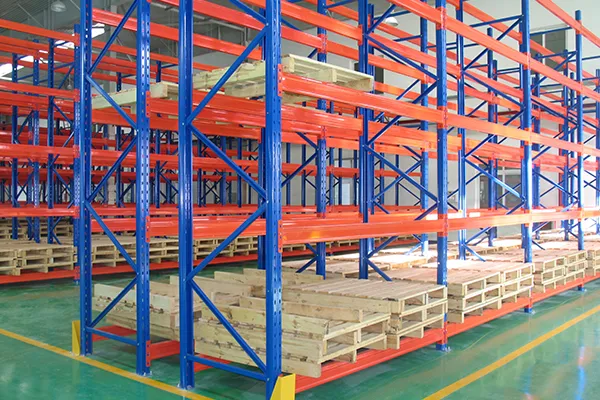
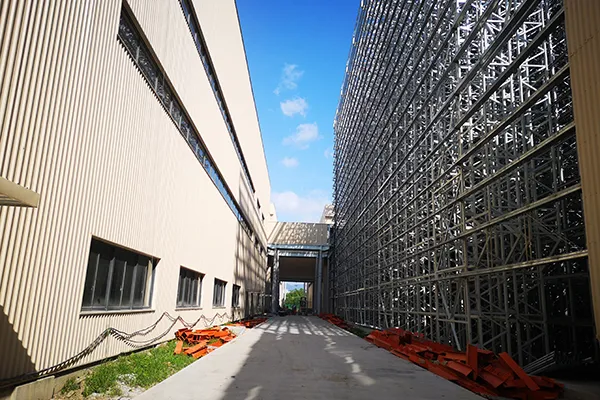
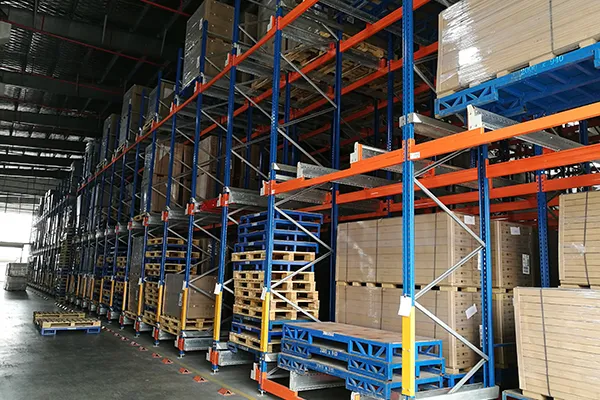
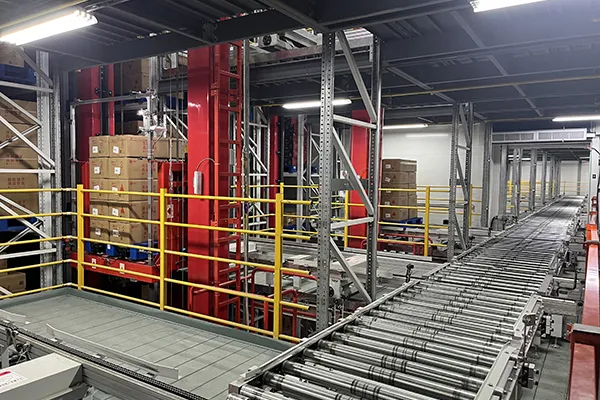
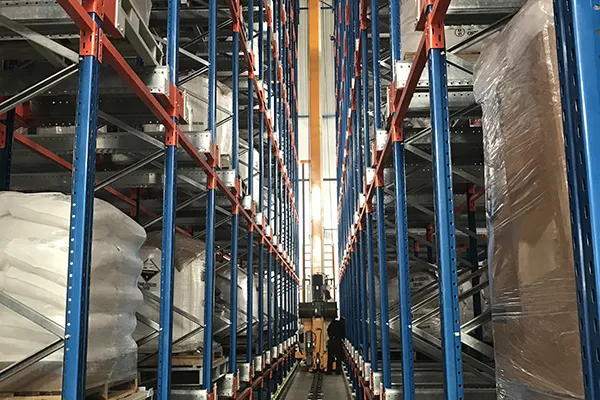
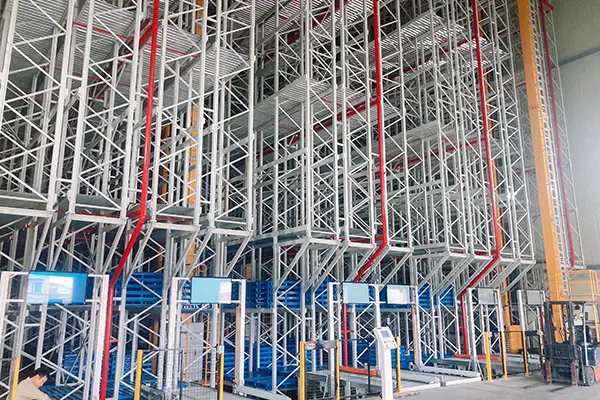
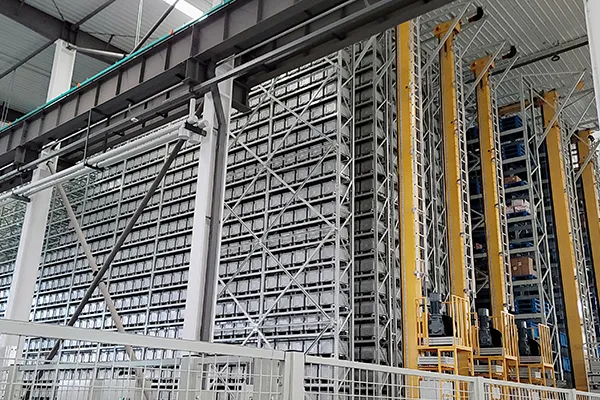
Non-Standard Heavy-Duty Racks with Stacker Cranes are not merely larger or stronger versions of their standard counterparts; they are fundamentally re-engineered storage structures designed for missions where off-the-shelf options fail. These systems cater to storing items that defy conventional dimensions and weights—be it massive industrial machinery components, aerospace assemblies, or dense metal coils. The integration with stacker cranes transforms these robust frames into intelligent, high-density storage centers, offering unparalleled inventory control for the most demanding applications. For integrators, they represent a high-value technical capability; for distributors, a premium product line; and for end-users, the key to unlocking previously unusable storage potential and streamlining complex material handling.
Deconstructing the Difference: Composition and Structural Superiority
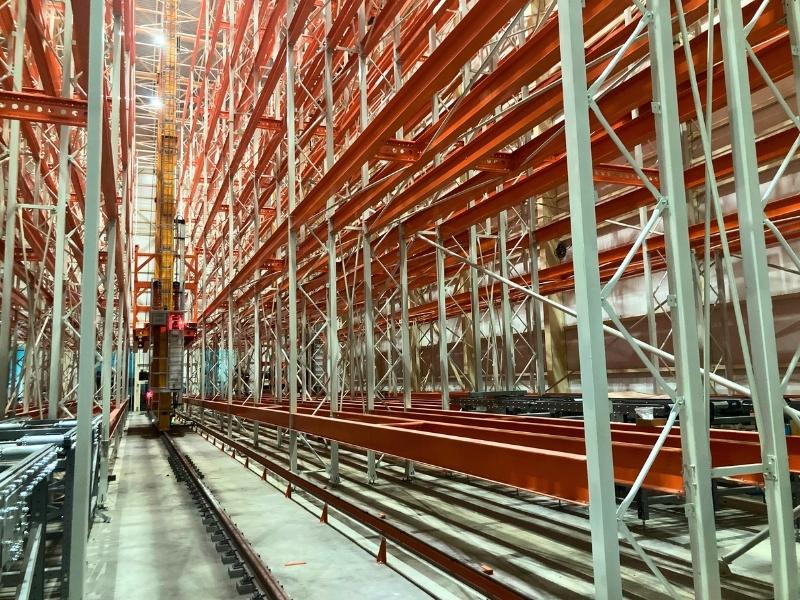
Understanding what sets non-standard heavy-duty racking apart requires a look beneath the surface at its engineering philosophy and physical composition.
- Core Composition and Enhanced Materials:
- High-Strength Steel Alloys: Standard racks often use commercial-grade steel. Our non-standard systems employ high-yield-strength steel (e.g., S355, S460 grades), with thicknesses and profiles (like box columns, heavy-duty beams) calculated to withstand specific dynamic and static loads far exceeding standard capacities.
- Custom-Engineered Components: Every element, from upright frames and load beams to bracing and connectors, is designed from the ground up. This contrasts with standard systems that rely on pre-defined, modular components.
- Specialized Coatings: For environments with corrosion risks (e.g., chemicals, cold storage), we apply advanced coating systems like hot-dip galvanizing or epoxy-polyester powders with increased thickness, a level of protection seldom found in standard racking.
- Structural Distinctions from Standard Racking:
- Load-Bearing Philosophy: Standard racks are designed for uniformly distributed, palletized loads. Non-standard racks are engineered for point loads and eccentric loads caused by irregularly shaped items, requiring sophisticated finite element analysis (FEA) to model stress distribution accurately.
- Connection Integrity: Standard systems often use boltless connections or standard bolts. Heavy-duty non-standard racks utilize high-tensile, pre-load-tested bolts, often with custom-designed moment-resisting connections or even welded joints at critical nodes to ensure rigidity under immense stress and seismic forces.
- Dimensional Flexibility and Clearance: While standard racks adhere to fixed bay widths and heights, non-standard systems are designed with custom clearances to accommodate product protrusions, necessary maintenance access for the stacker cranes, or to fit within existing building columns and roof trusses.
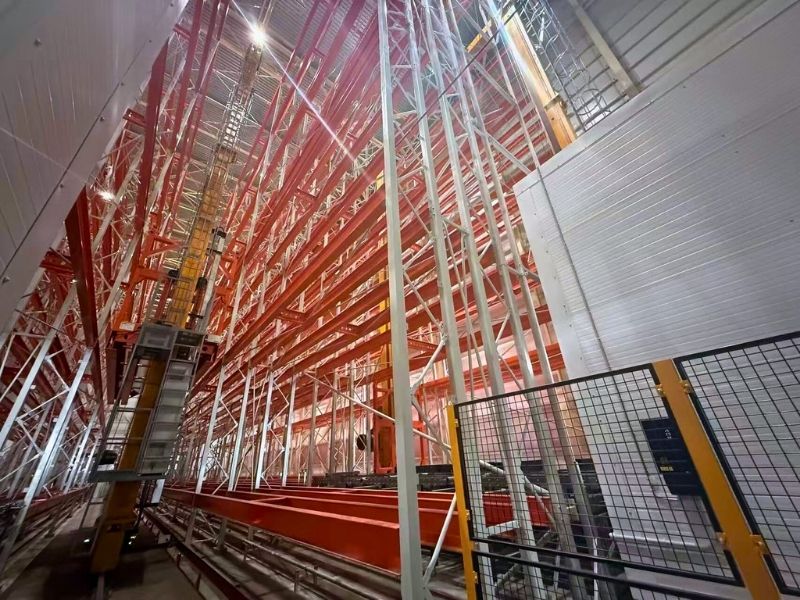
- Interface Precision with Stacker Cranes: The rack structure serves as the precision guideway for the stacker crane. Non-standard racks demand exceptionally tight tolerances for rail flatness, alignment, and column plumbness (often within ±2mm over 30m height), far surpassing the requirements for manual or forklift-operated standard racks. This precision is critical for ensuring the crane’s smooth, high-speed operation and long-term reliability.
Industry Applications and Tailored Advantages
The true value of these engineered storage systems is realized when applied to specific industry challenges.
- Heavy Machinery and Automotive Manufacturing:
- Challenge: Storing massive engine blocks, press dies, vehicle frames, and assembly jigs that are extremely heavy and non-palletizable.
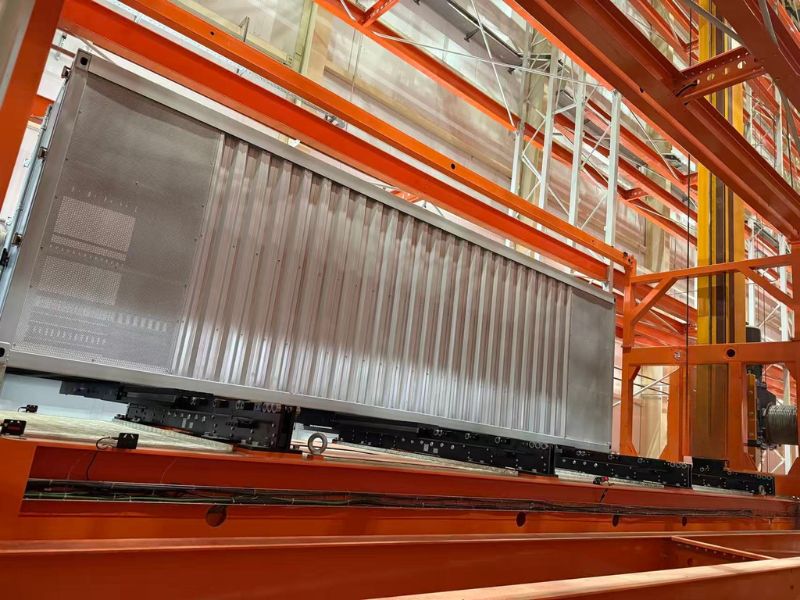
- Our Solution: Custom-designed cantilever racks or wide-span beam racks integrated with heavy-duty stacker cranes capable of handling loads from 5 to 50+ tons.
- Specific Advantage: Maximizes vertical space in high-bay facilities, protects high-value tooling from damage, and enables precise retrieval via the automated system, supporting just-in-sequence production lines.
- Aerospace and Defense:
- Challenge: Handling long, delicate, and expensive components like wing spars, fuselage sections, and composite materials under strict traceability and cleanliness protocols.
- Our Solution: Specialized racks with padded cradles and secure lashing points, integrated with stacker cranes featuring gentle handling controls and RFID tracking at every storage location.
- Specific Advantage: Provides absolute inventory visibility, minimizes manual handling risks to critical components, and ensures controlled access in secure areas.
- Metals and Building Materials:
- Challenge: Storing and retrieving steel coils, metal sheets, bar stock, and timber products that are dense, heavy, and prone to damage.
- Our Solution: High-density coil cradles or deep-reach rack configurations paired with stacker cranes equipped with custom grabs and rotators.
- Specific Advantage: Dramatically increases storage density compared to floor stacking, reduces product deformation, and automates the handling of hazardous heavy loads, improving safety.
- Bulk Commodities and Cold Storage Logistics:
- Challenge: Managing high volumes of packaged goods in freezing environments or storing heavy bulk items in distribution centers.
- Our Solution: Corrosion-resistant rack structures designed for low-temperature performance, combined with high-throughput stacker cranes.
- Specific Advantage: The robust non-standard racking withstands thermal contraction/expansion and harsh conditions, while automation reduces labor exposure to extreme cold and boosts throughput.
Our End-to-End Solution: Navigating the Complexity of Custom Projects
Delivering a successful Non-Standard Heavy-Duty Rack with Stacker Crane project demands a vendor with deep engineering prowess and project lifecycle management skills. Our one-stop service is meticulously crafted for this complexity.
- In-Depth Consultation and Feasibility Design:
- We begin with a comprehensive site survey, capturing exact dimensions, floor load capacities, and building constraints.
- Our engineers work closely with your team to define load specifications, access requirements, and operational flow.
- Advanced 3D modeling and structural simulation are used from the outset to validate design integrity and optimize the layout.
- Precision Engineering and Fabrication:
- Detailed manufacturing drawings are produced, specifying every custom component and its tolerances.
- Fabrication occurs in our controlled workshops using CNC cutting, robotic welding, and shot blasting to ensure the highest quality and consistency.
- All critical welds are non-destructively tested (NDT), and major assemblies undergo pre-assembly checks.
- Managed Logistics and Site Preparation Guidance:
- We plan the logistics for oversized and heavy components, providing detailed rigging and sequencing plans.
- Our team works with your construction partners to ensure the site foundation and anchor bolt layouts meet the precise design requirements.
- Expert Installation, Alignment, and Integration:
- Our certified installation specialists, supervised by project engineers, execute the erection with laser-guided alignment tools to achieve the required precision.
- The integration of the rack rails with the stacker crane is a focal point, ensuring flawless guidance system performance.
- Comprehensive commissioning tests, including load tests with certified weights, are performed to verify system safety and performance.
- Dedicated Lifecycle Support and Maintenance:
- We offer tailored maintenance programs specifically for heavy-duty systems, focusing on bolt torque checks, structural inspections, and wear-part monitoring.
- Remote diagnostic support and a dedicated spare parts inventory for custom components ensure long-term operational reliability.
Conclusion: Building the Foundation for Automated Heavy Storage
Choosing a Non-Standard Heavy-Duty Racks with Stacker Cranes system is a significant investment in foundational infrastructure. It is a decision that prioritizes long-term resilience, operational efficiency, and safety for the most challenging storage tasks. Our role is to demystify the complexity, providing not just custom equipment, but the engineering confidence, seamless integration, and enduring partnership necessary for success. We transform unique storage challenges into your most reliable and efficient operational asset.
Are you facing a storage challenge that standard solutions cannot solve? Contact our specialized engineering team today to discuss how our bespoke heavy-duty racking and automation solutions can be designed to meet your exact needs.