Introduction
Drive-in Racking represents a paradigm shift in high-density pallet storage, masterfully balancing volumetric efficiency with operational accessibility in a way that few other systems can. In an era where every square meter of warehouse space translates directly to cost and capacity, this solution stands out by fundamentally reconfiguring the storage lane from a mere aisle into a navigable storage channel itself. Far more than a simple arrangement of beams and uprights, drive-in racking is a sophisticated material handling architecture designed for high-volume storage of homogeneous, last-in-first-out (LIFO) or first-in-first-out (FIFO) compatible goods. This article provides a deep technical and operational analysis of drive-in racking, exploring its structural ingenuity, precise working principles, and the compelling advantages it offers for specific industry challenges, ultimately showcasing why our engineered solution is the definitive choice for maximizing your storage footprint.
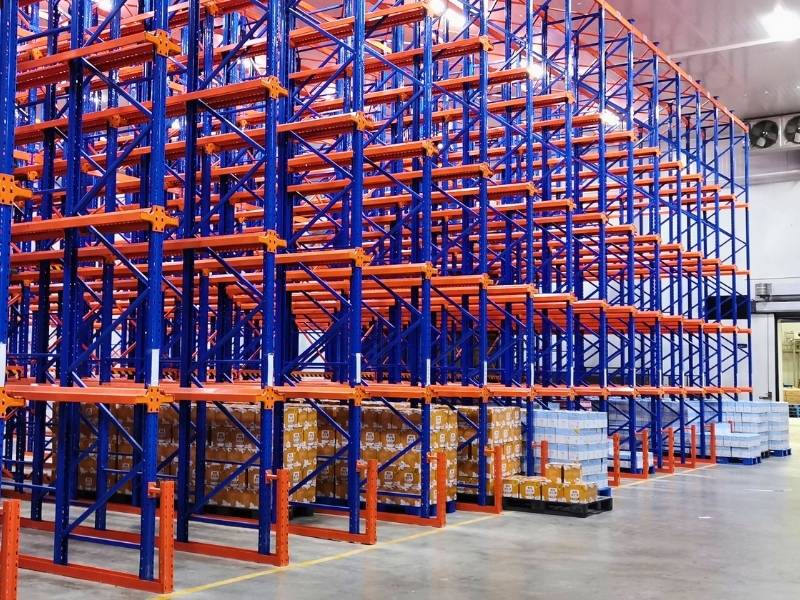
A Deep Dive into Drive-in Racking Structure
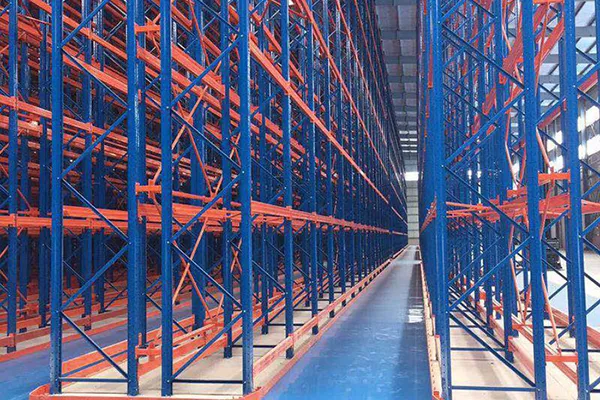
The superior density of drive-in racking is not accidental but the direct result of its intentional structural design, which eliminates dedicated access aisles for each pallet position. Understanding its components is key to appreciating its efficiency.
- The Structural Framework: Uprights and Beams Reimagined
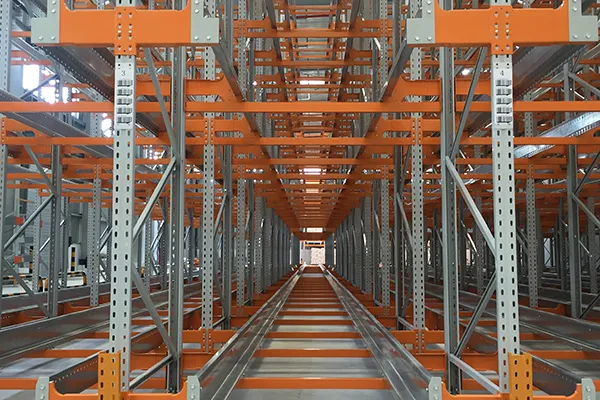
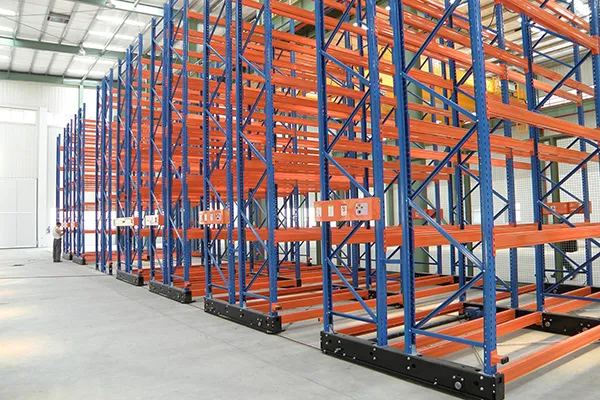
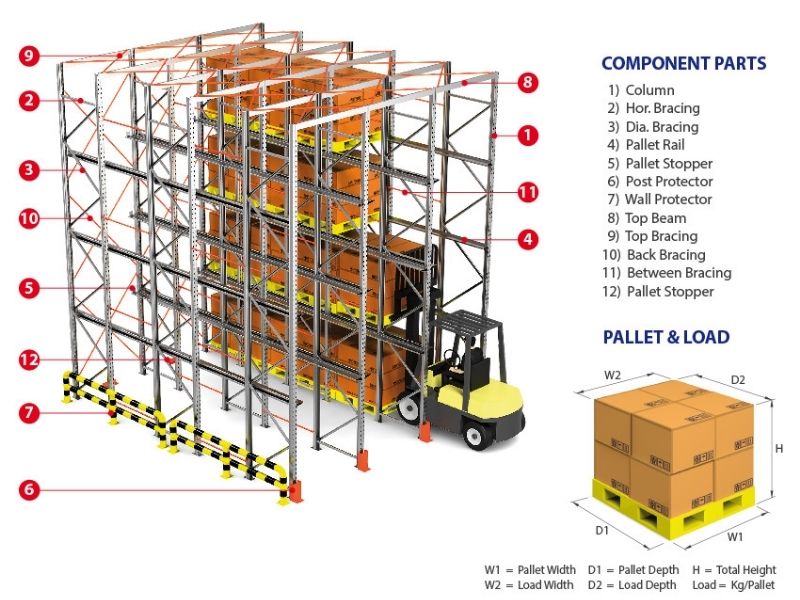
- Heavy-Duty Upright Frames: Unlike selective racking, drive-in systems utilize exceptionally robust upright frames designed to withstand not only vertical loads but also the lateral forces and potential impacts from forklift entry and exit. These frames are typically heavier gauge steel and feature reinforced column designs.
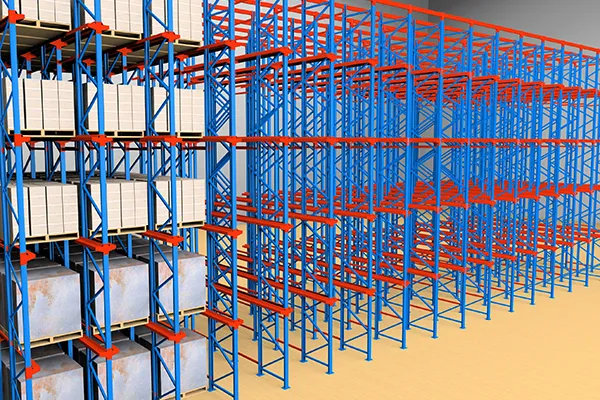
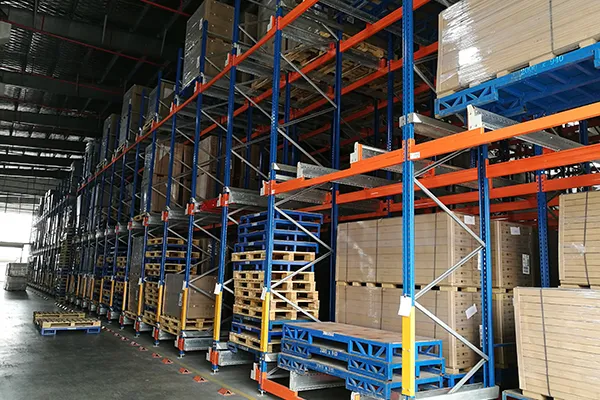
- Continuous Rails instead of Individual Beams: The most distinctive feature is the replacement of discrete beam levels with pairs of continuous load rails that run the entire length of the storage lane. Each pallet rests directly on these parallel rails, which are anchored to the uprights at multiple points for unwavering support.
- The Guidance and Safety Ecosystem: Enabling Forklift Navigation
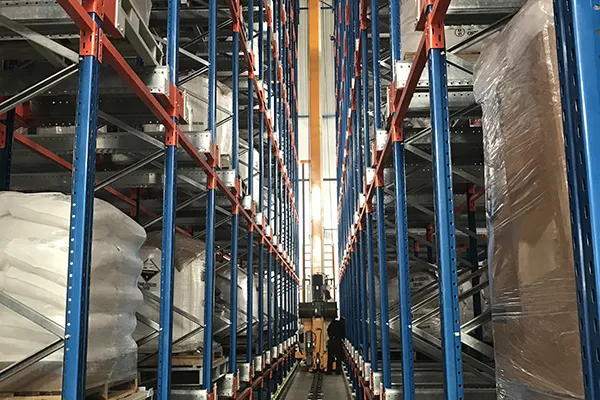
- Guide Rails and Lane Entry Guides: Critical to safe operation, these are low-profile rails installed along the floor at the lane entrance and sometimes within the lane. They physically guide the forklift wheels, ensuring the vehicle enters straight and remains centered, preventing collisions with the upright frames.
- Pallet Supports and Back Stops: At each storage position, small cantilevered arms or supports extend from the rails to cradle the pallet. At the rear of the lane, a sturdy backstop prevents the forklift from over-penetrating and secures the last pallet in the row.
- Integrated Column Protectors and Safety Meshing: To mitigate damage from inevitable minor contact, key structural points are shielded with protectors. Safety meshing can be added to the sides to prevent items from falling into adjacent lanes.
The Operational Mechanics
The “drive-in” namesake reveals its core working principle: the forklift drives directly into the racking structure to deposit or retrieve a load. This simple concept underpins a highly efficient process for specific inventory profiles.
- The LIFO (Last-In, First-Out) Configuration: The Standard Model
- Loading Sequence: The forklift enters an empty lane and places the first pallet all the way to the back stop. It then reverses and places the next pallet immediately in front of the previous one. This process continues until the lane is filled from the rear forward.
- Retrieval Sequence: Retrieval must occur in reverse order. The last pallet loaded (the one closest to the aisle) is the first to be removed. To access any other pallet, all those in front of it must be removed first. This makes it ideal for bulk storage of identical products with long shelf lives or where batch sequence is not critical.
- The FIFO (First-In, First-Out) Configuration: Enhanced Flow-Through Design
- Structural Modification: FIFO operation requires a slight structural adaptation, typically involving a gentle slope (e.g., 3-5%) from the loading side to the picking side, or the use of roller rails.
- Working Principle: Pallets are loaded from one side of the racking bay. Due to gravity or a mechanical assist, they gently move or are indexed forward toward the opposite side, where they are retrieved. This ensures the oldest stock is always retrieved first, perfect for perishable goods or items with expiration dates.
- The Role of the Specialist Forklift: The Human-Machine Interface
- Operator Skill Requirement: Efficient operation hinges on a skilled forklift operator. They must navigate narrow lane guides with precision, often relying on the guide rails tactilely and visually.
- Forklift Specifications: Typically, standard counterbalance forklifts are used, but specialized narrow-aisle trucks can be employed for even greater space savings. The truck’s mast and overall dimensions must be compatible with the lane’s clear entry width and internal height.
Strategic Applications: Where Drive-in Racking Delivers Maximum ROI
This system is not a universal panacea but a strategic tool that excels in well-defined scenarios, offering dramatic space savings over selective racking.
- Beverage and Food Manufacturing: Ideal for storing large quantities of homogeneous products like canned goods, bottled beverages, or packaged food ingredients. High density is paramount, and products are often shipped in full-pallet quantities.
- Cold Storage and Freezer Warehouses: Given the extreme cost of building and operating refrigerated space (per cubic meter), maximizing storage density is a financial imperative. Drive-in racking dramatically increases pallet positions within the same expensive footprint, offering a rapid return on investment.
- Chemical and Raw Material Storage: Suitable for non-hazardous materials stored in uniform containers or drums. The system provides organized, high-volume storage for bulk raw materials used in production.
- Finished Goods Warehousing for Slow-Moving Items: For products with low turnover rates but that need to be kept in inventory, drive-in racking provides a cost-effective, space-efficient “deep storage” solution, freeing up more accessible areas for fast-moving SKUs.
The Integrated Advantages of Our Drive-in Racking Solution
Choosing our drive-in racking solution means investing in a system engineered for total performance, safety, and longevity, not just initial space savings.
- Engineered for Safety and Durability:
- Seismic and Load-Certified Designs: Our structures are calculated and certified to meet local seismic codes and specified load capacities, ensuring structural integrity under all conditions.
- Superior Impact Protection: We use reinforced upright designs and high-visibility, replaceable column guards to absorb impact energy, protecting both the rack and the forklift.
- Optimized for Operational Efficiency:
- Custom Configuration Software: We use advanced design software to model your specific SKU dimensions, weights, and flow patterns, determining the optimal lane depth, number of levels, and configuration (LIFO/FIFO) for your throughput needs.
- Enhanced Visibility and Labeling: We integrate clear lane signage, level indicators, and labeling solutions to improve inventory visibility and reduce picking errors within the deep lanes.
- Comprehensive Total Cost of Ownership (TCO) Support:
- End-to-End Project Management: From initial floor plan analysis and structural drawings to installation supervision and final load testing, our team manages the entire process.
- Professional Installation and Training: Our certified installers ensure perfect alignment and safety compliance. We provide operator training focused on safe and efficient navigation within drive-in systems.
- Ongoing Inspection and Maintenance Programs: We offer scheduled safety inspections and maintenance services to ensure your system remains in optimal, safe condition for its entire lifespan, protecting your inventory and personnel.
Conclusion
Drive-in racking remains an indispensable and technologically mature solution for mastering warehouse cube utilization. Its clever structural design, which transforms aisles into storage lanes, offers an unmatched density-to-accessibility ratio for the right inventory profile. While it requires thoughtful application and skilled operation, the space savings—often up to 60% more pallet positions compared to selective racking—deliver a compelling and rapid ROI, especially in high-value space like cold storage.
Our approach goes beyond supplying components; we deliver an engineered storage ecosystem. We partner with you to analyze, design, and implement a drive-in racking solution that seamlessly integrates safety, efficiency, and durability into your operations, ensuring you reap the full benefits of deep-density storage.
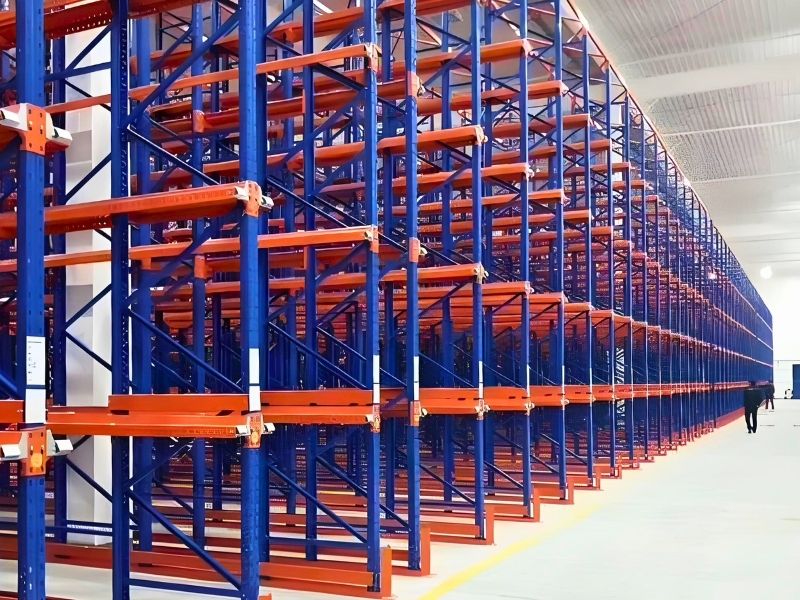
Ready to unlock the hidden capacity within your warehouse? Contact our storage solutions specialists today for a detailed analysis and discover how our engineered Drive-in Racking system can transform your storage density and operational economics.