
Introduction
Powered Mobile Pallet Racking is not just another storage solution; it is a transformative approach to warehouse space utilization and operational efficiency. In an era where every square foot counts and supply chain agility is paramount, this innovative system moves beyond static shelving to offer a dynamic, high-density storage alternative. By integrating motorized mobility into traditional pallet rack structures, it allows entire rows of racks to slide laterally on rails, creating temporary aisles only when and where they are needed. This article provides an in-depth exploration of its design, ideal use cases, comparative advantages, and economic considerations, aiming to demonstrate why it could be the optimal investment for your logistics operations.
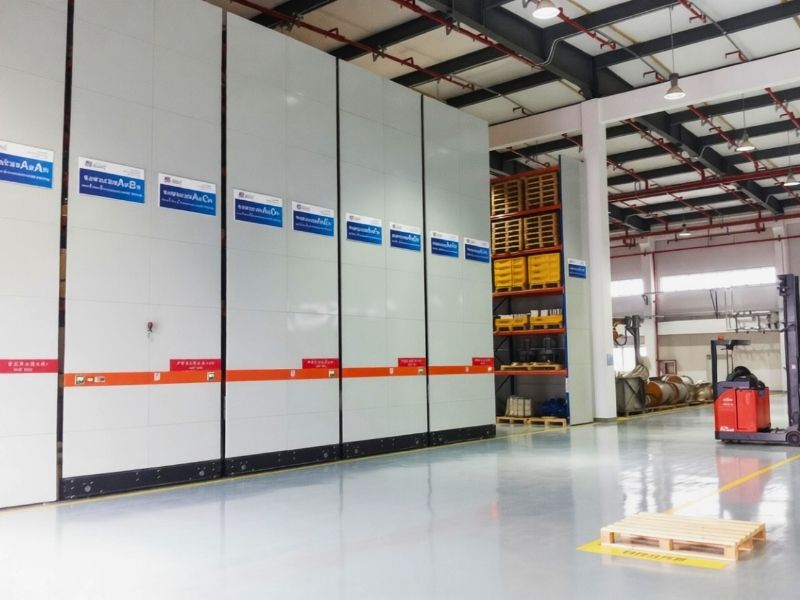
Structural Design and Operational Principle
At its core, a Powered Mobile Pallet Racking system consists of several key components that work in harmony:
- Base Frame and Uprights: These form the sturdy skeleton of each racking row, designed to carry significant loads, often matching or exceeding the capacity of static selective pallet racking.
- Carriage and Rail System: Each row of racks is mounted on a motorized carriage that runs on precision-engineered steel rails embedded in the warehouse floor. This forms the foundation for movement.
- Drive Unit and Control System: The “powered” aspect comes from electric motors integrated into the carriage. These are typically controlled via a centralized Push-Button Control, wireless remote, or even integrated with a Warehouse Management System (WMS) for automated aisle selection.
- Safety Features: Modern systems are equipped with multiple safety mechanisms, including:
- Safety light curtains or laser scanners at aisle ends to detect personnel and prevent movement.
- Emergency stop buttons on every control panel.
- Anti-tilt devices and mechanical locks for secure positioning.
- Pallet Racking Configuration: The mobile system can be paired with various rack types, such as selective, drive-in, or push-back racks, depending on storage strategy.
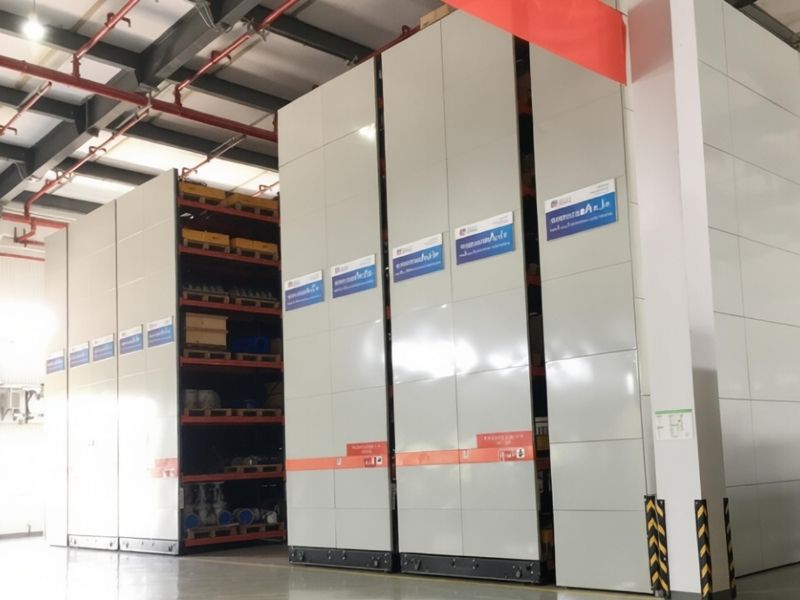
The operational principle is elegantly simple. Instead of dedicating permanent space for multiple access aisles, multiple rows of racks are placed side-by-side. When access to a specific pallet is required, the adjacent rows slide apart (either manually initiated or automatically), creating a single access aisle. Once the forklift operation is complete, the rows close back, eliminating the aisle and reclaiming that floor space for storage.
Optimal Application Scenarios and Industry Fit
Identifying the right scenario for Powered Mobile Racking is crucial for maximizing its return on investment. It shines brightest under specific operational conditions.
When is Powered Mobile Pallet Racking the Ideal Solution?
- High-Value Real Estate: When warehouse space is extremely costly or physically limited, and expanding the footprint is not an option.
- High Storage Density Requirement: For businesses that need to store a large volume of SKUs but have a relatively low to medium order-picking frequency per SKU (compared to high-speed picking systems).
- Archiving and Long-Term Storage: Perfect for industries that need to retain inventory, documents, or samples for extended periods with infrequent access, such as pharmaceuticals, aerospace, or public archives.
- Seasonal Inventory Fluctuations: Companies with pronounced peak seasons can use the system to compact off-season stock, freeing up space for other operations.
Which Industries and Companies Benefit Most?
- Manufacturing: Storing raw materials, work-in-progress, or finished goods where floor space is at a manufacturing plant is critical.
- Third-Party Logistics (3PL) Providers: To offer flexible, high-density storage solutions to multiple clients within a single facility.
- Aerospace and Automotive: Storage of large, expensive, but slow-moving parts and components.
- Libraries, Museums, and Document Management Centers: For high-density archival of books, artifacts, or files.
Comparative Advantages and Cost-Benefit Analysis
The decision to implement a Powered Mobile Pallet Racking System is often driven by its compelling advantages over both conventional static racking and other forms of automation.
Key Advantages:
- Exceptional Space Savings: The most significant benefit, often achieving 60-80% more storage capacity in the same floor area compared to static selective racking by eliminating multiple permanent aisles.
- Enhanced Operational Efficiency: Consolidates storage, reducing travel time for forklifts within the storage zone and potentially improving picking routes.
- Improved Inventory Security and Control: With fewer access points, inventory is naturally more secure. The system often complements FIFO (First-In, First-Out) or LIFO (Last-In, First-Out) strategies when configured appropriately.
- Scalability and Flexibility: Systems can be designed to cover part or all of a warehouse and can often be reconfigured as needs change.
Cost Analysis vs. Other Automated Solutions
It’s essential to position Electric Mobile Racking within the automation spectrum:
- Vs. Static Pallet Racking: While the initial investment per pallet position is higher (approximately 2-3 times), the dramatic increase in storage density often results in a lower cost per stored pallet per square meter. The payback period is calculated through space savings and operational gains.
- Vs. High-Density Static Systems (Drive-In/Through): Offers better selectivity (direct access to every pallet face) without sacrificing as much density, though at a higher cost than drive-in systems.
- Vs. Fully Automated Systems (AS/RS, Shuttles): Powered Mobile Racking represents a “semi-automated” or “mechanized” solution. It has a significantly lower initial capital cost, lower software integration complexity, and offers greater flexibility for handling non-standard loads. It is ideal for operations that need high density and improved efficiency but are not yet ready for or do not require the throughput levels of a fully robotic system.
Maintenance, Longevity, and Total Cost of Ownership
A robust Powered Mobile Pallet Racking system is designed for industrial longevity, often with a service life of 25+ years. Understanding its maintenance profile is key to evaluating the total cost of ownership.
- Routine Maintenance: This primarily involves the mechanical and electrical components:
- Regular inspection and cleaning of the rail tracks to prevent debris buildup.
- Lubrication of moving parts as per the manufacturer’s schedule.
- Periodic checks of drive motors, gearboxes, and control system components.
- Professional Servicing: An annual or bi-annual inspection by a certified technician is recommended to ensure safety systems (sensors, brakes) are fully functional and to address any wear and tear proactively.
- Operational Durability: High-quality systems use industrial-grade components. The rack structure itself requires the same occasional inspection as any static racking for damage or load capacity integrity.
- Cost of Downtime: A significant advantage of this system is its modularity. If one row requires service, other rows can typically continue to operate, minimizing operational disruption.
Conclusion
Powered Mobile Pallet Racking stands as a powerful and pragmatic solution for businesses trapped between the need for more space and the constraints of their existing facility. It smartly bridges the gap between conventional static storage and high-cost, full automation. By converting wasted aisle space into productive storage, it delivers a compelling return on investment through direct space savings, operational efficiency gains, and, in critical environments like cold storage, ongoing energy cost reduction.
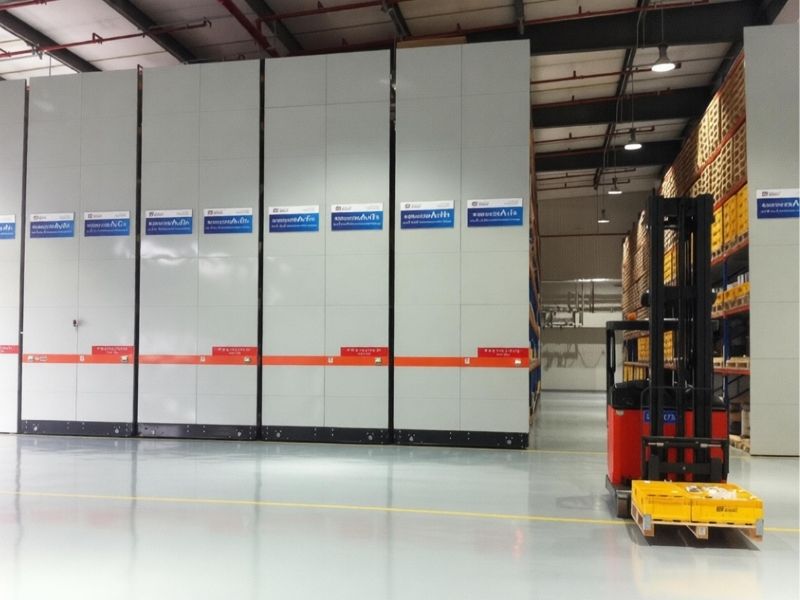
Is your warehouse operating at its true potential? The data often shows that over 50% of a conventional warehouse floor is dedicated to aisles. Finding solutions and reclaiming that space could be the key to unlocking your next phase of growth without the need for costly expansion or relocation.