
Introduction to Pallet Shuttle Racking Systems
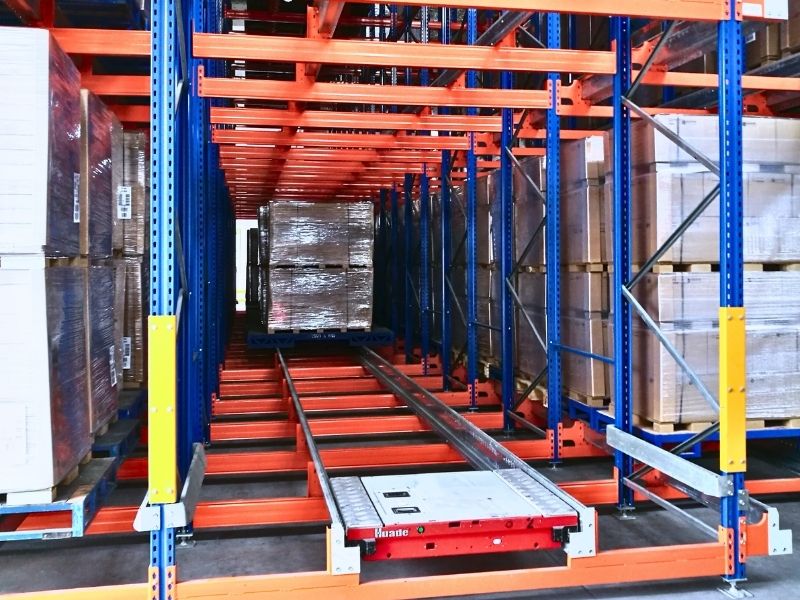
Pallet Shuttle Racking System represents a significant advancement in automated storage technology, combining the reliability of traditional racking with sophisticated automated handling capabilities. This semi-automated system utilizes remote-controlled shuttle carts that operate within storage lanes, efficiently transporting pallets to designated locations without requiring forklift entry. The technology has gained substantial traction in modern supply chain operations due to its ability to dramatically enhance storage density while maintaining selective accessibility.
As global logistics faces increasing pressure from e-commerce growth and labor shortages, these systems offer a balanced solution between fully automated facilities and conventional manual operations. Their modular design allows for flexible implementation across various industry sectors, from food distribution to manufacturing, making them a versatile choice for operations seeking to optimize their storage infrastructure.
Key Operational Advantages
The implementation of shuttle racking technology delivers substantial benefits across multiple operational dimensions:
- Maximized Storage Density: By eliminating forklift aisles between storage lanes, these systems increase storage capacity by up to 60% compared to selective racking while maintaining complete product accessibility
- Enhanced Operational Safety: Reduced forklift interaction within storage lanes significantly decreases accident risks and product damage, creating a safer working environment
- Improved Inventory Management: Advanced software integration enables real-time tracking and precise stock rotation, particularly beneficial for FIFO (First-In-First-Out) and LIFO (Last-In-First-Out) inventory management
- Labor Optimization: Single operators can manage multiple shuttle devices simultaneously, reducing labor requirements by approximately 40% while increasing throughput efficiency
- Energy Efficiency: Electric shuttle carts consume significantly less energy compared to conventional forklift operations, contributing to sustainability objectives
- Scalability Flexibility: Systems can be easily expanded by adding additional shuttle carts and storage modules without major infrastructure modifications
System Components and Configuration
Understanding the technical composition of pallet shuttle systems is essential for proper implementation:
Core Hardware Elements
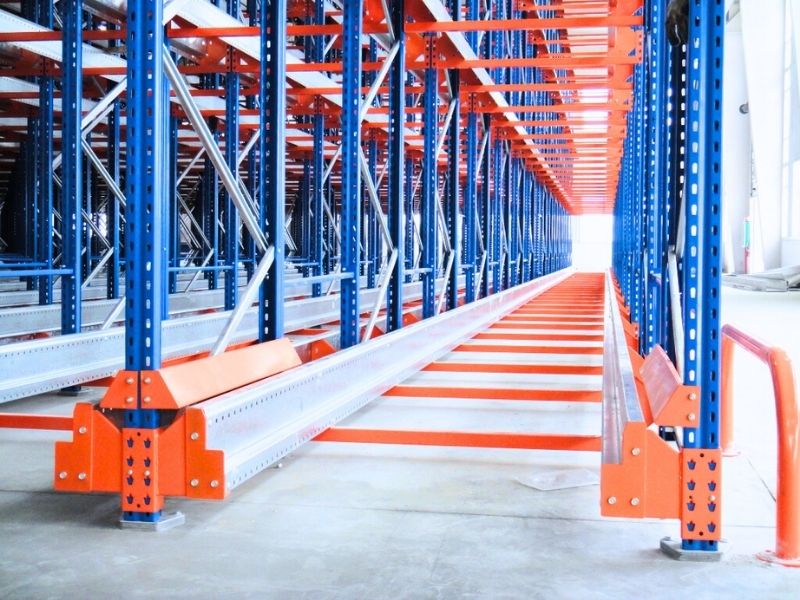
- Storage Racking Structure: Specially designed high-strength steel racks with integrated guide rails for shuttle movement
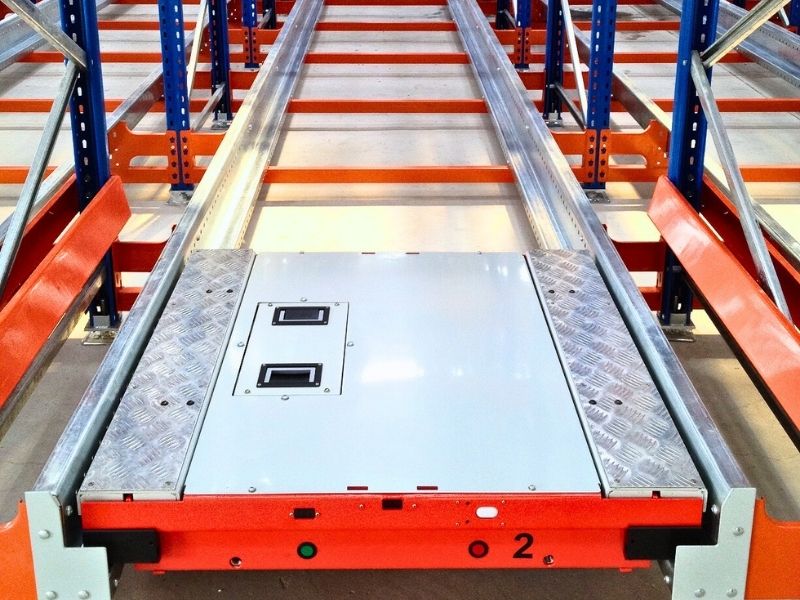
- Shuttle Transport Vehicles: Battery-operated autonomous carts with advanced navigation systems and lifting mechanisms for pallet handling
- Charging Infrastructure: Automated charging stations that ensure continuous system operation
- Pallet Transfer Stations: Designated areas for loading and unloading operations between shuttles and external handling equipment
Control and Software Architecture
- Warehouse Management System (WMS) Integration: Central control software that coordinates shuttle movements and inventory tracking
- Radio Frequency Communication: Real-time data exchange between shuttles and central control units
- Performance Analytics: Comprehensive reporting tools that monitor system efficiency and maintenance requirements
Industry Applications and Implementation Scenarios
The versatility of shuttle racking technology supports diverse operational requirements:
Cold Storage Facilities
- Temperature-Sensitive Products: Maintains consistent temperature distribution by minimizing air exchange from equipment movement
- High-Density Storage: Maximizes valuable refrigerated space utilization for seasonal products and frozen goods
- Reduced Personnel Exposure: Limits worker time in extreme temperatures while maintaining operational efficiency
Manufacturing and Production Support
- Raw Material Buffer Storage: Provides high-density storage for production inputs with controlled access
- Finished Goods Handling: Efficiently manages production output before distribution
- Just-In-Time Operations: Supports lean manufacturing principles with reliable material availability
Distribution and E-commerce fulfillment
- High-Volume SKU Storage: Ideal for products with high turnover rates and multiple stock keeping units
- Seasonal Peak Management: Easily accommodates fluctuating inventory levels during promotional periods
- Cross-Docking Support: Facilitates rapid product movement between receiving and shipping operations
Implementation Considerations and Challenges
Successful deployment of pallet shuttle technology requires careful planning:
- Initial Investment Analysis: Comprehensive cost-benefit assessment comparing long-term operational savings against capital expenditure
- Infrastructure Compatibility: Evaluation of existing facility constraints including floor conditions, ceiling heights, and structural limitations
- Operational Integration: Phased implementation strategy to minimize disruption to ongoing operations
- Staff Training Requirements: Development of specialized training programs for system operation and maintenance
- Maintenance Protocol Establishment: Proactive maintenance schedules and spare parts management to ensure system reliability
Future Development Trends
The evolution of shuttle racking systems continues to address emerging industry needs:
- Artificial Intelligence Integration: Predictive analytics for maintenance and optimized storage patterns based on historical data
- Enhanced Energy Recovery Systems: Regenerative braking and solar-assisted charging for improved sustainability
- IoT Connectivity: Advanced sensor networks for real-time performance monitoring and remote diagnostics
- Modular Expansion Capabilities: Scalable systems that can integrate with other automation technologies
- Advanced Safety Features: Collision avoidance systems and enhanced emergency protocols
Conclusion
The pallet shuttle racking system approach represents a pragmatic automation solution that balances technological sophistication with operational practicality. As supply chain complexities continue to increase, these systems provide a viable pathway toward greater efficiency without requiring complete facility overhaul. The continued innovation in shuttle technology promises even greater integration capabilities with broader warehouse automation ecosystems, positioning these systems as a fundamental component of tomorrow’s smart warehouses. Organizations implementing shuttle racking solutions today are not only addressing current operational challenges but are also building foundational infrastructure for future logistics requirements.