Introduction
A Stacker Crane ASRS (Automated Storage and Retrieval System) is the pinnacle of warehouse automation engineering—a fully integrated solution where computer-controlled stacker cranes navigate narrow aisles between towering racking structures, retrieving and depositing pallets with millimeter precision at speeds that manual operations cannot approach. In today’s hyper-competitive supply chain environment, where delivery windows shrink and labor availability tightens, the decision to implement a Stacker Crane ASRS Solution represents a fundamental shift from reactive logistics to strategic, data-driven material handling. This article unpacks the full scope of what a modern Stacker Crane ASRS Solution delivers, examining the engineering, the economics, and the operational transformation that makes this technology the cornerstone of Industry 4.0 warehousing.
The Core Architecture Explained
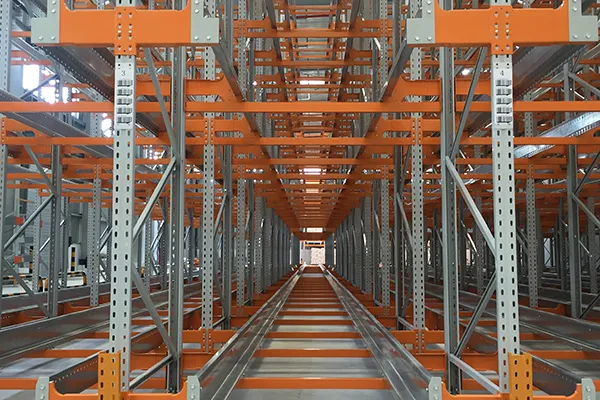
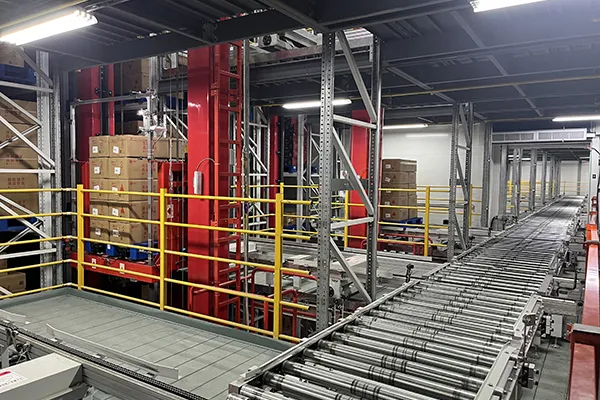
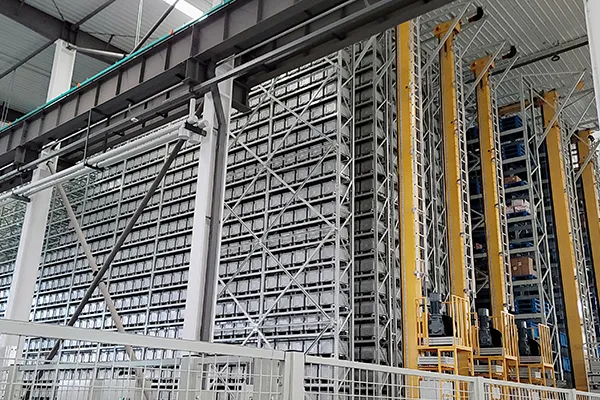
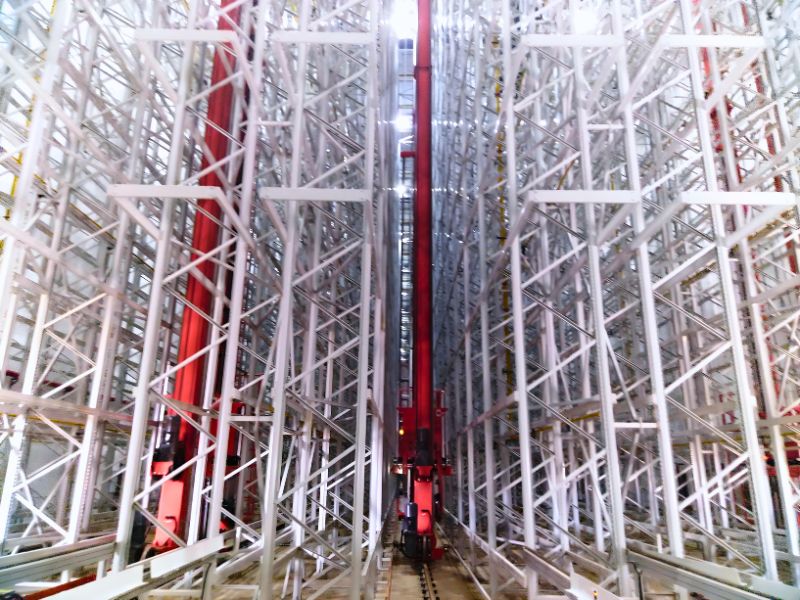
At its heart, a Stacker Crane ASRS Solution consists of three tightly integrated subsystems: the racking structure, the stacker crane machine, and the control software orchestration layer. The racking typically rises to heights of twenty to forty-five meters, forming long aisles flanked by storage locations on both sides. The stacker crane itself runs on a floor rail and is guided at the top by an overhead rail, ensuring absolute vertical and horizontal alignment. Twin masts, constructed from structural steel, support a carriage assembly that traverses vertically while the entire crane travels horizontally along the aisle. Load-handling devices—commonly telescopic forks, satellite shuttles, or vacuum grippers—extend into storage locations to deposit or retrieve unit loads. The Stacker Crane ASRS control system coordinates every movement, receiving instructions from a warehouse management system and executing them with a level of repeatability that manual operations cannot replicate. This architecture forms the backbone of a solution that can process hundreds of pallet movements per hour, per aisle, around the clock, without fatigue, error, or downtime.
Throughput That Redefines Productivity Benchmarks
The throughput capability of a Stacker Crane ASRS Solution is what separates it from semi-automated or manual alternatives. Modern stacker cranes achieve travel speeds of up to 240 meters per minute horizontally and 120 meters per minute vertically, with simultaneous dual-axis movement that positions the load carriage at the target coordinate in the shortest possible time. Acceleration and deceleration profiles are optimized through algorithmic motion control, minimizing the energy wasted in braking and maximizing the number of cycles completed per hour.
- Dual-Cycle Operations: A Stacker Crane ASRS can perform combined put away and retrieval cycles, depositing an incoming pallet and immediately retrieving an outgoing pallet at a nearby location before returning to the aisle front. This eliminates empty return travel and significantly boosts productive output per crane.
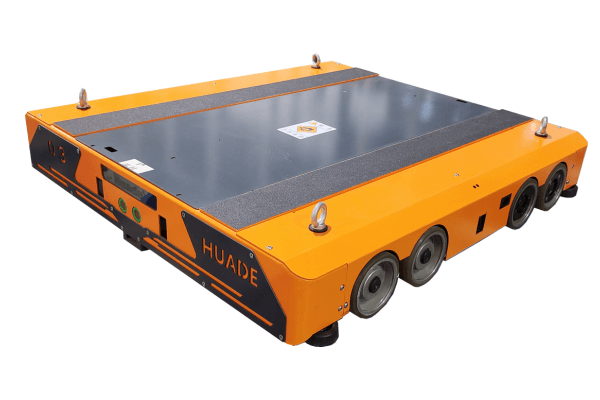
- Multiple Load Handling: Twin-fork or multi-shuttle configurations allow a single crane to carry two or more pallets simultaneously, multiplying throughput without requiring additional aisles or cranes.
- Predictable Cycle Times: Unlike human-operated equipment, the stacker crane delivers identical cycle times hour after hour, shift after shift. Production planning becomes deterministic rather than aspirational, enabling precise labor scheduling, carrier booking, and dock management.
For distribution centers handling high order volumes, the throughput consistency of a Stacker Crane ASRS Solution eliminates the peak-hour congestion and labor scramble that plague conventional warehouses. The system simply performs, at the same speed, regardless of whether it is Tuesday morning or the peak of holiday season fulfillment.
Vertical Spatialization
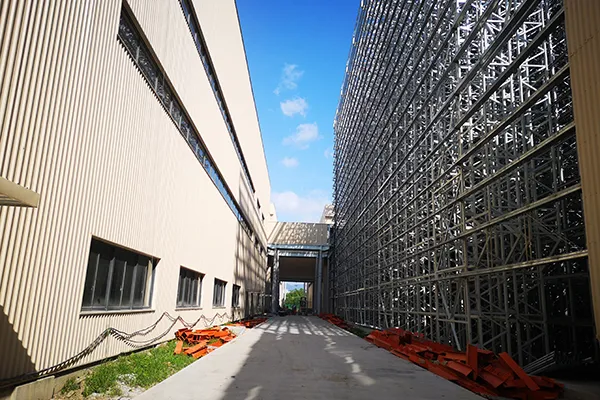
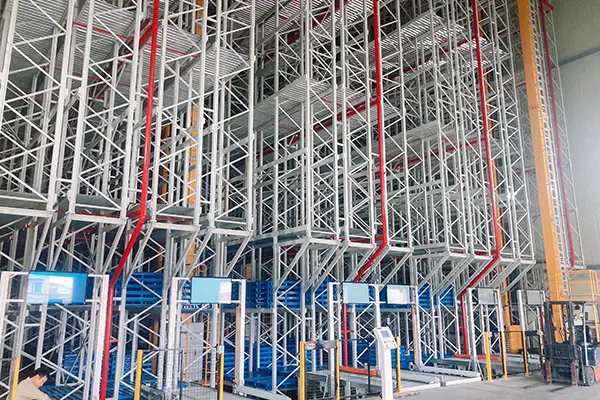
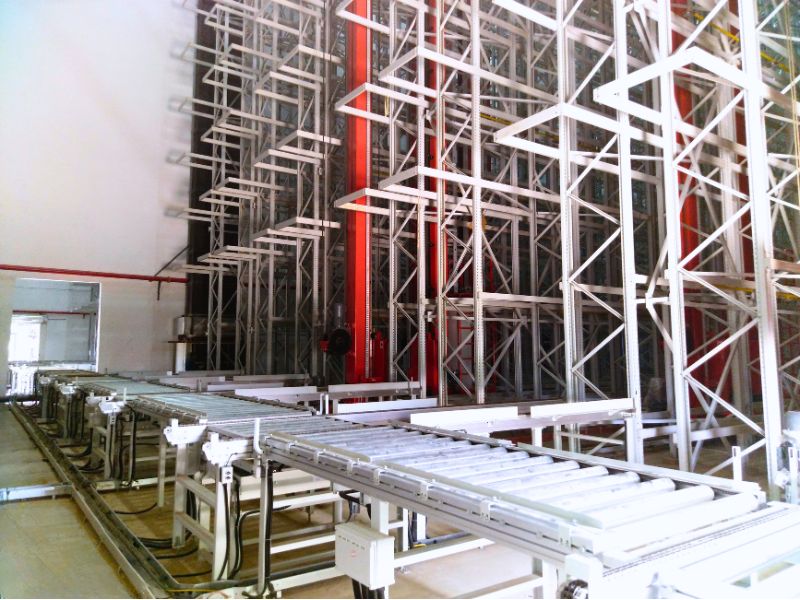
The most visually striking feature of a Stacker Crane ASRS Solution is its height, and that height translates directly into financial advantage. Land costs, particularly in urban logistics corridors, have made horizontal warehouse expansion prohibitively expensive. The stacker crane’s ability to service racking at extreme heights allows a facility to capture vertical cube that would otherwise remain empty air above a conventional low-bay layout.
- Density Multipliers: A high-bay Stacker Crane ASRS can store the same number of pallets as a conventional warehouse occupying three to four times the land area. This compression ratio is the fundamental economic driver behind the technology.
- Reduced Building Footprint: Smaller roof and wall areas mean lower construction costs, reduced heating and cooling loads, and simplified fire suppression infrastructure. Every square meter of building envelope saved is a square meter of capital and operating expense avoided.
- Land Acquisition Avoidance: For companies that have outgrown their current facilities, installing a Stacker Crane ASRS Solution within an existing building shell can eliminate the need for land purchase, zoning approvals, and new construction—a saving measured in years of project timeline and millions in capital.
In markets where industrial land prices exceed hundreds of dollars per square meter, the vertical density of a Stacker Crane ASRS is not a luxury feature but a prerequisite for operational feasibility.
Accuracy, Inventory Integrity, and Traceability
Manual warehouse operations inevitably introduce inventory errors. Pallets are placed in wrong locations, quantities are miscounted, and stock records drift away from physical reality. A Stacker Crane ASRS Solution eliminates these discrepancies at their source. The crane’s positioning system confirms every deposit location to single-digit millimeter accuracy, and the control software records every transaction in real time, creating an unbroken chain of custody for every pallet from receipt to dispatch.
- Automatic Location Validation: Before releasing a load, the crane verifies that the target location is empty and dimensionally correct. If a pallet overhangs or a previous retrieval was incomplete, the system flags the exception immediately, preventing the cascade errors that plague paper-based or radio-frequency scanning operations.
- Real-Time Inventory Visibility: Every stock movement updates the warehouse management database instantly. Planners, sales teams, and customer service representatives can view available inventory with absolute confidence, enabling promise dates that are backed by verified physical stock.
- Batch and Date-Code Control: For food, pharmaceutical, and chemical applications, the Stacker Crane ASRS can execute first-expiry-first-out protocols automatically, selecting the appropriate pallet based on manufacturing date, batch number, or any other attribute stored in the system. This automation of shelf-life management reduces write-offs, improves product quality at dispatch, and supports regulatory compliance documentation.
The inventory integrity delivered by a Stacker Crane ASRS Solution ripples through the entire business, reducing safety stock requirements, improving order fill rates, and building customer trust through consistent, accurate deliveries.
Labor Independence and Workforce Transformation
Labor markets for warehouse operators have become structurally tight across most developed economies. Recruitment is difficult, retention is expensive, and the physical demands of manual material handling contribute to injury rates and absenteeism. A Stacker Crane ASRS Solution fundamentally changes the labor equation.
- Reduced Operator Headcount: A single aisle with a stacker crane replaces multiple forklift operators across multiple shifts. The personnel required shift from machine operators to system supervisors and maintenance technicians—roles that are more attractive in the labor market and carry lower physical risk profiles.
- Night and Weekend Operation: The system operates without lights, without breaks, and without shift premiums. An unmanned Stacker Crane ASRS can process inventory replenishment during nighttime hours, preparing the warehouse for next-day outbound activities with zero incremental labor cost.
- Ergonomic Hazard Elimination: Forklift operation, manual pallet handling, and working at height are eliminated from the storage and retrieval process. Workers transition to control room environments or peripheral value-added tasks, dramatically reducing workplace injuries and the associated insurance and compliance burdens.
For companies struggling with labor availability in remote or high-cost regions, the workforce transformation enabled by a Stacker Crane ASRS Solution can be the deciding factor in maintaining operational continuity.
Safety Architecture by Design
Safety in a Stacker Crane ASRS Solution is not an add-on feature but an intrinsic property of the system design. The entire storage area is a no-go zone for personnel during normal operation, physically separated by fencing, light curtains, and interlocked access gates. If an access gate opens, the crane in that aisle immediately enters a safe state, with motion disabled until the zone is confirmed clear and the system is intentionally reset.
- Collision Avoidance: The control system maintains absolute knowledge of crane position at all times. When multiple cranes operate in transfer zones or on shared rails, anti-collision logic prevents any possibility of intersection or contact.
- Load Verification Sensors: Before every movement, the crane confirms that the load is correctly seated on the forks or shuttle table. An improperly positioned pallet triggers an immediate halt, preventing dropped loads, racking impact, and the chain reaction of structural damage that could follow.
- Overload Protection: Integrated weight sensors prevent the crane from attempting to lift a pallet that exceeds its rated load capacity, protecting both the mechanical structure and the racking from overstress conditions.
- Emergency Recovery: In the rare event of a power failure or system fault, manual recovery procedures allow trained technicians to safely extract the crane and any suspended load without risk of uncontrolled movement.
These safety characteristics mean that a Stacker Crane ASRS Solution operates within a risk profile fundamentally lower than conventional forklift-based warehousing, a fact that insurers increasingly recognize through reduced premium structures for automated facilities.
Energy Efficiency and Sustainability Profile
Sustainability has moved from a corporate social responsibility footnote to a core procurement criterion for major shippers and retailers. A Stacker Crane ASRS Solution contributes to sustainability objectives in measurable ways.
- Regenerative Braking: Modern stacker crane drives recover energy during deceleration phases, feeding electricity back into the facility power grid rather than dissipating it as heat through resistor banks. This recovered energy then powers subsequent acceleration cycles, reducing net energy consumption per pallet movement.
- Eliminated Lighting Load: Because the storage aisles are unmanned during operation, there is no requirement for continuous high-intensity lighting. Motion-activated maintenance lighting provides illumination only when technicians are present, cutting lighting energy consumption by over ninety percent compared to conventional warehouses.
- Reduced Building Conditioning: The compact building envelope of a high-bay Stacker Crane ASRS requires less heating, cooling, and ventilation energy than sprawling low-bay alternatives. In cold storage applications, the reduced external surface area directly reduces refrigeration heat gain and compressor run times.
- Material Efficiency: The extreme vertical orientation minimizes the land area disturbed, the concrete poured, and the steel consumed in the building frame, reducing the embodied carbon footprint of the warehouse construction itself.
Companies pursuing net-zero supply chain targets increasingly recognize the Stacker Crane ASRS Solution as a meaningful contributor to their carbon reduction roadmap, a benefit that resonates with environmentally conscious customers and investors alike.
Integration with the Digital Supply Chain
A Stacker Crane ASRS Solution does not operate in isolation. Its control system forms a node in the broader digital supply chain architecture, exchanging data with enterprise resource planning platforms, transportation management systems, and e-commerce order fulfillment engines. This integration enables capabilities that extend far beyond simple pallet storage.
- Dynamic Slotting: The system can reorganize inventory autonomously during idle periods, moving fast-moving SKUs closer to the dispatch face and relocating slow-movers to more distant positions. This continuous optimization maintains peak throughput without manual intervention.
- Order Sequencing: For outbound operations, the Stacker Crane ASRS can retrieve pallets in the exact reverse sequence of delivery stops, eliminating the need for marshalling yards and manual re-sorting at the dock.
- Predictive Maintenance: Vibration sensors, motor current monitors, and thermal imaging feed data into predictive analytics platforms that forecast component wear before failure occurs. Maintenance interventions are scheduled during planned downtime windows, avoiding the operational disruption of unscheduled breakdowns.
- Performance Analytics: Every movement is logged, timestamped, and available for analysis. Operations managers can identify bottlenecks, measure productivity trends, and benchmark performance across multiple facilities with a level of granularity impossible in manual environments.
This digital integration positions the Stacker Crane ASRS Solution not just as storage infrastructure but as a source of operational intelligence that drives continuous improvement across the entire supply chain.
Conclusion
The capital commitment required for a Stacker Crane ASRS Solution is substantial, and responsible decision-makers must evaluate it through a rigorous total cost of ownership framework. The investment encompasses the racking structure, the crane machines, the control software, the building modifications or new construction, and the integration engineering. Yet when measured against the avoided costs—land acquisition, ongoing labor, inventory inaccuracy, energy consumption, and safety incidents—the financial case converges toward a payback period that typically ranges from three to five years for most applications. Beyond the payback point, the system continues to deliver cost advantages for decades, with stacker cranes routinely achieving operational lives of twenty years or more through disciplined maintenance and periodic component refurbishment.
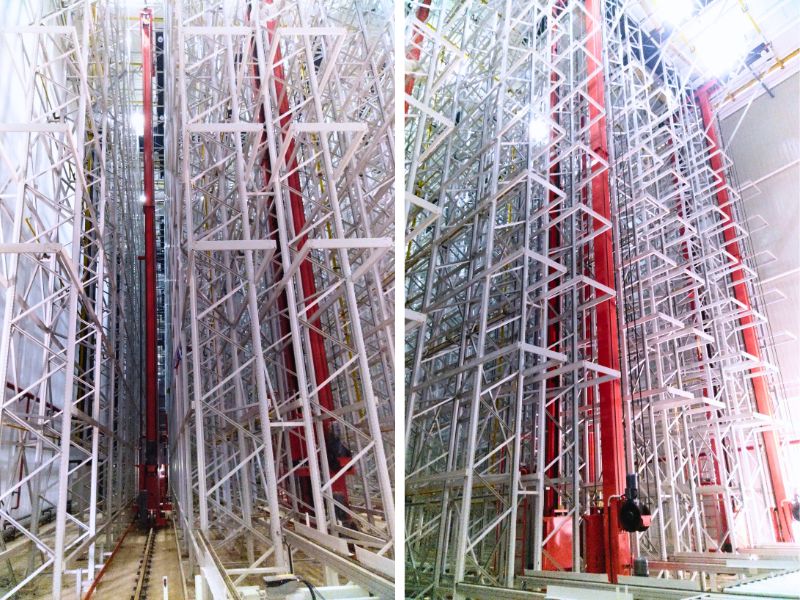
The decision to deploy a Stacker Crane ASRS Solution is ultimately a decision about competitive positioning in a logistics landscape that rewards speed, accuracy, density, and resilience. Companies that adopt this technology gain a structural cost advantage over competitors still reliant on manual or semi-automated alternatives. They can serve more customers from smaller facilities, fulfill orders with fewer errors, and adapt to volume fluctuations without the constraints of labor market dynamics. The stacker crane is not merely a machine—it is a strategic asset that transforms the warehouse from a cost center into a source of sustainable competitive advantage. For logistics leaders contemplating the next phase of their operational evolution, the question is increasingly not whether to invest in a Stacker Crane ASRS Solution, but how soon they can begin reaping its benefits before their competitors do the same.